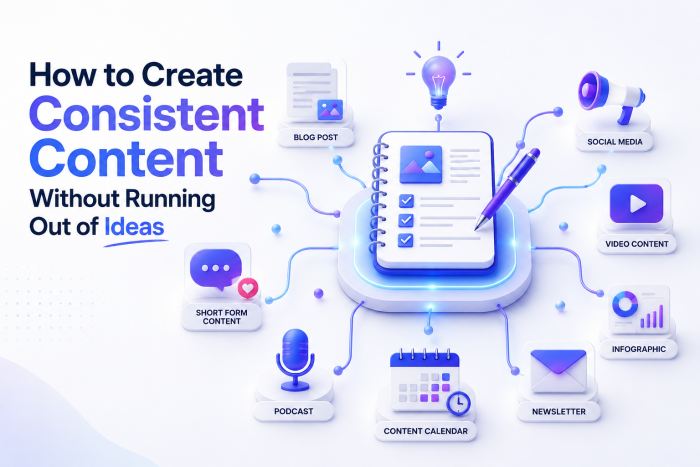
Most content calendars fail quietly. At the beginning of the month, everything looks structured and promising. There is a clear plan, a list of ideas, and a sense of control. But as the weeks pass, that structure starts to break. Posts get delayed, ideas feel rushed, and consistency begins to slip.
The problem is not a lack of effort. It is the way the calendar is built. A working content calendar is not just a schedule of posts. It is a system that connects your goals, your content, and your workflow in a way that actually holds up over time. When this system is missing, even the most detailed plan falls apart.
This guide focuses on building a monthly content calendar that works in real scenarios, not just in theory.
What a Content Calendar Is Supposed to Do
A content calendar is often seen as just a planning tool, but in reality, it plays a much bigger role. It acts as a central system that keeps your content strategy aligned while making execution more consistent.
It starts by giving your content a clear purpose. Without that direction, you might post regularly, but the content can feel scattered and ineffective. Every post should contribute to something larger whether that’s growth, engagement, or conversions.
A calendar also helps reduce decision fatigue. When your content is planned in advance, you’re not constantly wondering what to post next. Instead of scrambling for ideas, you can focus your time and energy on improving the quality of what you create.
Another key benefit is visibility. A well-structured calendar gives you a clear view of everything at a glance:
● what’s planned
● what’s in progress
● what’s ready to go live
This becomes even more valuable when you’re managing multiple platforms or working with a team.
When these elements come together, content creation feels more structured, more intentional, and far less stressful.
Start With Objectives Instead of Random Ideas
Most content calendars begin with a list of ideas. While this may seem logical, it often leads to inconsistency because there is no clear direction behind those ideas.
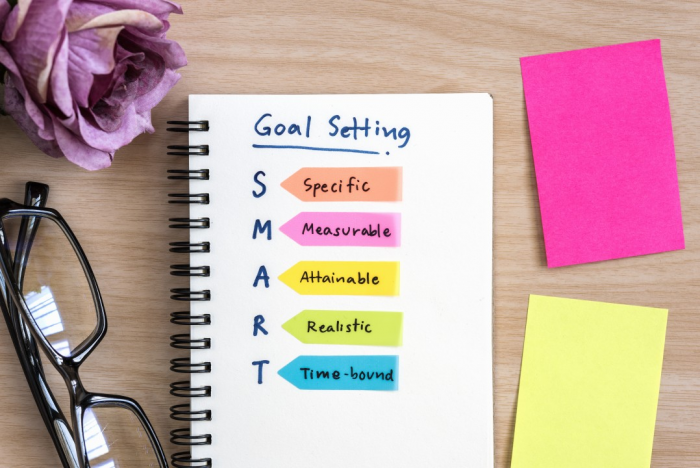
A more effective approach is to start with objectives. Before planning any content, define what you want to achieve during the month. This could be increasing reach, building authority, generating leads, or improving engagement.
Once the objective is clear, content ideas become easier to generate and evaluate. For example, if your goal is growth, your content will naturally lean toward shareable and trend-driven formats. If your goal is authority, you will focus more on in-depth and educational content.
This shift ensures that your calendar is driven by strategy rather than random inspiration.
Build Content Pillars That Create Structure
After defining your objectives, the next step is to create content pillars. These are the core themes your content revolves around throughout the month, giving your strategy structure and direction.
Instead of thinking in terms of individual posts, you start thinking in categories. For example, your content might be grouped into:
● educational posts
● behind-the-scenes insights
● product or service highlights
This shift makes a big difference. It creates consistency without making your content feel repetitive. Your audience starts to recognize patterns and understand what to expect from you, even though each post still feels fresh.
Content pillars also make planning much easier. Rather than coming up with entirely new ideas every time, you can rotate between these themes and build different variations within each one. This keeps your content both organized and sustainable over time.
Plan Content Based on Platform Behavior

Every platform has its own content dynamics, and your calendar should reflect that. A common mistake is creating one piece of content and trying to use it everywhere.
Short-form videos tend to perform well on platforms like Instagram and YouTube Shorts because they match how users consume content there. On the other hand, platforms like LinkedIn favor structured, insight-driven posts that provide value in a professional context.
Educational content often works best in formats that allow depth, such as carousels or long-form posts. Meanwhile, engagement-driven content might rely more on storytelling or quick, relatable ideas.
When you plan content specifically for each platform, you improve performance and reduce the need for heavy editing later. Your content feels native rather than forced.
Set a Publishing Frequency You Can Maintain
Consistency is one of the most important factors in content success, but it is often misunderstood. Many creators plan for high frequency without considering sustainability.
Posting every day may sound effective, but it often leads to burnout or a drop in content quality. A better approach is to choose a frequency that you can maintain comfortably over time.
A balanced schedule allows you to focus on both consistency and quality. It also gives you room to refine your content instead of rushing to meet deadlines.
Your calendar should reflect your actual capacity, not an ideal version of it. When your plan is realistic, execution becomes much smoother.
Break the Month Into Weekly Planning Cycles
Planning an entire month in one go can feel overwhelming and rigid. Breaking it into weekly segments makes the process more manageable and flexible.
Each week can have its own focus and mix of content. This allows you to adjust your approach as the month progresses without disrupting the entire calendar.
Weekly planning also aligns better with real workflows. Content creation is rarely static. New ideas emerge, feedback comes in, and priorities shift. A weekly structure allows you to adapt without losing direction.
This approach keeps your calendar dynamic while still maintaining overall consistency.
Turn Your Calendar Into a Workflow System
A content calendar shouldn’t just show what to post, it should show how content moves from idea to publication. When you treat it as a workflow, it becomes far more useful and reliable.
Every piece of content passes through a few key stages:
● idea
● drafting
● production
● review
● publishing
Making these stages visible helps you track progress more clearly. You can see exactly where each piece stands and whether things are moving as planned.
This visibility also helps you spot problems early. For instance, if content keeps getting stuck in the review stage, it becomes easier to identify that bottleneck and fix it before it disrupts your schedule.
When your calendar reflects the full workflow, not just final posts, it becomes a system that supports execution, not just planning.
Leave Room for Real-Time Content Opportunities
No matter how well you plan, unexpected opportunities will always arise. Trends, news, and audience interactions can create moments where quick content performs exceptionally well.
If your calendar is fully packed, you miss these opportunities. A better approach is to leave some space open each week for spontaneous content.
This allows you to stay relevant and responsive while still maintaining a structured plan. The balance between planned and real-time content is what keeps your calendar effective in the long run.
Tools That Help You Build and Manage a Content Calendar
Choosing the right tools can significantly improve how you plan and execute your content calendar. Each tool plays a different role, and the best choice depends on your workflow and scale.
1. Technylo Content Calendar Generator
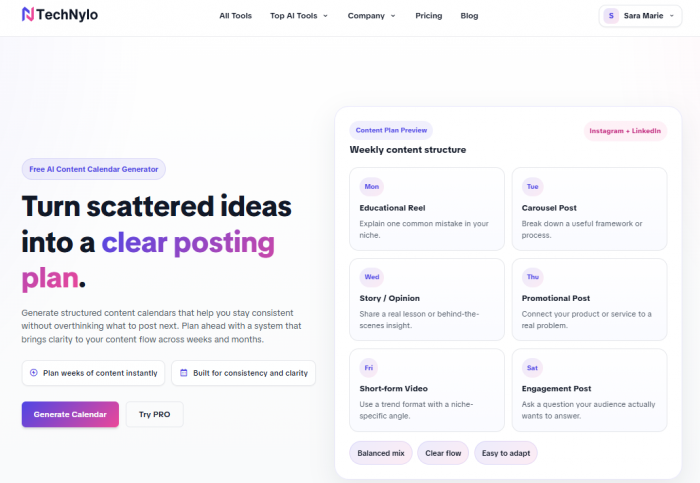
Technylo is designed to simplify the initial planning process. Instead of starting with a blank page, it generates structured content ideas based on your niche and goals.
It helps you create a monthly calendar with suggested topics and content angles. This is especially useful when planning recurring formats or campaign-based content.
The main advantage is speed and clarity. It gives you a strong starting point, allowing you to move quickly into execution without spending too much time on brainstorming.
2. Notion
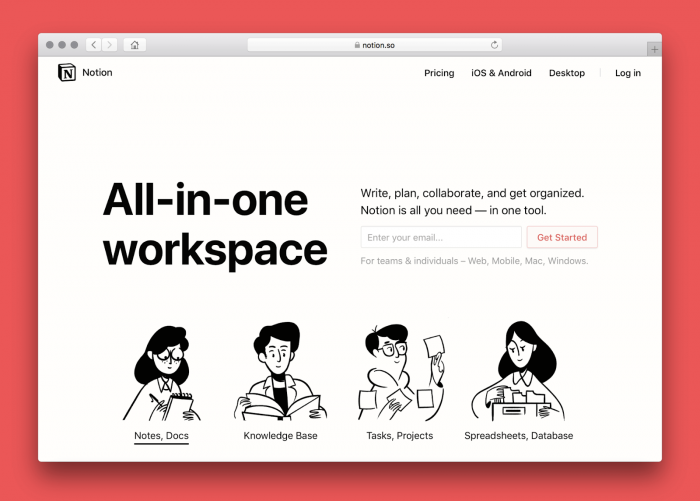
Notion is a flexible tool that allows you to build a customized content calendar. You can create databases, track content stages, and organize everything in one place.
It is particularly useful for teams or creators who want a detailed system. However, it requires careful setup to avoid becoming cluttered.
3. Trello
Trello offers a visual approach to content management. Content is organized into cards that move across different stages, making it easy to track progress.
It works well for teams that prefer a simple and visual workflow without too much complexity.
4. Google Sheets
Google Sheets remains one of the most practical tools for content planning. It is easy to use, highly customizable, and accessible from anywhere.
While it lacks automation, it provides a straightforward way to organize your calendar and collaborate with others.
5. Airtable
Airtable combines the simplicity of spreadsheets with advanced database features. It allows you to manage content with multiple views and structured data.
This makes it a strong choice for larger content operations that require more organization and flexibility.
6. Hootsuite
Hootsuite focuses on scheduling and publishing content. It allows you to visualize your posting schedule and manage multiple platforms in one place.
It is particularly useful during the final stage of content execution.
7. Buffer
Buffer provides a simple and clean way to schedule content. It is easy to use and works well for individuals or small teams.
While it does not offer deep planning features, it simplifies the publishing process.
Where Most Content Calendars Fail
Even well-planned calendars can break if certain issues are not addressed. One of the most common problems is overplanning. When every slot is filled, the calendar becomes rigid and difficult to maintain.
Another issue is ignoring performance data. A content calendar should evolve based on what works. If certain types of content consistently perform better, they should be prioritized in future plans.
Lack of workflow visibility is also a major factor. When progress is not tracked, delays become harder to manage.
Finally, treating all platforms the same reduces effectiveness. Each platform requires a tailored approach, and ignoring this can limit your results.
What a Working Monthly Content Calendar Looks Like
A functional content calendar feels structured but flexible. At the beginning of the month, there is a clear direction based on defined goals and content pillars.
Each week is planned with a balanced mix of content, but not everything is fixed. There is room for adjustments and real-time opportunities.
Content moves smoothly through different stages, and any delays are easy to identify and fix. Over time, this system becomes easier to manage, and content quality improves naturally.
The calendar becomes a tool that supports your workflow rather than something you struggle to maintain.
Final Thoughts
A well‑planned monthly content calendar is less about filling boxes and more about building a repeatable system that turns ideas into consistent, goal‑driven content. By defining clear objectives, choosing a realistic cadence, and pairing smart workflows with AI tools like the Technylo Content Calendar Generator and others, you move from reactive posting to strategic storytelling that compounds month after month.