Why Most Instagram Captions Fail (Even on Good Content)
The uncomfortable truth is that most Instagram captions are written too late and with too little intention.
Creators spend hours perfecting visuals, editing reels, choosing thumbnails, and then rush through the caption in less than a minute. What follows is predictable. Generic lines, overused quotes, or captions that simply describe what is already visible in the post.
That approach no longer works.
Instagram has shifted from a purely visual platform to a hybrid of content and context. The caption now plays a direct role in engagement signals such as comments, saves, and shares. It is often the difference between a post that looks good and a post that performs.
A viral caption does not exist to “fill space.” It exists to guide attention, create emotion, and trigger action.
What Actually Makes a Caption Go Viral
When you analyze high-performing posts across creators and brands, a clear pattern starts to emerge. Viral captions are rarely random, they follow a subtle but consistent structure that keeps the reader moving from one line to the next.
This structure usually unfolds in a few key steps:
● It starts with a hook that interrupts scrolling and grabs attention instantly.
● Then comes a short layer of context, which builds curiosity or makes the content feel relatable.
● After that, the caption delivers value, this could be an insight, an emotion, or useful information.
● Finally, it ends with a call-to-action, encouraging the reader to engage, respond, or share.
What makes this work is how people actually consume content on Instagram. Users don’t read captions linearly at first they scan. The first line decides whether they tap “more.” The rest of the caption determines whether they stay, engage, and interact.
In simple terms, the first line earns the click, and everything after earns the engagement.
The First Line Is Where Everything Is Won or Lost

The opening line of your caption carries disproportionate weight. It determines whether someone pauses or continues scrolling.
A strong hook creates tension, curiosity, or recognition. It makes the reader feel that there is something worth discovering just below the fold. Weak hooks, on the other hand, tend to sound safe and predictable, which is exactly why they get ignored.
Instead of writing something like “Had a great day today,” high-performing creators lean into statements that feel incomplete or intriguing. Lines such as “Nobody talks about this part,” or “This almost didn’t work,” create a natural urge to read further.
This is not about being dramatic. It is about giving the audience a reason to stay.
Why Storytelling Outperforms Everything Else
Even the simplest captions perform better when they’re framed as a story. People don’t connect with plain statements, they connect with progression. A good caption creates a sense of movement, even in just a few lines.
At its core, a story quietly follows a simple flow:
● a beginning
● a shift
● an outcome
This structure creates emotional continuity, which keeps readers engaged much longer than static captions.
This is where the difference shows up. A basic caption might just say something worked well, but a stronger version briefly shows what went wrong before it worked. That contrast is what makes the content feel more real and relatable.
Storytelling also makes your content more memorable. When someone relates to your experience, they’re far more likely to engage whether that’s commenting, sharing, or saving the post. And those actions directly feed into Instagram’s distribution system, helping your content reach more people.
Adding Value Is What Drives Saves and Shares
If there is one metric that consistently signals strong content, it is saves.
People save posts when they believe they will need that information again. This is why captions that include insights, lessons, or actionable ideas tend to perform better over time compared to purely aesthetic captions.
Value does not always mean educational content. It can also be clarity, honesty, or perspective. A caption that articulates something the audience feels but cannot express often performs just as well as a practical tip.
The key is that the reader should walk away with something. If the caption leaves no impression, there is no reason to engage with it.
The Role of Questions and Call-to-Action
Engagement does not happen automatically. It is often prompted.
Many creators hesitate to ask for interaction because they think it feels forced. In reality, a well-placed question or call-to-action simply guides the audience toward a response. It reduces friction.
When a caption ends without direction, the reader has no clear next step. When it ends with a question or a simple instruction, the barrier to engagement becomes much lower.
This is why even a subtle prompt can change performance significantly. Asking for an opinion, inviting a reaction, or encouraging a save can shift passive consumption into active interaction.
Writing Style Matters More Than Length
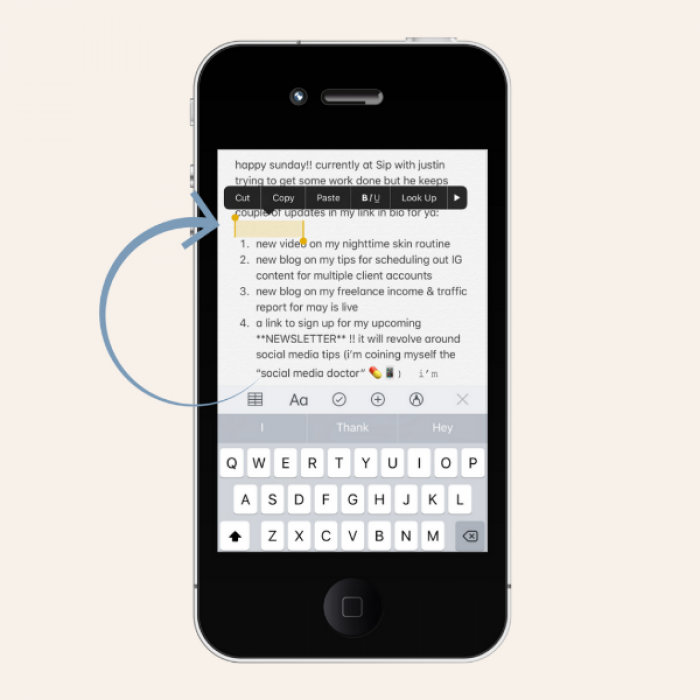
There is often confusion around caption length. Some believe short captions perform better, while others prefer long-form storytelling.
In practice, both formats work.
What matters is readability. A long caption with clear spacing, short sentences, and structured flow will outperform a short caption that lacks clarity. Similarly, a short caption can perform well if it delivers impact quickly.
The real mistake is not length. It is density. Large blocks of text with no breaks reduce readability and discourage users from continuing.
Good captions feel easy to read, regardless of how long they are.
Real Examples of Viral Caption Styles
Different types of captions work depending on the content and context.
Relatable captions tend to perform well because they reflect shared experiences. A simple “POV” format often creates instant connection because it mirrors real-life situations.
Story-driven captions work best when there is a clear transformation or realization. They pull the reader through a sequence rather than presenting a static idea.
Educational captions perform well when they simplify something useful. Instead of overwhelming the reader, they break information into digestible insights.
Emotional captions succeed when they feel honest rather than dramatic. Subtlety often works better than exaggeration.
Promotional captions, when done correctly, focus less on selling and more on the journey behind what is being shared. This builds interest without resistance.
Caption Generator Tools That Actually Help
Writing captions consistently can become repetitive, especially when managing multiple posts or campaigns. This is where AI tools become useful, not as replacements for creativity, but as accelerators.
One of the more structured tools is Technylo Caption Generator
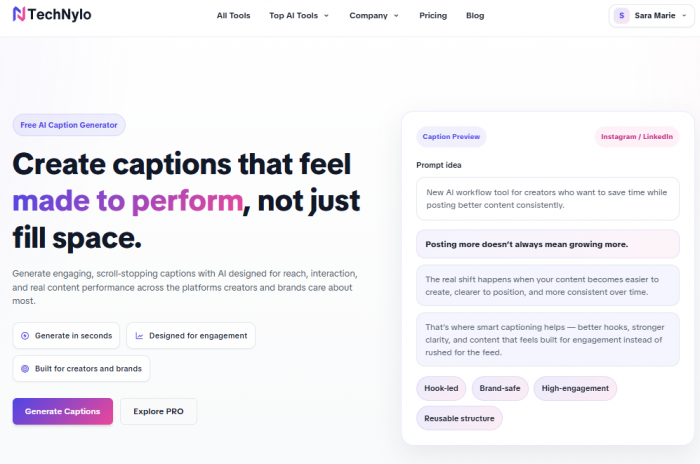
Technylo is designed around workflow rather than just generation. It helps organize ideas, generate caption drafts, and refine them based on platform needs. This makes it particularly useful for creators or teams managing ongoing content series. Instead of producing isolated captions, it allows you to build consistency across posts and campaigns.
Tools like Copy.ai and Jasper take a slightly different approach. They focus on tone control and variation, making them useful for brands that want consistent messaging across multiple posts. They are especially effective when captions need to align with a broader marketing voice.

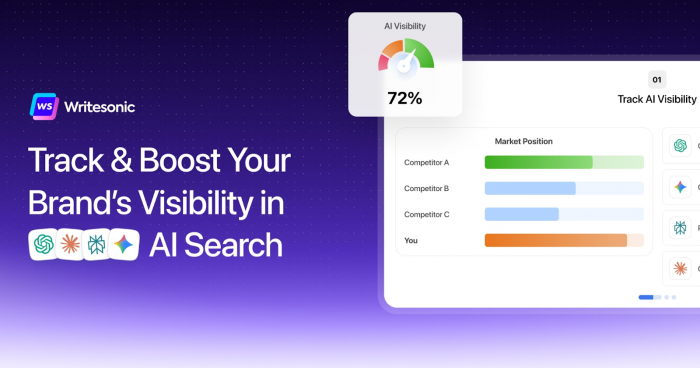
Writesonic and Rytr are more speed-focused. They are useful when you need quick caption ideas or multiple variations in a short time. These tools work best during ideation phases rather than final polishing.
Hypotenuse AI stands out in ecommerce use cases. It is better suited for product-focused captions where clarity and conversion matter more than storytelling.

Anyword brings a performance-driven layer into caption writing. It attempts to predict how well a caption might perform, making it useful for marketers who rely heavily on data and optimization.
Each of these tools solves a slightly different problem. The key is not choosing the “best” tool, but choosing the one that fits your workflow.
Mistakes That Quietly Kill Engagement
Many captions fail not because they are bad, but because they miss critical elements.
A weak opening line often causes users to skip the caption entirely. Even strong content gets ignored if the first line does not create interest.
Another common issue is the absence of a clear message. When a caption tries to say too many things at once, it loses focus and impact.
Overwriting is also a problem. Trying too hard to sound clever or inspirational often makes captions feel forced rather than authentic.
Perhaps the most overlooked mistake is misalignment. When the caption does not match the tone or purpose of the content, it creates disconnect. This reduces both readability and engagement.
When to Use Short vs Long Captions
Short captions work best when the content itself carries the message. This is common in memes, aesthetic posts, or quick reactions.
Long captions perform better when there is something to explain, tell, or unpack. Educational posts, storytelling content, and personal reflections benefit from additional depth.
There is no fixed rule. The effectiveness of a caption depends on how well it complements the content rather than how many words it contains.
Final Take: Viral Captions Are Built, Not Guessed
Viral captions are not the result of luck or creativity alone. They are built through structure, intention, and understanding of audience behavior.
Every high-performing caption earns attention, maintains interest, and guides action. It does not rely on trends or randomness.
Once you start treating captions as a core part of your content rather than an add-on, the difference becomes visible not just in engagement numbers, but in how your audience responds.
FAQs
1. How long should an Instagram caption be?
There is no fixed length. The focus should be on clarity and readability rather than word count.
2. Do hashtags still matter?
They still play a role in discoverability, but they are far less important than content quality and engagement.
3. Can AI tools fully replace caption writing?
They can assist with speed and ideation, but human context and tone remain essential for strong performance.
4. What type of captions go viral most often?
Captions that combine relatability, value, and clear engagement prompts tend to perform consistently well.