Viral isn't luck. It never really was - but in 2026, that's more true than ever. The creators who consistently break through aren't posting more often or hoping something catches. They're building to a system.
Instagram Reels now account for 35% of total screen time on the platform and reach over two billion monthly users. The format gets pushed harder than anything else on the app. But the algorithm has also become significantly smarter about what it promotes. Recycled TikTok content gets suppressed. Overpolished ads underperform raw, authentic storytelling. And the old game of chasing hashtags and posting frequency has been replaced by a different game entirely: depth of engagement over volume of output.
This guide is the framework. Seven steps, grounded in what the algorithm actually rewards right now, written for creators who are done guessing. We start with the signals that matter, work through concept, hook, filming, editing, audio, posting, and distribution - and end with the consistency model that turns one viral Reel into a repeatable pattern.
2B+ Monthly Reels users | 35% Of Instagram screen time is Reels | 2.8 sec Average decision window before scroll | 50% Of Reels watched without sound |
Step 1: Understand What the Algorithm Actually Rewards
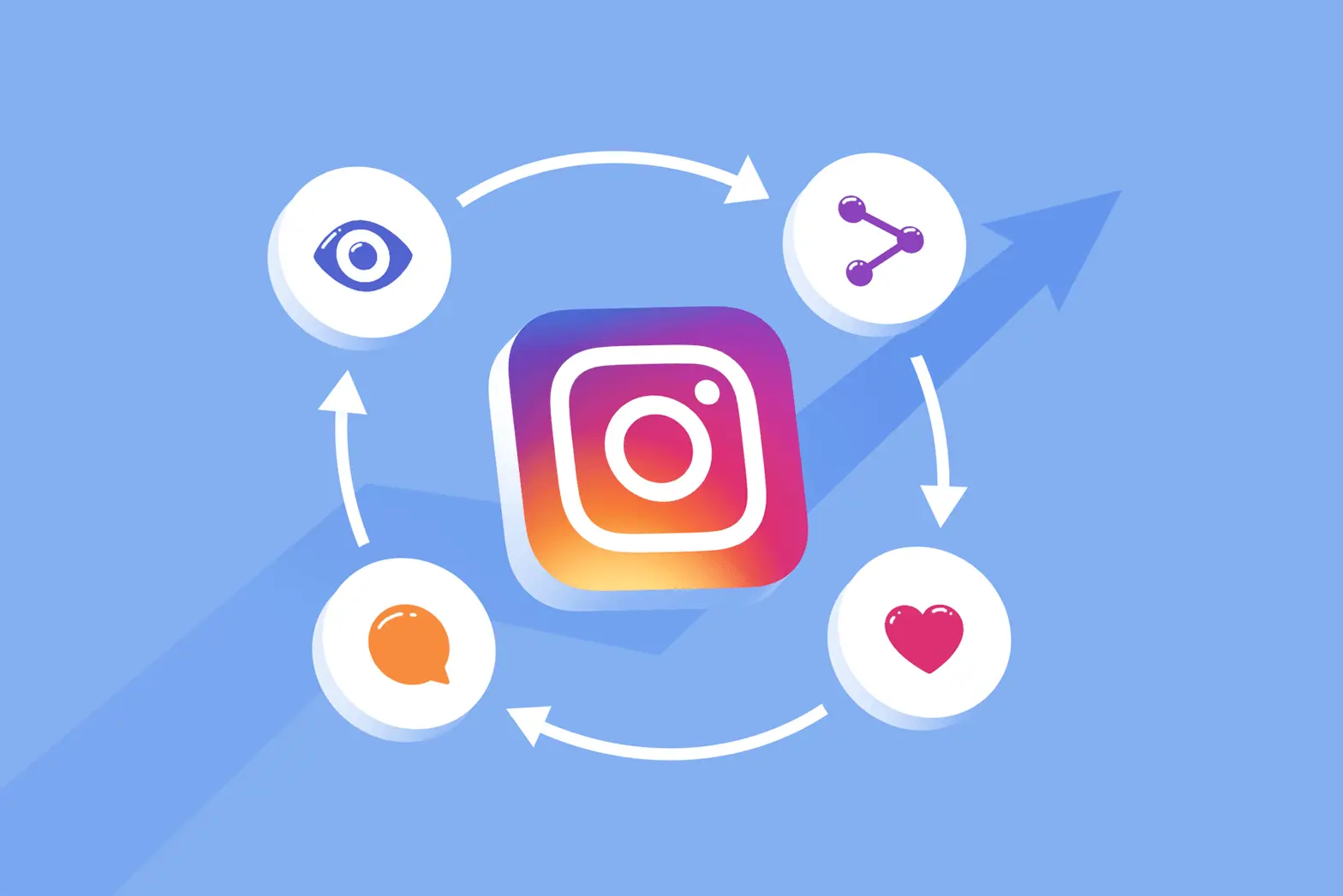
Most advice about Reels starts with content tips. This guide starts with the algorithm, because if you don't understand what Instagram is measuring, you'll make great videos that reach nobody. The algorithm doesn't care about your effort. It only cares about how people behave when they watch your Reel.
Instagram uses a three-stage process for every Reel. First, it shows your content to a small test group of non-followers. If that group engages, it pushes the Reel to a larger audience. If that second group engages, it pushes wider still. Your job is to pass the first test - everything after that is the algorithm doing its job.
| Adam Mosseri has confirmed it publicly: sends per reach - people sharing your Reel via DM - is the single strongest predictor of broad distribution. Build for that signal above all others. |
Here are every signal that currently matters, ranked by weight, along with what they mean and how to earn them:
| Signal | What it means | How to earn it |
| DM Shares (Sends) | Highest weight - tells Instagram your content has genuine value | Design shareable content: relatable, surprising, or genuinely useful |
| Watch Time + Completion | The more of your video people watch, the more it gets pushed | Strong hook + pacing + no dead air = high retention |
| Saves | Second-highest signal - means people want to come back | Educational, reference, and 'how-to' content drives saves |
| Replays (Loops) | A powerful hidden signal - rewatches signal intense interest | Build loop-friendly endings that fade into the beginning |
| Comments (meaningful) | Quality > quantity - lengthy comments signal deep engagement | Ask a specific question that invites a real answer, not just 'thoughts?' |
| Profile Visits After View | Signals your Reel made someone curious about you - strong reach signal | Hook the viewer beyond the Reel with a strong bio and pinned content |
| Likes | Least weighted - still counted but won't carry a Reel alone | Don't optimise for likes; optimise for the signals above it |
One thing worth noting separately: Instagram now uses an 'Originality Score' to detect recycled content. Reposting a TikTok video with a watermark will actively suppress your reach. So will reusing footage from viral trends without adding your own perspective. The algorithm in 2026 rewards creation, not curation.
Step 2: Build the Concept Before You Film
Most Reels fail before the camera is ever turned on. The concept is vague, the format is chosen by default rather than by research, and the hook is written as an afterthought. Treat concept development as the highest-leverage step in the whole process - because it is.
Start by answering one question honestly: what is this Reel designed to make someone do? Not feel - do. Watch twice? Send it to a friend? Save it for later? Comment their experience? The answer determines every format and length decision that follows. A Reel designed for DM shares looks different from one designed for saves. Building without that clarity produces content that's pleasant but directionless.
The five formats that consistently perform across niches
| Format | Length | Top Signals | When it works |
| Tutorial / How-To | 7–30 sec | Saves + Shares | Educational, actionable steps with clear outcome - drives saves |
| Transformation | 15–30 sec | Replays + Shares | Before/after with clear contrast - drives replays and DM shares |
| Relatable Reaction | 8–20 sec | DM Shares | Trending audio + reaction format - high share rate, relatable emotion |
| Behind the Scenes | 15–60 sec | Comments + Saves | Shows process or human moment - builds trust and community |
| Talking Head | 30–90 sec | Saves + Comments | Thought leadership or story - works when the speaker has charisma |
| Text-Only / Faceless | 15–30 sec | Saves + Shares | B-roll + text overlay - scalable, works without showing face |
| Mini Vlog / POV | 30–90 sec | DM Shares | Day-in-life moment - performs well when relatable or aspirational |
How to find what works in your specific niche
Before creating, spend 20 minutes in your niche's Reels feed. Don't just watch - study. When a Reel makes you stop scrolling, ask yourself: what made me stop? Was it the opening visual? A text overlay? A sound you recognised? Write down the mechanics, not the topic. Those mechanics are your research.
Look for sounds with the trending arrow indicator - that upward arrow means the audio is gaining momentum right now. Target audio with under 5,000 uses where possible; you catch trends before they're saturated, which means the algorithm gives your content an early-mover boost. Audio trends often originate on TikTok and migrate to Instagram within one to two weeks, so monitoring TikTok gives you a forward-looking signal.
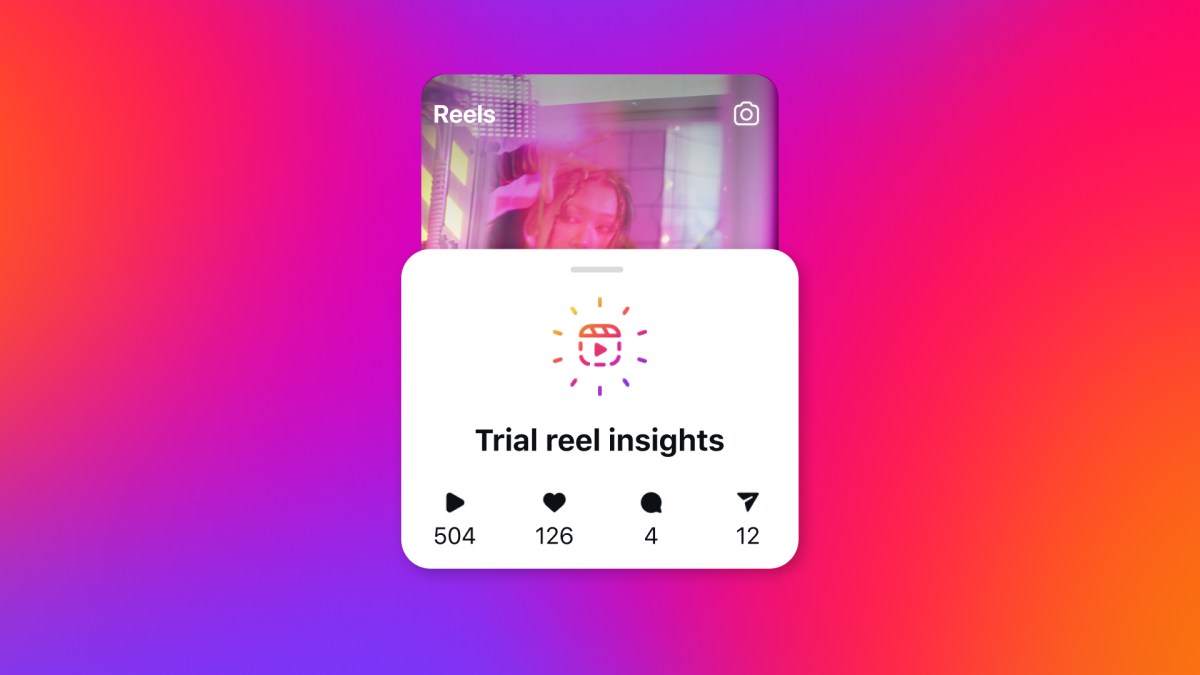
🎯 Trial Reels - test before you commit Instagram introduced Trial Reels specifically to let creators test content with non-followers before publishing broadly. If a Trial Reel performs well with cold audiences, that's a green light. Use this feature when you're unsure about a concept. It removes the risk of burning a mediocre Reel on your existing audience. |
Step 3: The Hook - Your Only Chance to Stop the Scroll

Human attention on vertical video has compressed to 2.8 seconds on average. That is the entire window you have to earn a watch. Up to 50% of viewers drop off in the first three seconds of a Reel. Everything you've read about hooks being important understates how absolute this is.
A strong hook works on two levels simultaneously: visual and textual. Because around half of all Reels are watched with the sound off, your first frame has to communicate what the Reel is about - immediately, before a single word is spoken or heard. Text overlays in the first frame aren't optional; they're structural. Place your hook text in the upper middle of the screen where Instagram's interface won't cover it.
| A 15-second Reel that viewers watch three times is far more valuable algorithmically than a 60-second video that most people abandon at the halfway point. Replays are a powerful hidden signal. |
Six hook types - with written and visual versions
| Hook Type | Written Caption Hook | Visual / Text Overlay Hook |
| The Bold Claim | Most people are doing [X] completely wrong. | POV: you finally understand what [niche topic] actually means. |
| The Result First | I grew from 0 to 50K followers in 4 months. Here's how. | This one edit doubled my engagement rate overnight. |
| The Open Question | What nobody tells you about [topic]... | Wait until you see what happens when you try this. |
| The Contrast | The old way: [common method]. The new way: [your method] | Before I knew this vs after. The difference is wild. |
| The Curiosity Gap | I tried [unusual thing] for 30 days. The results surprised me. | You won't believe what happened when I asked my audience this. |
| The Relatability | If you've ever felt like [pain point], watch this. | POV: you're finally doing the thing you said you'd do in January. |
The loop technique
This is underused and disproportionately effective. Structure your Reel so the last frame flows seamlessly into the first - creating a natural loop that makes viewers watch again without realising they've done it. The replay signal that generates is significant. For tutorial and before/after formats, end with the beginning of the process. For talking-head content, end on a line that connects back to the opening question.
Hook test - use this before filming Read your hook out loud and ask: would someone who has never heard of you or your niche, watching on a phone at 9pm, stop scrolling for this? If the answer is 'probably not,' rewrite it. Don't move to filming until you can honestly say yes. |
Step 4: Filming and Editing for Retention

You don't need expensive equipment. You do need good light. Lighting is the single production variable that most dramatically affects how professional your content looks, and poor lighting undermines good content in a way that viewers respond to emotionally even if they can't articulate why. Natural light during the hour after sunrise or before sunset is free and flattering. A $20 ring light transforms a dim indoor space. This is the only production investment that consistently pays back.
Film in 9:16 vertical at minimum 1080p, ideally 4K at 30fps. Never use footage downloaded from TikTok with the watermark visible - Instagram's algorithm actively detects and suppresses content with competitor platform watermarks. If you're repurposing content across platforms, upload from the original source file every time.
Editing for watch time
The cut is your primary retention tool. Every time there's a pause in your video where nothing is happening or changing, a viewer's attention is at risk. Edit for pace: if you're talking, cut out every 'um,' every pause longer than a beat, and every moment where the energy drops. Jump cuts - quick consecutive cuts of the same speaker from slightly different angles - are the dominant visual grammar of high-performing Reels for a reason: they eliminate dead time and create momentum.
Add text overlays throughout, not just in the hook. Around 50% of viewers watch with sound off, and text overlays ensure the value is communicated regardless. Keep text legible at phone size, high contrast against the background, and never overlapping with Instagram's native interface buttons on the right side.
Pre-filming checklist ✓ Concept locked - you know what the viewer is meant to do after watching ✓ Hook written - visual first frame and text overlay planned ✓ Location has good natural light or ring light is set up ✓ Phone set to 4K 30fps or minimum 1080p ✓ No competitor platform watermarks on any footage ✓ Loop ending planned - last frame connects back to opening ✓ Text overlay placements planned - upper middle, no Instagram UI overlap |
Step 5: Audio Strategy-The Fastest Route to Broader Reach
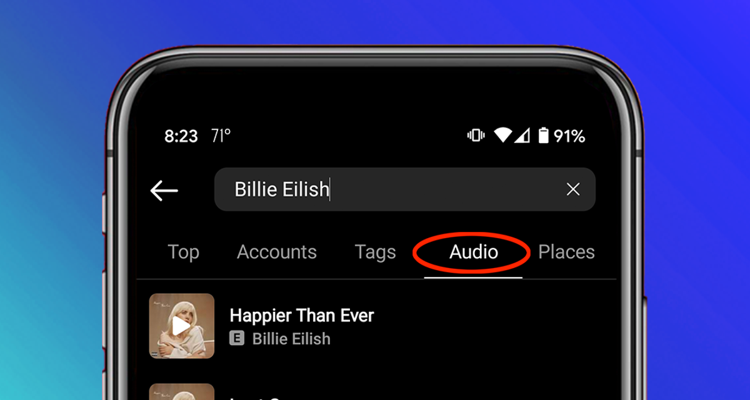
Trending audio gives your Reel an initial push before the algorithm has had time to assess its quality. When a sound is trending, Instagram is already distributing it broadly - and your content appears on that audio's dedicated page, which represents a secondary discovery channel beyond your niche's feed.
The sweet spot is audio with a rising trend indicator (the upward arrow) and under 5,000 uses. Once a sound hits tens of thousands of uses, you're competing against a saturated library and the early-mover advantage is gone. Audio trends typically peak within 72 hours to a week. Being early is the entire game.
Where to find trending audio before it peaks
– Navigate to Instagram's Creative Studio - Professional Dashboard → Trending Audio gives a curated list of rising sounds
– In the Reels feed, look for the small upward arrow next to any audio name - that's the trending indicator
– Monitor TikTok trends - audio typically migrates from TikTok to Instagram within 1 to 2 weeks, giving you advance warning
– Tap any audio name to see its usage count and the page of Reels using it - this shows you how close to saturation it is
– Business accounts have limited access to commercial music - check the 'Original audio' label before using, and use Meta's royalty-free library for branded content
The 1% trick - use trending audio without losing your own sound
Here's a practical technique that earns the trending audio boost while keeping your original voice or music as the primary sound. After uploading your Reel, go to Audio settings and lower the trending sound's volume to 1% - not zero, which Instagram won't register. Raise your original audio to 100%. The algorithm detects that you're using the trending audio and surfaces your Reel on that audio's page, while viewers hear your actual content audio. This is widely used by creators in educational niches where their voice-over is the primary value.
Original audio - the longer-term advantage
Trending audio is a reach accelerant, not a strategy. Your own distinctive sound - a consistent voice-over style, original music, a recurring sound effect - is what makes your content recognisable at a glance. In 2026, original audio also gets preferential treatment from the algorithm, which is actively promoting content that feels native to Instagram rather than imported from elsewhere. Building a signature sound is a slower compounding investment, but it differentiates you in a way that chasing trends never can.
Step 6: Posting, Timing, and the First 90 Minutes

Instagram's algorithm judges your Reel's quality largely within the first 60 to 90 minutes after posting. How quickly engagement arrives matters as much as how much engagement arrives. A post that gets 200 interactions in the first hour outperforms one that accumulates 1,000 interactions spread over three days. Rapid early engagement signals to the algorithm that your content is trending right now.
This means posting when your specific audience is most active is not a minor optimisation - it's structural to whether the first test group that sees your content engages at a rate that unlocks broader distribution.
When to post - the benchmarks
Aggregated 2025–2026 data across millions of posts shows the following peak windows as general benchmarks: Tuesday through Friday between 9am and 11am local time, and evenings between 6pm and 9pm. Saturday mornings show strong performance for lifestyle and entertainment content. Sunday evenings perform well for motivational and planning content.
These are starting points, not rules. Your actual optimal posting time is in your Instagram Insights under Followers → Most Active Times. Test your top three time slots over four to six weeks before drawing any conclusions. Your niche, your audience's timezone, and your content type all shift these benchmarks.
What to do in the first 90 minutes after posting
Do not post and disappear. The first 90 minutes is when the algorithm is actively watching your content's early engagement. Stay in the app and engage: reply to every comment that comes in with a meaningful response rather than a single emoji. Share your Reel to Stories immediately after posting with an engagement sticker - a poll, a question - to give it a second surface of distribution to your existing followers who might not see it in the Reels feed.
Instagram has confirmed publicly that posting a new Reel within 24 to 48 hours of a viral one significantly benefits performance, because the algorithm's attention is already on your account. If you have content queued, this is the moment to release it.
⚡ Cross-platform sharing without watermarks When sharing your Reel content across platforms - TikTok, YouTube Shorts, Facebook Reels - always upload from the original source file, never download from one platform and repost to another. Each platform's algorithm detects competitor watermarks and suppresses the reach of flagged content. Original files only, every time. |
Step 7: Consistency and the Compound Effect
One viral Reel will not build your audience. It might spike your follower count for a week. But if your next three posts underperform, that spike reverses and you're back where you started. The algorithm's trust in your account - and its willingness to push your content to non-followers - is built over time through consistent performance, not through occasional peaks.
Think about it from the algorithm's perspective. It's making a bet every time it pushes your content to a cold audience. It wants to bet on creators whose content reliably performs. A creator with 50 Reels that each get 20% above their follower count in reach is a better bet than a creator with one viral Reel and 49 underperforming ones.
| Quality beats frequency. Three to four high-quality Reels per week consistently outperforms seven rushed ones. The algorithm rewards the content that performs, not the account that posts most. |
The content battery approach
Batch filming is the most practical way to maintain quality under a consistent posting schedule. Set aside one focused filming session per week - two to three hours - and produce enough footage for the whole week's Reels. This removes the daily creative pressure that leads to posting something mediocre just to 'maintain the schedule.' It also puts you in a creative flow state that produces better ideas than trying to film on demand between other tasks.
Maintain a running ideas list throughout the week. Every time you notice something in your niche that made you stop and think - a question from a client, a piece of content you engaged with, something that surprised you - add it to the list. Most of your best concepts will come from living in your niche, not from sitting down to brainstorm.
How to analyse performance without overthinking it
Check your Insights once a week, not daily. Daily checking creates noise - individual posts perform differently based on timing, platform mood, and external factors that have nothing to do with content quality. Weekly patterns are where the real information lives. Look at: which Reels exceeded your average reach by the largest margin, what format they used, what length they were, and whether they used trending audio. Those three variables will tell you what to do more of.
When something works significantly better than average, don't just celebrate it - deconstruct it. What was the hook? Was the format different? Did you try a new type of CTA? Then replicate the mechanics in a fresh piece of content, not the content itself. This is the difference between copying yourself and learning from yourself.
Weekly Reels system - the minimum viable framework ✓ Monday: review last week's Insights - note what outperformed, document the mechanics ✓ Tuesday: batch-film this week's Reels in one focused 2-3 hour session ✓ Wednesday: edit, add text overlays, captions, and audio - finalise for the week ✓ Thursday to Sunday: post on schedule, engage in first 90 min of each post ✓ Ongoing: maintain a live ideas list - add to it whenever something stops your scroll |
The full framework at a glance
This is the system in condensed form. Return to it before each Reel you create until it becomes instinct.
| 01 | Understand the signals - design every Reel to earn DM shares, replays, and saves above all other metrics |
| 02 | Build the concept first - know what format you're using, what action you're designing for, and what audio you'll use before filming |
| 03 | Write the hook before anything else - visual hook in the first frame, text overlay in the first two seconds, no exceptions |
| 04 | Film in good light, edit for pace - no dead air, jump cuts to remove pauses, text overlays throughout for sound-off viewers |
| 05 | Use trending audio under 5,000 uses - or use the 1% trick to earn the trending boost while keeping your own audio |
| 06 | Post when your audience is active - engage every comment in the first 90 minutes, share to Stories immediately |
| 07 | Post 3–4 quality Reels per week consistently - analyse weekly, replicate the mechanics of what outperforms |
One final thing
The framework in this guide is built from what Instagram's own team has stated publicly, from creator data, and from the patterns that consistently show up in high-performing accounts across different niches and follower sizes. It's as close to a reliable system as this medium currently allows.
But a system is only as good as the person executing it. The creators who consistently go viral aren't the ones who've read the most guides. They're the ones who post, analyse, learn from the result, and apply that learning to the next piece of content. The framework is the starting point. Your own performance data is the real curriculum.
Start with Step 3 if you take nothing else from this: get the hook right, every single time. It is the variable with the most leverage over reach of any decision you make in the Reels process. Everything downstream - audio, editing, posting time - matters less than whether someone stops in the first three seconds.
| Make someone watch your Reel twice. The algorithm handles the rest. |