Organic engagement is not built by posting more and hoping something lands. It grows when content gives people a reason to pause, react, respond, save, or share. That reason can be usefulness, recognition, disagreement, curiosity, timing, or trust. When those ingredients are missing, even polished content struggles.
A lot of brands think engagement is mainly an algorithm problem. In most cases, it is a relevance problem first. The post may look good, but it enters the feed with no urgency, no clear angle, and no emotional or practical payoff. People scroll because the content does not earn attention fast enough or reward it well enough.
The pages that grow organically usually understand one thing better than everyone else: engagement is a behavior, not a vanity metric. It happens when content fits the audience’s mood, platform habits, and real interests closely enough that interaction feels natural.
Start with a better question
Many social strategies begin with, “What should we post this week?” That sounds practical, but it often leads to filler. A stronger question is, “What would make our audience stop and care today?” That shift changes everything. It forces the content to compete in the real environment where people are distracted, impatient, and flooded with similar-looking posts.
Good engagement rarely comes from broad, safe content. It usually comes from content that enters the feed with a point. It says something useful, names something familiar, challenges a lazy assumption, or makes a complicated issue easier to understand. In other words, it creates movement.
A stronger starting point usually includes:
● one clear audience problem
● one clear angle on that problem
● one clear reaction you want from the viewer
● one format that fits the idea naturally
Without those basics, content tends to feel assembled rather than intentional.
Engagement begins before publishing
By the time a post goes live, a lot of its fate is already decided. The topic, opening, structure, format, and emotional weight all shape whether people will engage. This is why low-performing content is often misdiagnosed. People blame timing or reach when the real weakness is in the build itself.
If the topic is too generic, people ignore it. If the opening is slow, they move on. If the format is wrong for the idea, retention falls. If the post says something technically true but socially dull, it may get seen but not acted on.
That is why engagement is as much editorial as it is promotional.
Where posts usually go wrong before they are even published
| Weak point | What it looks like | What it causes |
| Topic is too broad | “How to grow on social media” style framing | Low interest because the idea feels familiar |
| Opening is vague | Long setup before the real point appears | Weak stop rate |
| No distinct angle | Content says what everyone already says | Low comments and shares |
| Low practical value | Pleasant but forgettable advice | Few saves |
| No interaction path | Nothing to respond to or discuss | Quiet comment section |
Think beyond content pillars
A lot of brands organize social media around content pillars like education, promotion, behind-the-scenes, tips, and storytelling. That can help planning, but it does not fully explain engagement. People do not engage because a post belongs to a pillar. They engage because it gives them something specific.
That “something” usually falls into a smaller set of audience motives. People want to learn faster, feel understood, express a view, save something useful, share something smart, or respond to a tension they recognize. Once content is built around these motives, performance often improves because the post feels more alive in the feed.
Think about the difference between a generic advice post and one that captures a real frustration. The second one has social energy. It feels closer to how people actually think and talk.
A useful way to frame content is to ask:
● Does this teach something worth saving?
● Does this express something people want to agree with or argue with?
● Does this reflect a frustration or behavior the audience recognizes instantly?
● Does this help someone share a point with a friend or colleague?
That is a much sharper planning lens than simply deciding whether today’s post is “educational” or “inspirational.”
Structure content around four engagement outcomes
Not all engagement means the same thing. A post can attract attention without creating interaction. It can get likes without getting saves. It can get comments without building trust. That is why treating engagement as one broad result often leads to weak analysis.
A better approach is to break it into four outcomes: attention, interaction, retention, and distribution.
Attention is the scroll stop. Interaction is the comment, like, click, or reply. Retention is the save, full read, or full watch. Distribution is the share, repost, or DM send. Each outcome responds to different creative choices, and each teaches you something different about what the content is doing well or badly.
Four engagement outcomes that matter more than raw likes
| Outcome | What it means | What usually drives it |
| Attention | People stopped scrolling | Sharp hook, strong first frame, clear subject |
| Interaction | People responded in the moment | Opinion, tension, relatability, question |
| Retention | People stayed with the content or saved it | Usefulness, depth, clarity, strong structure |
| Distribution | People passed it to others | Social value, practical value, identity value |
This lens helps separate a content problem from a distribution problem. If people stop but do not engage, the opening may be strong but the body weak. If people save but do not comment, the post may be useful but not conversational. That kind of diagnosis matters.
The hook is not decoration. It is access
The first line, first frame, or first few seconds decide whether the rest of the content even gets a chance. That does not mean hooks need to be theatrical. It means they need to be precise.
Weak hooks announce a topic. Strong hooks enter the topic through tension, surprise, specificity, or recognition. They meet the audience where attention actually lives. People are not scanning the feed hoping to find a broad lesson. They are scanning for something that feels timely, emotionally accurate, or practically useful.
Instead of easing in, better openings tend to do one of these things:
● name a mistake people keep making
● challenge an accepted idea
● surface a frustration the audience already feels
● promise a useful payoff quickly
● frame a contrast that creates curiosity
For example, “Here are tips to boost engagement” is far weaker than “Most low-engagement posts fail before the second line.” One sounds like content. The other sounds like a point.
The best-performing posts usually give people something to keep

A lot of content is optimized for instant approval instead of lasting value. It looks polished, sounds decent, and may collect a round of likes. But likes are often the lightest form of engagement. Saves and shares usually signal stronger relevance because they suggest the audience found something worth returning to or passing along.
That is why practical content often ages better than merely agreeable content. Frameworks, comparisons, mini playbooks, swipeable examples, and mistake breakdowns tend to generate more durable engagement because they help the audience do something, avoid something, or understand something more clearly.
This does not mean every post should sound like a lecture. Personality still matters. Tone still matters. Story still matters. But content that leaves people with nothing useful often fades quickly.
Content types and the reactions they most often create
| Content type | Strongest engagement signal | Why it works |
| Frameworks and mini systems | Saves | Easy to revisit and apply |
| Sharp opinion posts | Comments | Invites reaction and debate |
| Relatable observations | Shares and comments | People want to tag others or add their own example |
| Step-by-step posts | Saves and shares | Practical, structured, easy to use |
| Case examples | Retention and saves | Real evidence makes ideas more credible |
| Story-led reflections | Replies and comments | Emotional entry makes people respond personally |
If you want comments, leave room for people to enter

Many posts do not get comments because they are too closed. They explain everything neatly, leave no tension unresolved, and give the audience nothing to add. That may feel complete from a writing perspective, but social content often performs better when it creates an opening for participation.
The best conversational posts usually do not ask random generic questions at the end. They build a response path into the content itself. They present an opinion that people can challenge. They describe a situation that others want to add to. They create a comparison people naturally want to weigh in on.
A few stronger ways to invite comments are:
● ask for experience, not vague opinion
● offer two approaches and let people choose
● state a view that naturally invites pushback
● describe a common mistake and ask what others would add
● share a pattern and let the audience confirm or reject it
The difference is subtle but important. Good comment design feels native to the post. Weak comment bait feels tacked on.
Consistency is useful, but rhythm is what keeps a page interesting
Many brands hear “be consistent” and interpret it as “post frequently.” Frequency helps, but it does not solve sameness. A page can post every day and still feel flat if every piece sounds alike, teaches the same kind of lesson, or repeats the same emotional tempo.
Rhythm matters more. Rhythm means content has variation in role, pace, and payoff. One post may drive reach. Another may deepen trust. Another may spark comments. Another may be built mainly for saves. Another may make the brand feel more human and accessible.
When content has rhythm, the page feels less like a machine and more like a living editorial system.
A stronger weekly mix for organic engagement
| Post role | Main job | Example style |
| Reach post | Pull new people in | Strong opinion, trend response, relatable insight |
| Trust post | Show depth and clarity | Breakdown, case example, framework |
| Save post | Deliver lasting utility | Checklist, process, swipe file |
| Conversation post | Trigger discussion | Contrarian take, comparison, audience question |
| Human post | Build familiarity and warmth | Story, reflection, lesson learned |
This kind of structure gives the page momentum without making it repetitive.
Format should match the idea, not the trend
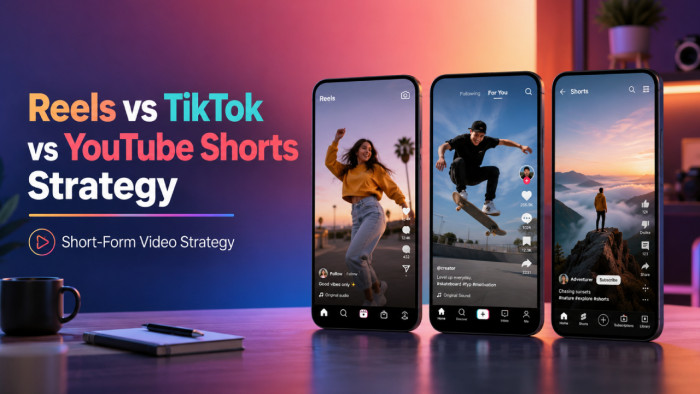
A common mistake is forcing every idea into the format that currently seems popular. But a strong idea in the wrong format often underperforms. A detailed concept may belong in a carousel. A quick reaction may work better as a short-form video. A thoughtful perspective may perform best as a text-led post with no visual clutter at all.
Each format creates different behavior. Carousels reward curiosity and sequence. Short-form video rewards immediate tension and fast clarity. Stories reward closeness and low-pressure interaction. Static posts reward simplicity and strong visual hierarchy.
Instead of asking what format is trending, ask:
● Does this idea unfold step by step?
● Does it need visual proof or demonstration?
● Does it work best as a fast reaction or a slower explanation?
● Is the core strength the wording, the example, or the visual transformation?
The format should help the idea travel, not distort it.
Specificity is what makes content feel real
Generic advice is one of the fastest ways to lose engagement. Even when it is correct, it often feels too broad to be worth reacting to. Specificity changes that. It makes content feel lived-in. It sounds like it came from observation instead of automation.
Instead of saying, “Post consistently,” explain what consistency looks like for a two-person team with limited time. Instead of saying, “Know your audience,” explain why cold viewers and existing followers respond differently to the same post. Instead of saying, “Create value,” show what kind of content gets saved versus what kind gets comments.
Specificity improves:
● credibility, because the post sounds grounded
● engagement, because the audience can recognize themselves in it
● shareability, because the point feels clearer and easier to pass on
● memory, because concrete ideas stick better than abstract ones
This is one of the biggest differences between content that is seen and content that is acted on.
Organic engagement also comes from how you behave after posting
Too many accounts treat publishing as the finish line. It is not. What happens after the post goes live shapes the quality of engagement as much as the content itself.
Replying to comments quickly helps momentum. Follow-up questions keep threads alive. Story reposts of audience responses make people feel seen. Thoughtful comments on adjacent creators’ posts build visibility and relationship depth. Repeated audience questions can become future posts, which improves both relevance and trust.
Pages that feel socially alive tend to attract more engagement over time because people can sense that interaction is welcomed, not merely tolerated.
Small actions that improve engagement quality
| Action | Why it matters |
| Reply to early comments quickly | Encourages more people to join the thread |
| Add follow-up questions | Extends the conversation instead of ending it |
| Repost audience responses in stories | Shows that participation gets noticed |
| Turn recurring questions into posts | Makes the audience feel heard |
| Stay active around the post after publishing | Signals that the account is present, not passive |
Read metrics like creative signals, not report-card numbers
Metrics become useful when they help improve content, not when they simply flatter or discourage the team. Likes can tell you the post was easy to agree with. Saves suggest practical value. Shares suggest social usefulness or identity fit. Comments show conversational energy. Profile visits suggest the content created enough curiosity to make people want more.
That is a much richer way to read performance than just asking whether a post “did well.”
A few smarter ways to interpret results:
● high views but weak interaction often means the hook worked but the body did not
● high likes but low saves often means the post felt pleasant, not essential
● high saves often indicate a repeatable content direction worth expanding
● strong comments often reveal themes the audience wants more of
● strong shares suggest the post gave people something they were proud or eager to pass on
This kind of reading helps teams create better next posts instead of chasing random changes.
What usually improves engagement fastest
Most pages do not need a complete rebuild. They need sharper fundamentals. The biggest gains often come from stronger hooks, narrower topic framing, better specificity, more save-worthy content, and better conversational design inside the post.
If engagement feels flat, start here:
● tighten the opening so the point appears faster
● stop choosing broad topics that everyone has covered already
● create more posts people would want to keep or forward
● write captions and slides that sound like real observation, not recycled advice
● build comment opportunities into the content itself
● match each idea to the format that serves it best
These changes sound small, but together they can transform how content performs.
High-impact changes and what they usually improve
| Improvement area | What to change | Likely effect |
| Hooks | Lead with tension, specificity, or contrast | Better stop rate |
| Topic selection | Focus on sharper audience problems | Higher relevance |
| Utility | Publish more frameworks and examples | More saves and shares |
| Comment design | Leave space for the audience to add something | Better discussion |
| Format choice | Match content shape to platform behavior | Better retention |
| Post-publish activity | Stay active in replies and follow-ups | Higher repeat engagement |
Final thoughts
Organic engagement grows when content becomes harder to ignore and easier to respond to. That means stronger hooks, clearer angles, sharper specificity, better utility, smarter format choices, and more active community behavior after publishing. None of this is glamorous, but it is what works.
The most effective social pages are not simply posting more. They are engineering better reactions. They know when a post is meant to spark comments, when it should drive saves, when it should build trust, and when it should widen reach. That clarity is what makes their strategy feel strong even when the output looks simple.
If you want to increase social media engagement organically, stop asking only how often you should post. Ask what makes this post worth stopping for, worth saving, and worth talking about. That is where stronger engagement usually begins.