Most people treat captions as an afterthought. They spend an hour on the photo, agonise over the edit, choose the filter - then dash off whatever comes to mind in the 30 seconds before hitting post. And then they wonder why the engagement is flat.
Here's the thing: captions aren't decoration anymore. In 2026, they are structural. They're what algorithms read to understand your content. They're what determines whether someone stops scrolling or keeps going. They tip a passive viewer into someone who responds, saves, or shares - which is the only thing that meaningfully affects your reach.
This guide covers everything that actually moves the needle right now. From the hook through to the call to action, including real formulas you can use, a platform-by-platform breakdown, and an honest look at the mistakes that quietly tank reach. We've written this as practitioners who test captions, read the data, and keep up with algorithm updates - not as people who repeat the same generic advice you'll find in five other articles.
1 in 3 consumers now start searches on social, not Google | 70% more comments when a CTA is included | Saves outrank likes as the #1 algorithm signal on Instagram | 125 characters visible before 'more' on Instagram feed |
The shift that changes everything in 2026
Something meaningful happened around mid-2025 that most creators either missed or haven't fully adapted to: social platforms started functioning like search engines.
Instagram now indexes caption text and surfaces posts in search results - both within the app and, for professional accounts, in Google searches too. TikTok's in-app search has become a primary discovery channel, particularly for how-to and educational content. Nearly one in three people now skip Google entirely and search directly on TikTok or Instagram instead.
What this means practically: the words you write in a caption now directly affect who sees your content, not just how they respond to it. A caption with naturally integrated keywords - 'home workout routine for beginners' - will be found by people who've never heard of you. A caption stuffed with hashtags is mostly noise.
| Keywords now beat hashtags. A caption with three naturally woven search terms will outperform one padded with 25 hashtags - and Instagram's own team has confirmed it. |
The second shift is about which engagement signals actually matter. Platforms have moved decisively away from passive likes and toward active, intentional engagement: shares, saves, watch time, and comment conversations. A post with 100 likes and 20 saves will consistently outrank one with 600 likes and zero saves. Every word in your caption should be written with this in mind.
Part 1: The hook - your first line is everything

On Instagram and Facebook, captions are cut off after approximately 125 characters in the feed. On TikTok, you have even less visible space. That means your opening sentence has a single job: make the person want to tap 'more.'
Most captions fail this test immediately. They open with something descriptive, something warm-up-y. 'Just got back from the most amazing trip.' 'Really excited to share this project.' 'It's been quite a journey.' None of these give the reader a reason to stay. They're all about the writer, not the reader. And the reader, scrolling quickly on their phone, doesn't owe you their attention.
Good hooks are about the reader before they're about you. They open with tension, a specific question, a surprising contradiction, or an incomplete thought that the brain naturally wants to close. Here are four types that consistently work across every platform:
Four hook formulas that work in 2026
The Contradiction "Most people think you need to post every day to grow. That's actually what's slowing them down." Why it works: Creates instant tension. The reader already has a belief, and you've just challenged it. They have to keep reading. |
The Specific Promise "3 caption mistakes that are quietly tanking your reach - and the exact fix for each." Why it works: Specificity signals credibility. '3 mistakes' is real and bounded. 'Some mistakes' is forgettable. |
The Relatable Pain "Spending an hour writing a caption and getting 12 likes is genuinely demoralising." Why it works: Opens with empathy rather than advice. The reader feels understood before you've given them anything. |
The Open Loop "The one caption change that doubled our save rate was almost embarrassingly simple..." Why it works: The ellipsis creates a gap the brain wants to close. It's manipulation - the honest kind. |
Notice what all four share: they're oriented toward the reader, not the writer. They don't open with 'I launched something' or 'We're excited to announce.' They open with an idea, a tension, or a problem the reader already has. That reorientation - from writer-first to reader-first - is the single most important shift you can make in how you approach captions.
💡 The scroll test Before posting any caption, read your first line out loud and ask: if a slightly tired, mildly distracted person saw this on their phone at 9pm, would they stop? If the answer is 'probably not,' rewrite the opening. That's the entire test. |
Part 2: The body - value without padding

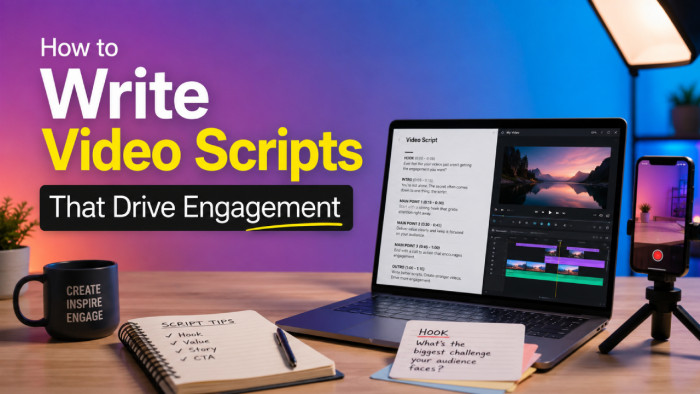
Once the hook has earned you the expanded read, the body has to deliver. The most common failure at this stage is burying the value - padding the middle of a caption with context the reader didn't ask for before getting to the useful part. Every sentence should either add information, create momentum, or deepen connection. If it does none of those things, cut it.
Good caption bodies tend to follow one of two structures: the instructional stack, or the personal story. Both work. They work for different reasons.
The instructional stack
This is the format you see in high-performing educational content. You promise something in the hook, then deliver it in clear, numbered or structured steps. The visual rhythm - short lines, breathing space, each point earning its place - matters as much as the content itself.
Example - instructional stack "How to write a caption that actually gets saved: 1. Open with what the reader wants, not what you did 2. Deliver the value before asking for anything 3. Use line breaks - each thought needs room to land 4. End with one clear action, not three Save this for your next post session." |
The personal story
This format drives connection in a way that instructional content can't. It's not about tips - it's about experience. The structure that consistently works is: problem → moment of change → insight → invitation. It doesn't need to be long. Four to six lines is often enough.
Example - personal story format "Six months ago, my posts averaged about 40 saves total. I changed one thing: I stopped writing about what I did and started writing about what my audience was dealing with. The following month: 600+ saves. The shift wasn't the content. It was the direction it was pointing." |
Both structures share one principle: they respect the reader's time. They get to the point, say it clearly, and don't overstay their welcome. The temptation to over-explain -to add a sentence that rewords what you just said, to pad toward a length you think you should hit - is the most common trap in caption writing. If you've said it, trust it and stop.
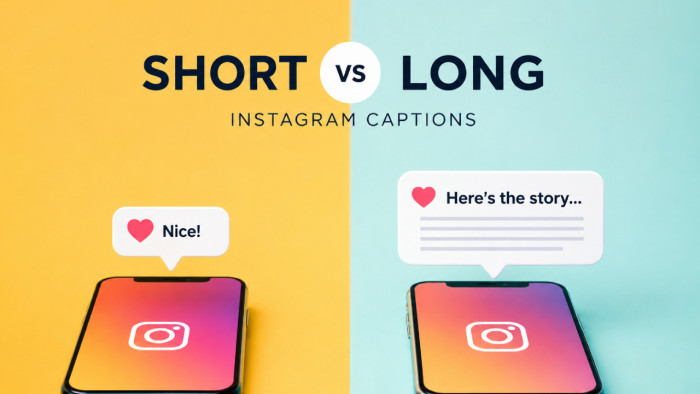
A word on length
Caption length should match the value being delivered - not the platform's character limit. A 250-word caption is too long if you're only saying 60 words of useful things. A 30-word caption is too short if the content genuinely needs context. The question to ask yourself: 'Is there anything here I could cut without losing anything?' If yes, cut it.
As a practical benchmark: Instagram Reels perform best under 150 characters. Feed carousels can support 150–300 words of genuine value. TikTok captions work best at 50–150 characters. LinkedIn rewards 150–300 words for thought leadership content. But these are patterns informed by data - not rules to follow mechanically.
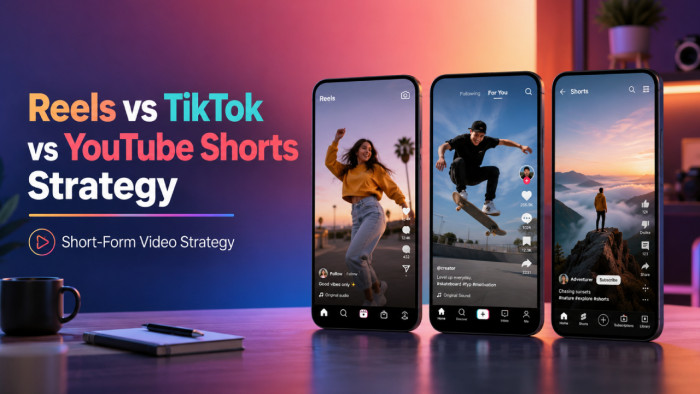
Part 3: Platform specific - one caption does not fit all

The single most common mistake in social media management is writing one caption and posting it everywhere unchanged. The content might be identical. The delivery needs to be completely different. Each platform has a culture, a tone, and a set of expectations that users have absorbed so deeply they react to violations of them the way you react to someone speaking too loudly at a library.
Here's how each platform currently works, and what that means for caption strategy:
| Platform | Visible Space | Hashtags | Top Signals | Caption Style | Ideal Length |
| 125 chars visible | 3–5 max | Saves + Shares | Keyword + story | Under 150ch Reels | |
| TikTok | 50–150 chars | 2–3 max | Watch time + Shares | Keyword hook | Short + searchable |
| 300 words max | 3–5 niche | Comments + Reposts | Opinion-led | 150–250 words | |
| X (Twitter) | Under 280 | 1–2 or none | Replies + Reposts | Wit or insight | 70–100 chars ideal |
| 40–80 chars | Few or none | Shares + Comments | Story-driven | Short + emotional |
Instagram - keyword-first, emotion-second
Instagram now behaves like a search engine. Public posts from professional accounts are indexed by Google, which means your captions contribute to your digital SEO footprint beyond the app itself. Front-load searchable keywords in your first two lines. Use line breaks liberally - walls of text don't get read on a phone. Limit hashtags to three to five, placed at the end of the caption or in the first comment. And because Instagram's algorithm now weighs saves and shares above all other signals, your CTAs should consistently point toward those actions.
TikTok - the caption as a search query
Most TikTok viewers don't expand the caption during a video - they see it as a visual element alongside the content. Think of it less as a caption and more as a subtitle for your visual, or a search query someone would actually type. Write for discoverability: 'easy high-protein breakfast ideas' performs better than 'I've been making this every morning.' Short, specific, keyword-loaded. If the video's hook is doing its job, the caption supports the algorithm's ability to find you the right audience.
LinkedIn - opinion leads, value follows
LinkedIn rewards thought leadership, which in practice means content that takes a clear position on something. The most engaging LinkedIn captions open with a statement that a segment of readers will push back on - not to provoke, but because a point of view is inherently more interesting than a fact. The body can be longer here: a well-structured 200-word LinkedIn caption consistently outperforms a brief one, provided the words genuinely earn their place. End with a question that invites professional perspective, not a 'let me know your thoughts' placeholder.
X - compression is the craft
X rewards precision. The best captions say something specific, surprising, or genuinely useful in under 280 characters - and often in under 100. Hashtags carry almost no algorithmic weight here; the platform reads context from the text itself. The engagement signal X values most is the repost, so write toward that: something a person would want to put their name on by sharing it. If you have more to say, use a thread - but the first post still needs to earn the expand on its own.
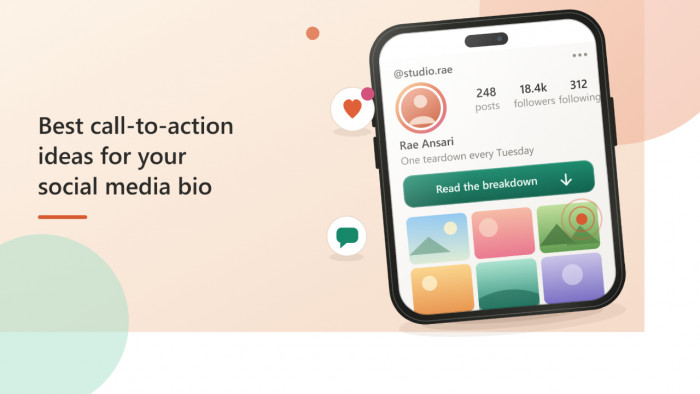
Part 4: Calls to action that move people

Every caption should end with a clear next step. This isn't optional - it's structural. Without a CTA, even a genuinely great caption leaves the reader at a dead end. With one, you direct the energy the caption has built toward a specific action, and you signal to the algorithm that your content produces measurable behaviour.
The most common CTA mistake is being too generic. 'What do you think?' after every post trains your audience not to respond. It's too open, too easy to scroll past. Specific questions with a narrow frame are significantly easier to answer and generate much higher response rates: 'Which of these three approaches do you actually use?' or ‘Yes or no: has this happened to you this week?’
| In 2026, saves and shares carry more algorithmic weight than comments. Posts that drive saving behaviour are rewarded with wider distribution - sometimes dramatically so. |
For saves - use when your content has reference value "Save this for the next time you're staring at a blank caption box." |
For shares - use when the content resonates universally "If you know a creator who needs to read this, send it their way." |
For comments - use to start a conversation "Which platform gives you the most trouble with captions? Drop it below." |
For saves + future action - combines retention with behaviour "Save this and try the second formula on your next post. Come back and tell me what happened." |
One CTA per caption. Two CTAs compete with each other and dilute both. Pick the action that aligns with your current goal - building reach through shares, creating a save-worthy reputation, or growing comment engagement - and ask for that one thing, clearly and specifically.
Part 5: The 5 mistakes quietly killing your reach

Most caption problems aren't dramatic. They're small, habitual choices that compound into consistently flat performance. Here's where engagement dies, and what to do about it.
| Mistake | Why it hurts & what to do instead |
| Opening with 'I' | Every caption that starts with 'I just launched...' or 'I've been thinking about...' begins with the writer, not the reader. Flip it. Start with the idea, the tension, or the problem your audience already has. 'I' can appear - but not in line one. |
| Hashtag stuffing | Rows of hashtags were a discoverability strategy a few years ago. Instagram has explicitly deprioritised hashtag-heavy posts in favour of keyword-rich captions. Three to five relevant hashtags help. Twenty-five look like spam - to the algorithm and to your readers. |
| Caption mirrors image | If your image shows a finished workspace, don't caption it 'my desk.' Caption it with the three habits that made that space possible. The caption should add a dimension the image can't show - the why or the how - not narrate the one it already does. |
| Vague, platitude language | 'Grateful.' 'On a journey.' 'Authentic connection.' These phrases have been written so many times they register as nothing. Specificity is what makes a caption feel real. Not 'I'm grateful' but 'Three months ago I was about to quit. Today I'm not.' The more specific, the more believable. |
| Same caption everywhere | A 250-word LinkedIn post pasted unchanged into Instagram will feel exhausting. A breezy TikTok caption pasted into LinkedIn will feel careless. Platform tone is real and your audience on each platform has absorbed what belongs there. One piece of content, re-written for each platform. Not one caption, copy-pasted. |
Three caption structures worth keeping on your desk
These work consistently across platforms and content types. They're not templates to fill in mechanically - they're structural starting points that you adapt to your own voice.
The Myth-Buster "Most people think [common belief]. Here's what actually works: [your specific insight]." Why it works: Creates immediate credibility by positioning you as someone with contrarian knowledge. Works particularly well for educational content and thought leadership. |
The Before/After Arc "[Time period] ago I was [relatable struggle]. Now [positive outcome]. Here's the one thing that changed: [specific insight]." Why it works: Narrative structure with emotional resonance. The reader identifies with the 'before' and stays for the 'after.' Four to six lines. Any longer and it loses momentum. |
The Numbered Save-Bait "[Number] things about [topic] most people learn too late: [list with short explanations]." Why it works: Saves are driven by perceived future value. A numbered list on a topic someone cares about is the most consistent save-driver across every content category. Odd numbers perform better than even ones - '7 things' feels more authentic than '8 tips.' |
The last honest thing
The frameworks and formulas in this guide will move you further faster. But the real skill that separates consistently strong caption writers from occasional ones can't be found in a checklist. It's built through observation.
The people who write the best captions read constantly. They notice what makes them pause mid-scroll and what makes them keep going. They save opening lines the way some people save quotes. They pay attention to which of their captions drove real action and which ones were technically fine but produced nothing.
Treat every caption as a small experiment. Form a hypothesis - this hook type, this CTA, this length - and test it against your actual audience. Your analytics will tell you more about what works for your specific niche than any guide, including this one. The formulas are starting points. Your audience's behaviour is the real data.
| Write for the person who's mildly tired, slightly distracted, and scrolling at 9pm. If they stop - you've done the job. |