
TRWHO.com Tech doesn’t behave like a typical tech blog; it behaves like a slow, deliberate “explainer room” for people who live with technology but don’t speak it fluently. It sits in an interesting middle ground: more thoughtful than thin affiliate blogs, but not as transparent or deep as heavyweight newsrooms and research outlets.
What TRWHO.com Tech actually is

At first glance, TRWHO.com Tech looks like yet another tech portal promising “emerging tech, hardware, software, security, crypto, and more.” Once you read across its sections, a very different pattern emerges: it is fundamentally an explanation‑first, narrative‑driven tech literacy site.
Instead of chasing news cycles or leaks, the site leans on long, structured explainers that translate AI, hardware choices, cybersecurity, and crypto basics into everyday language. It is built for readers who are tech‑dependent students, managers, small‑business owners but not necessarily tech‑fluent.
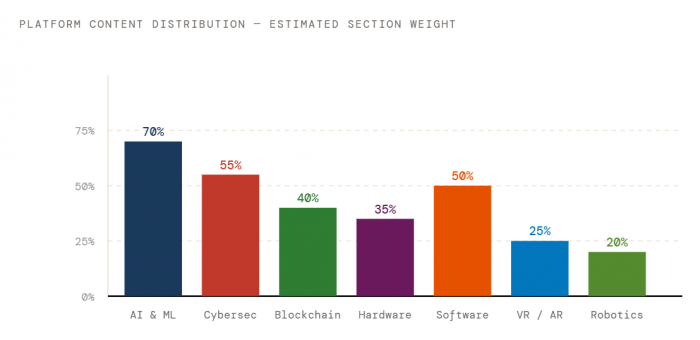
All Eight Pillars, Honestly Assessed
TRWho.com Tech organises its editorial output across eight primary content pillars. Here is how each holds up under scrutiny.
Artificial Intelligence
The platform's strongest pillar. Covers ML fundamentals, generative AI applications, and sector-specific deployments in healthcare and finance.
Cybersecurity & Privacy
Increasingly urgent content. Ranges from zero-trust frameworks to practical personal data hygiene. Depth varies but the intent is real.
Blockchain & Crypto
Covers DeFi, NFTs, smart contracts, and institutional blockchain. Gets interesting when it digs into practical disruption rather than hype.
Hardware
CPUs, GPUs, storage, motherboards plus FPGA-level hardware architecture for advanced readers. Unusual range for a generalist platform.
Software & Cloud
SaaS comparisons, cloud provider breakdowns, and developer frameworks. AWS vs. Google Cloud comparisons are among the more practical outputs.
VR / AR
Covers immersive tech across gaming, education, real estate, and medicine. Thinner editorial depth here the topic deserves more.
Robotics & Automation
Manufacturing, healthcare robotics, and automation economics. A deliberate focus on overlooked breakthroughs that mainstream tech media ignores.
Mobile Apps & Online Services
App reviews, streaming comparisons, e-commerce platforms. The most consumer-facing section and arguably the most crowded space to occupy.
The AI Coverage: Ambitious, But Uneven
AI is TRWho.com's editorial heartland, and it shows. The platform does something most tech blogs don't: it refuses to treat artificial intelligence as a single topic. Machine learning, deep learning, generative models, AI-driven automation, and sector-specific deployments each get their own treatment. That granularity is valuable.
The standout contribution is contextualisation. When covering ChatGPT or its competitors, TRWho doesn't just explain what the tool does, it walks through practical workflows, describes failure modes, and acknowledges trade-offs. That is the difference between a product overview and a user-useful guide.
“Teaching someone what AI is has become trivially easy. Teaching them when not to use it and why is where most platforms still fail.”
Where the AI pillar stumbles is in the middle layer. Absolute beginners are well-served. Advanced practitioners are occasionally addressed. But the intermediate reader, someone running a small business, managing a team, or making purchasing decisions about AI tools often finds content that is too elementary on one page and too abstract on the next. The gap in the middle is the gap that matters most commercially.
What the AI section does well
● Sector-specific AI breakdowns — healthcare diagnostics, financial modelling, manufacturing automation — rather than generic overviews
● Step-by-step guides for tools like ChatGPT, positioned for practical outcomes rather than theoretical understanding
● Forward-looking coverage of AI-blockchain convergence, with the AI/blockchain market projected to reach $703M by 2025 cited in context
● Discussion of adversarial ML and AI system vulnerabilities — security-aware coverage rare in generalist platforms
Cybersecurity: The Platform's Most Timely Bet
Of all TRWho's content pillars, cybersecurity is the one where urgency and readership interest align most powerfully. The platform appears to understand this. Its security coverage goes beyond the usual "use a strong password" advice to engage with genuinely complex terrain: zero-trust architecture, hardware security modules (HSMs), quantum-resistant cryptography, and supply chain vulnerabilities.
The most sophisticated content on the site sits here. An analysis of cybersecurity in the age of emerging technologies, for instance, engages with NIST's AI Risk Management Framework, discusses adversarial ML defences, and traces how compromised firmware in third-party chipmakers can cascade into enterprise-level breaches. That is not beginner content and it shouldn't be presented as such.
| Threat Category | TRWho Coverage Level | Practical Guidance | Verdict |
| Phishing & Social Engineering | Comprehensive | Actionable tips for individuals & SMBs | Strong |
| Ransomware & Malware | Solid | Recovery steps & prevention | Strong |
| Quantum-Era Encryption Risks | Emerging | Conceptual, limited practical depth | Developing |
| IoT & Hardware Vulnerabilities | Good | Supply chain focus is a differentiator | Strong |
| AI-Specific Threats (Adversarial ML) | Moderate | Present but not deeply actionable | Developing |
| Personal Privacy & GDPR | Partial | Thin on regulatory specifics | Weak |
The tension in the cybersecurity pillar is philosophical. TRWho wants to serve both the individual protecting their Instagram account and the IT director managing enterprise infrastructure. These two readers need profoundly different things. The platform handles this by producing content at both extremes but the connective tissue between them is thin. A small business owner trying to build their first security posture has to do significant self-navigation.
Blockchain: Where Hype Meets Honest Analysis
Blockchain coverage is the section most susceptible to cheerleading, and TRWho is not entirely immune. But it performs better than average. The editorial angle disruption of traditional industries, the mechanics of decentralised finance, the practical architecture of smart contracts is more grounded than the typical "crypto to the moon" register found across competing platforms.
The 2025 blockchain trends coverage specifically calls out eleven shifts worth watching, including institutional DeFi, cross-chain interoperability, and the maturation of NFT utility beyond speculation. That is real analysis. Less impressive is the treatment of crypto volatility and regulatory risk topics where a genuinely user-first platform should be more explicit about what readers stand to lose as well as gain.
Critical Lens : The blockchain section has an editorial blind spot: it is better at explaining how decentralised systems work than at explaining why they sometimes fail catastrophically. Smart contract exploits, rug pulls, and protocol governance crises are real, recurring events that affect real users. A platform committed to user-first content should spend as much energy on the failure modes of blockchain as on its transformative potential. The absence of this balance is not dishonesty but it is a form of incompleteness.
A fully credible blockchain section teaches readers to read a token's tokenomics critically, not just to understand what a blockchain is.
Hardware: Surprising Depth, Unexpected Sophistication
The hardware pillar is where TRWho.com Tech surprises most. What begins as a beginner-friendly explainer on CPUs and GPUs extends, in places, into genuinely technical territory: FPGA reconfigurability, signal integrity analysis, heat-pipe cooling architecture, NVMe protocol migration, and firmware optimisation. This is not common on a platform that simultaneously serves people who don't know what a motherboard is.
The modular hardware philosophy is consistently emphasised backward compatibility, plug-and-play architecture, component lifecycle management. These are not fashionable concepts in a culture that celebrates annual device upgrades, which is exactly why they're worth foregrounding. The implicit argument that sustainable computing is also economically rational computing is a defensible and underserved editorial position.
Where hardware coverage could go further
The coverage of semiconductor supply chain dynamics, a topic that fundamentally shapes hardware availability and pricing globally is conspicuous by its absence. The 2020–2024 chip shortage reshaped the technology landscape in ways that directly affect every reader who has tried to buy a GPU or a car. TRWho covers components in depth but misses the geopolitical and industrial context that makes those components significant.
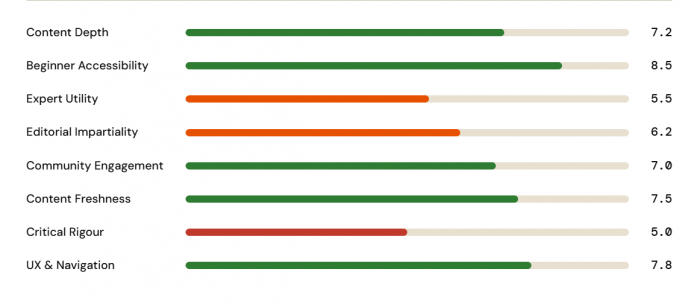
Platform Performance, Rated Honestly
Community & Participation: A Genuine Differentiator
The most strategically interesting thing about TRWho.com tech is not what it publishes, it is how it frames the reader's role. Forums, comment sections, and user-generated content contributions position the platform as a collaborative space rather than a broadcast channel. In practice, this is partially aspirational. But the aspiration itself shapes the content register in productive ways.
Articles consistently invite reaction. The writing addresses the reader directly. Tutorials end with prompts to apply, not just to understand. This posture tutorial-as-dialogue rather than tutorial-as-lecture is pedagogically sound and commercially smart. Engaged readers return. Passive readers don't.
The community angle also creates an interesting quality-control challenge. User-generated content is uneven by definition. TRWho's challenge as it scales is to maintain editorial standards while preserving the participatory culture that gives it energy. That tension doesn't have a clean resolution but it does need to be actively managed.
What Works. What Doesn't. What's Next
| Strengths | Weaknesses |
| Genuinely inclusive editorial register no assumed prior knowledge | Intermediate reader gap content jumps from basic to advanced with limited bridge |
| Security coverage goes beyond basics into real architectural depth | Blockchain coverage underweights failure cases and regulatory risk |
| Hardware section unexpectedly sophisticated, especially on modularity and FPGA | VR/AR section thinner than its importance warrants |
| Consistent content refresh cycle keeps coverage timely | Multi-domain presence (trwho.com, .org, .co.uk) creates brand fragmentation |
| Community-first framing creates reader investment | Platform's own data practices and privacy policies are not prominently explained |
| Multi-pillar breadth with coherent thematic threading | Critical rigour softer than it should be analysis sometimes tips into advocacy |
| SEO-intelligent without sacrificing editorial quality | Semiconductor geopolitics and supply chain context absent |
Where TRWho.com Tech Goes From Here
The trajectory for a platform like TRWho.com Tech is less about content and more about architecture. The next meaningful leap is not publishing more articles about quantum computing, it is building the infrastructure that lets the right article reach the right reader at the right moment.
AI-driven personalisation, the kind the platform already discusses in the context of other industries, is the obvious tool to apply to its own editorial feed. Personalised learning paths, adaptive content difficulty, and certification-backed skill tracks would transform TRWho from a destination you visit into a system you progress through. That is a fundamentally different and more valuable product.
Priority Growth Areas — Based on This Analysis
● Intermediate content layer: Build the bridge between "what is AI" and "how to implement AI in your business" this is the most commercially valuable editorial gap to close
● Interactive tools: Cybersecurity risk calculators, hardware compatibility checkers, and blockchain investment risk frameworks would move TRWho from explanation to utility
● Video and audio formats: The platform's written depth is a strength, but the most underserved readers (time-poor professionals) consume tech content through podcasts and short-form video
● Transparent corrections policy: Tech changes fast and errors happen — a visible corrections culture would strengthen credibility enormously
● Certified learning tracks: An online certification programme in cybersecurity fundamentals or AI literacy, tied to the existing content, would convert readers into long-term students
The Competitive Position
TRWho.com Tech is not competing with Wired or TechCrunch for breaking news and it is right not to. Its competitive frame is the underserved middle market: people with genuine curiosity about technology and limited patience for jargon, who want guidance that respects their intelligence without overwhelming their time. In that frame, the platform has a real and defensible position. The risk is that the position is not yet distinct enough. The site's editorial voice, while warm and clear, is not yet unmistakable. That is the next creative challenge.
“The platforms that will define the next decade of tech education are not the ones that cover the most they are the ones that know precisely who they are teaching, and refuse to forget it.”
How TRWho.com Tech Stacks Up
| Platform Type | Breadth | Beginner-Friendly | Expert Depth | Community | Free Access |
| TRWho.com tech | High | High | Medium | Medium–High | Full |
| Traditional Tech News | Very High | Low | High | Low | Partial |
| Online Learning Platforms | Medium | High | Very High | Medium | Paywalled |
| Tech YouTube / Podcasts | High | High | Variable | High | Full |
The table above makes the opportunity visible. TRWho.com Tech occupies a rare position: genuinely broad, genuinely free, and genuinely accessible. The platform that eventually closes the expert-depth gap while maintaining that accessibility and openness will have built something rare in the technology media landscape.
The Honest Conclusion
TRWho.com Tech is doing something harder than it looks. Building a technology platform that is simultaneously useful to a first-year student, a mid-career professional, and a seasoned developer requires editorial intelligence that most platforms quietly abandon in favour of picking a single audience and serving them well. TRWho hasn't entirely solved this. But it is working the problem more honestly than most.
The platform's core editorial instinct that technology belongs to everyone, and that confusion is a solvable problem is correct and important. The gap between that instinct and its full realisation is the gap that defines TRWho's next chapter. Close it, and the platform becomes genuinely essential. Ignore it, and TRWho risks becoming one of a hundred competent tech sites rather than one of a handful of genuinely indispensable ones.
For now, it earns its place in a reader's regular rotation not as a sole source, but as a reliable first-pass orientation layer in a technology landscape that is too fast, too broad, and too consequential to navigate without maps.