What I learned after months of posting into the void.
Getting likes is easy. A like takes half a second and means almost nothing the next morning.
Getting someone to stop scrolling and type a real reply is a different sport. Getting them to send your post to a friend is harder still.
When I started posting, my content vanished the second it went live. The captions were clear. The photos were fine. Still, nothing moved. The posts that did travel were never my most polished ones. They were the ones that handed people something to do.
That gap pulled me into months of testing, and what follows is the part worth keeping. Below are 50 post ideas built to pull comments and earn shares, sorted into five groups so you can jump to whatever you need and post something today.
A quick promise before we start: every idea comes with an example you can copy and a one-line reason it works. Skip around. Steal freely.
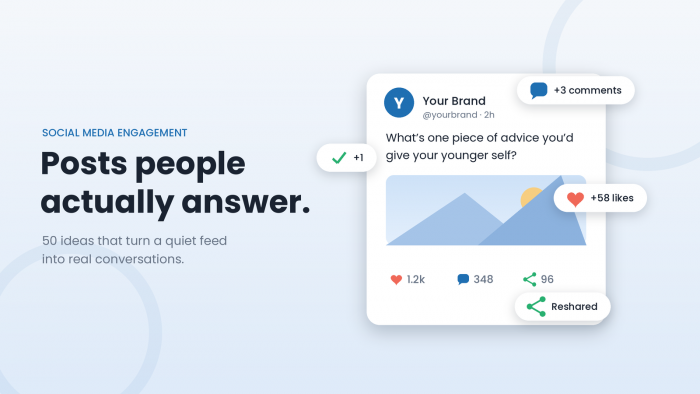
Why Some Posts Start Conversations While Others Sink
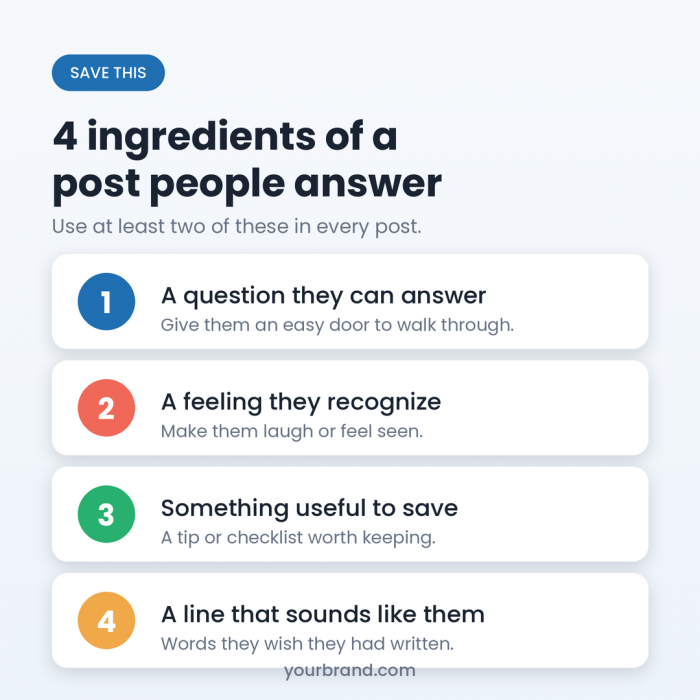
Before the list, here is the pattern I found sitting underneath all 50 ideas. Four ingredients decide whether a post gets answered, and the strongest posts use two or three of them at once.
A question the reader already has an answer to. People scroll past statements. They stop for questions they hold an opinion on, because answering feels like being asked at dinner, not pitched to in an ad.
A feeling they recognize in themselves. Posts that make someone laugh or feel understood get forwarded, because sharing is how people say “this is me” without writing a word.
Something useful enough to save. A tip or a checklist they will want again later. Saved posts send a quiet signal that algorithms read as quality.
A line that sounds like something they would say. When a post puts words to a thought your audience already had, they share it to borrow your phrasing.
Hold those four in mind. Each group below leans on one of them, and I will point back here as we go.
50 Post Ideas, Sorted by What They Do
I split these into five groups. The first asks questions, which maps to that opening ingredient about opinions. The rest build on it from there.
Question-Based Posts
These are the fastest way to earn a reply, because a question is a door someone only has to walk through.
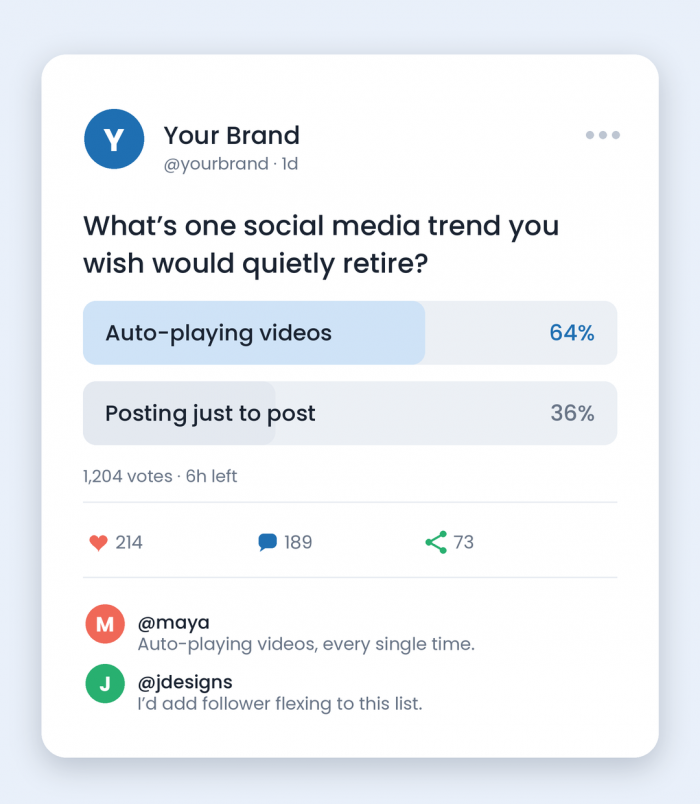
- The Opinion Opener. “What is one social media trend you wish would quietly retire?” People answer because you asked for something they rarely get asked.
- The This-or-That. “Coffee before replies, or replies before coffee?” A two-way choice is the lowest-effort answer there is.
- The Fill-in-the-Blank. “The best advice I ignored for years was ______.” An empty space begs to be finished.
- The Hot Take Check. “Unpopular opinion: meetings should never start before 10am. Fair?” People reply fast when they sense room to disagree.
- The Ranking Prompt. “Rank these worst to best: email, DMs, voice notes, phone calls.” Ranking turns a reply into a small game.
- The Light Confession. “Be honest, how many browser tabs are open right now?” Tiny confessions feel safe to admit in public.
- The Friendly Debate. “Pineapple on pizza: crime, or comfort food?” A low-stakes argument pulls in both camps.
- The Memory Jog. “What was the first thing you ever bought online?” Nostalgia loosens people up.
- The Recommendation Ask. “What is one book you would hand your younger self?” Asking for advice makes people feel useful.
- The Two-Word Reply. “Describe your week in two words.” A strict limit makes answering effortless.
Storytelling Posts
Questions earn quick replies. Stories earn the second ingredient from earlier: feeling. A good story makes a stranger see themselves, and that is what they comment about.
- The Expensive Lesson. Open with “This one mistake cost me a client,” then tell what you learned. Close by asking which lesson shaped them.
- The Before and After. Show where you started beside where you are now. Visible progress invites people to share their own.
- The Behind the Scenes. “What the photo shows, versus what was actually happening.” Honest contrast earns trust.
- The Origin Story. Why you started doing this in the first place. Purpose is contagious.
- The Failure Post. A plan that fell apart, and the one thing you kept from the wreckage. Showing the scar earns replies.
- The Quiet Win. A small victory most people would scroll past. Relatable joy spreads.
- The Turning Point. The exact moment something shifted for you. Readers go looking for their own.
- The Ordinary Day. A plain account of a normal workday. Familiar beats impressive.
- The Stranger’s Advice. A line from someone you barely knew that stuck with you. Surprise makes it memorable.
- The Beginner Letter. The thing you wish someone had told you on day one. Generosity reads as warmth.
Educational Posts
This group taps the third ingredient: usefulness. People save these, and saving is the engagement most folks forget to chase. As I noted up top, a saved post quietly tells the platform your content was worth keeping.
- The Quick Tip List. “5 things beginners get wrong about captions.” Skimmable and worth a bookmark.
- The Mistake Breakdown. “7 reasons good posts get ignored.” Leading with the problem pulls people in.
- The Pre-Publish Checklist. “Run through these before you hit post.” A checklist feels like a tool, so people keep it.
- The Myth Buster. “No, you do not need to post daily. Here is why.” Correcting a common belief sparks debate.
- The Short How-To. A tiny tutorial someone can act on within the hour. Usefulness gets bookmarked.
- The Head-to-Head. “Reels or carousels: which earns more saves?” Comparisons settle running arguments.
- The Plain-English Glossary. Confusing terms explained in everyday words. Clarity gets passed to beginners.
- The Honest Tool List. A short rundown of tools you actually open every week. Real recommendations travel.
- The Number With a Point. One surprising stat, plus what it means for the reader. Numbers feel like proof.
- The One-Image Cheat Sheet. A whole topic packed into a single graphic. Density makes it save-worthy.
Fun and Interactive Posts
Not every post needs a lesson. This group exists to be played with, and play lowers the cost of joining in.
- The Quick Poll. “Which logo reads cleaner, A or B?” Voting costs a single tap.
- The Guessing Game. “Guess what this used to be.” Curiosity holds the scroll.
- The Caption Contest. “Best caption for this photo wins eternal bragging rights.” Humor invites entries.
- The Spot the Difference. Two near-identical images with one small change. Puzzles hold attention longer than facts.
- The Would You Rather. “A beach office with bad wifi, or a city office with great coffee?” Tradeoffs are fun to argue.
- The Emoji Story. “Tell me about your Monday using only emojis.” A playful limit feels low-pressure.
- The Niche Bingo. A bingo grid full of things only your audience would recognize. Recognition spreads fast.
- The Rate This. “Rate this setup, 1 to 10.” A number is the easiest reply to give.
- The Unfinished Story. You write the first line, readers write the next. Building it together feels like a game.
- The Throwback. “Show me your first profile picture.” Shared nostalgia builds a little community.
Share-Worthy Posts (Ideas 41–50)
Here is where I have to correct the most common advice you will read, so stay with me. Most lists tell you to write “tag a friend” or “share if you agree.” I would skip that, and I explain why in the mistakes section further down. Real shares come from the fourth ingredient: a post that says something your reader wanted to say, so they pass it on as their own voice.
- The Said-It-For-Me. A single sentence your audience wishes they had written. People share what speaks for them.
- The Relatable Truth. “Things only small business owners understand.” Recognition gets forwarded without a prompt.
- The Kind Reminder. A line meant for whoever is having a rough week. Kindness gets passed along.
- The Inside Joke. Humor only your corner of the internet would get. Belonging spreads it.
- The Stake in the Ground. A clear opinion people want to co-sign. Conviction invites sharing.
- The Keeper Visual. A chart or guide worth saving for later. Practical value travels far.
- The Permission Slip. “You are allowed to rest.” Reassurance lands and gets reshared.
- The Mini Manifesto. What you stand for, in four short lines. Values attract the right people.
- The Wait-What Fact. A fact surprising enough to make someone stop and reread. Surprise drives forwards.
- The Shared Milestone. A win framed so your audience feels part of it. Pride spreads when people feel included.
Caption Templates You Can Copy Tonight
Ideas get you started. Templates get you unstuck on the nights nothing comes. Fill in the blanks and post.
Template 1, the turnaround:
I used to think ______.
Then ______ happened.
What flipped your thinking on something?
Template 2, the honesty hook:
Be honest: ______?
Template 3, the overlooked truth:
Nobody warns you about ______, and it costs more than people expect.
Each one leans on a question or a confession, the same levers from the question group earlier. Swap the topic to fit your niche and you have a week of posts ready to go.
How to Earn More Comments
A great idea still falls flat with a weak ending. Three habits fixed that for me.
End on a question, not a summary. Closing with “here are 5 tips” gives people nothing to do. Closing with “which of these would you try first?” hands them the reply.
Write like one person to one person. Use “you.” Tell your own story. When a reader feels addressed instead of broadcast at, answering feels natural.
Reply within the first hour. Early replies pull more replies, because people see a real conversation already happening and want in. The first ten minutes after posting do more work than the next ten hours.
How to Make Content People Actually Share
Comments live on your post. Shares carry it to rooms you will never see, which is how new followers find you. Two qualities make that jump more likely.
Make it useful enough to keep. A guide or a template someone wants on hand. People forward things that solve a problem for someone they know.
Make it feel like them. Funny, or quietly encouraging. When a post matches a reader’s mood, sharing it becomes a way to express that mood.
One more lever sits underneath both: make it easy to grab. Short sentences and a clean visual. A first line strong enough to earn the second. The harder a post is to read, the less it moves.
Mistakes That Quietly Kill Engagement
I promised earlier I would explain the “tag a friend” problem, so here it is, along with the other traps that cost me reach.
Posting only promotions. Nobody forwards an advertisement to a friend. Sell sometimes, sure, but a feed that only sells gives people no reason to stick around.
Begging for engagement. This is the big one, and it runs against advice you will see everywhere. Posts that openly beg (“tag a friend,” “comment YES below”) get pushed down by most platforms, which treat that language as engagement bait and limit who sees it. The irony writes itself: the posts trying hardest to be shared often reach the fewest people. Ask a real question instead, or write something worth passing on, and let the sharing happen on its own.
Opening with a weak line. Your first sentence decides whether anyone reads the second. “Here is my new blog post” loses. “I almost deleted this account last year” earns a pause.
Giving no reason to reply. A post can be interesting and still leave people with nothing to add. Before you publish, ask what the reader is supposed to do next. If you cannot answer, the post is not finished.
The Bottom Line
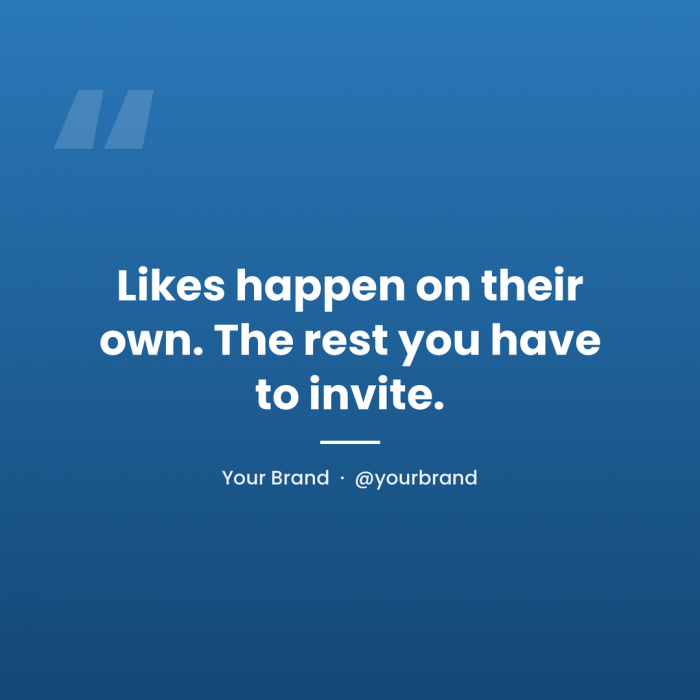
Strip away the 50 ideas and one rule is left: people answer posts that hand them something to do, and they share posts that say what they already wanted to say. Likes happen on their own. The rest you have to invite.
So pick one. Not all 50, just one that fits a thought you already wanted to share this week. Post it, then watch which kind of idea your audience actually answers, because that single signal will teach you more than any guide can, including this one.
Which idea are you trying first?