A vertical video can fit Reels, TikTok and YouTube Shorts without fitting the way people use any of them. That is the weakness in most cross-platform plans. The file is reused, but the idea, pacing and viewer journey are never reconsidered.
A better strategy starts with one strong subject and gives each platform a specific job. Reels can deepen an Instagram presence, TikTok can test creative angles quickly, and Shorts can connect a concise answer to a broader YouTube channel. The goal is not to produce three unrelated videos. It is to make one idea feel native in three viewing environments.
Start With the Outcome
The first decision is not which platform to open. It is what the video needs to achieve. Short-form video usually serves one of four functions: introducing an account to new viewers, strengthening familiarity with existing followers, answering a specific question or moving attention towards another destination. That destination might be a profile, product page, newsletter, playlist or long-form video.
The three platforms can support all four functions, but they do not support them in the same way. Instagram surrounds a Reel with profiles, Stories, posts, Highlights and direct messages. TikTok is built around rapid interest-led discovery and repeated creative variation. YouTube places Shorts beside search, subscriptions, playlists and longer videos.
Without a defined outcome, total views become the default score. Views can show distribution, but they do not reveal whether the right people watched or took the next step. The useful question is not, “Which app gives the most views?” It is, “What should a viewer understand or do after this video ends?”
Three Different Systems
Reels, TikTok and Shorts share a vertical, swipe-led format. Beyond that similarity, each platform places the video inside a different content system.
Instagram describes Reels as short videos people can create, share and use to connect with their community. TikTok’s official creative guidance puts greater emphasis on native production, vertical framing, sound and continuous testing. YouTube supports Shorts up to three minutes and reports traffic from the Shorts feed, search, channel pages and other discovery surfaces.
| Strategic factor | Instagram Reels | TikTok | YouTube Shorts |
| Primary strength | Builds discovery around an existing Instagram identity and community. | Tests topics, personalities and creative angles through fast recommendation-led feedback. | Builds a searchable video library connected to subscriptions and long-form content. |
| Viewer context | Viewers can inspect posts, Stories, Highlights, products and social proof on the same profile. | Viewers often meet the video before developing any familiarity with the account. | Viewers may arrive from the Shorts feed, search, a channel page or another video. |
| Content advantage | Visual identity, community interaction and profile-based conversion. | Native storytelling, trends, comments and creative iteration. | Evergreen questions, compact explanations and movement into deeper content. |
| Common weakness | Attractive videos may earn passive engagement without giving viewers a reason to follow. | Trend-led reach may attract people with little interest in the creator’s usual subject. | Disconnected clips may gain views without strengthening the wider channel. |
| Strongest fit | Personal brands, lifestyle businesses, visual products and community-led accounts. | Entertainers, opinion-led creators, consumer brands and frequent testers. | Educators, reviewers, experts and creators with a larger content library. |
These are strategic tendencies, not fixed rules. A tutorial can work on TikTok, comedy can grow through Shorts, and an educational account can build a serious audience through Reels. The difference lies in how the idea is packaged and what surrounds it after discovery.
Reels Builds Social Context
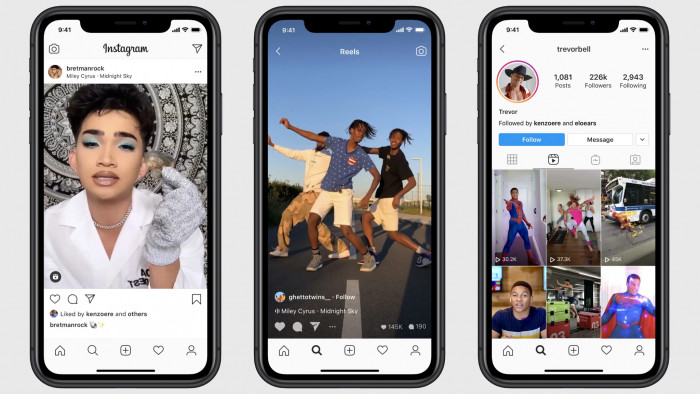
A Reel rarely operates alone. An interested viewer can move to the creator’s grid, Story, bio, Highlights, tagged posts or direct messages within seconds. Reels is therefore especially useful when the wider Instagram profile helps complete the story.
Consider a small skincare brand. A Viral Reel might show the difference between applying too much and the correct amount of a product. The caption can explain skin type or usage frequency, a pinned comment can answer a common objection, and a Story can continue the subject through a poll. The Reel creates attention, while the rest of Instagram supports evaluation.
Visual consistency helps because Reels also contributes to the account’s overall presentation. Consistent framing, readable text and recognisable series design can make an account easier to remember. Yet visual polish is not a substitute for a useful point. A beautiful sequence that communicates nothing specific gives viewers little reason to save, share or follow.
Instagram allows Reels to be recorded and edited up to three minutes, although its help guidance says Reels longer than three minutes will not be recommended to new audiences. Professional accounts can review Reel insights and retention information rather than relying on visible likes alone.
A practical Reels structure is:
● Open with a visible problem, contrast or result that can be understood before the caption is read.
● Use the middle to deliver one complete idea rather than compressing several unrelated tips.
● End with an action that fits Instagram, such as saving the explanation, checking a related carousel or viewing a Story demonstration.
● Use the caption to add context, examples or limitations instead of repeating the spoken script.
Instagram’s Trial Reels feature also lets eligible creators show experimental content to non-followers first, making it useful for testing a new topic or storytelling format.
TikTok Tests Ideas Faster
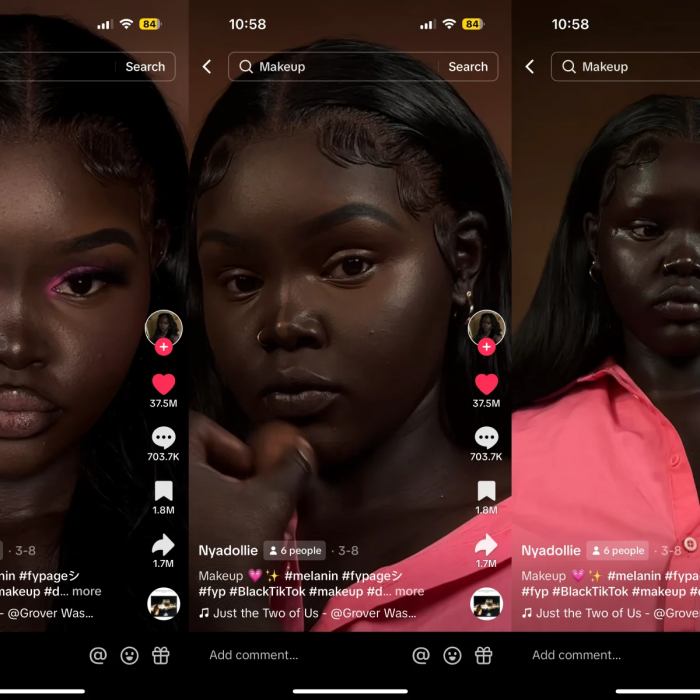
TikTok rewards an iterative production mindset. Rather than treating every upload as a finished campaign asset, creators can use videos as variations in an ongoing audience conversation.
A financial educator explaining an avoidable bank fee could begin with a warning, a personal story, a screen recording, a response to a comment or a challenge to common advice. The information remains similar, but each opening tests a different reason to keep watching.
TikTok recommends vertical 9:16 production, sound, content placed within the interface safe zone and a style that does not feel overly polished. Its guidance also advises presenting the proposition early and continually testing creative variations. Although much of this material is written for advertisers, the production logic also reflects TikTok’s native viewing environment.
Native production does not mean poor production. Audio still needs to be clear, demonstrations need to be readable, and editing should serve the idea. The difference is that the result feels direct and socially aware rather than like a television advert resized for a phone.
TikTok also has a substantial search role. Creator Search Insights gives creators in supported regions information about subjects people are searching for and can reveal content gaps where demand exists but useful videos remain limited.
The platform is particularly useful for:
● Testing different hooks for the same subject to learn whether viewers respond to urgency, curiosity, proof or personality.
● Creating follow-up videos from genuine comments, objections and requests instead of manufacturing an unsupported “part two.”
● Presenting one idea as a demonstration, reaction, personal story, comparison or direct answer.
● Joining trends only where the format still connects naturally to the creator’s established topic.
The main danger is confusing reach with audience fit. A trend can deliver a large audience that has no interest in the account’s next five videos. TikTok works best as a creative laboratory: identify whether the winning element was the topic, opening, visual proof or tone, then build a fresh version around that insight.
Shorts Builds Channel Value
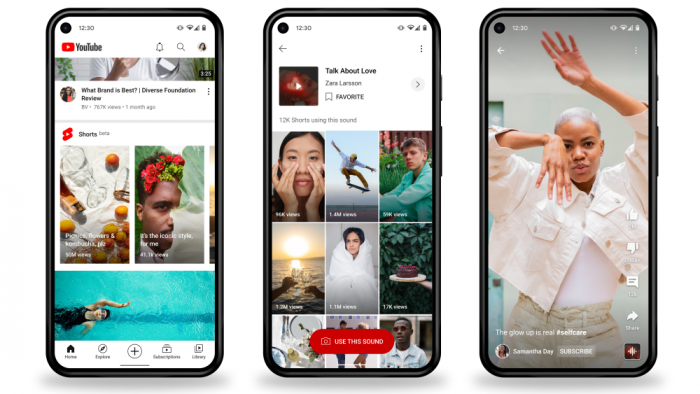
YouTube Shorts becomes more useful when it is planned as part of a channel rather than as a shelf of vertical leftovers.
A Short can answer a narrow question, introduce a larger topic, revive an older subject or extract one self-contained lesson from a long video. Its strategic advantage is not merely the Shorts feed. The viewer remains inside a platform built around search, subscriptions, related videos, playlists and longer viewing sessions.
YouTube currently classifies eligible square or vertical videos of up to three minutes as Shorts. The longer limit creates room for compact demonstrations, but extra time should be used only when the subject needs it. A forty-second answer should not be extended to two minutes simply because the format permits it.
Suppose a software reviewer publishes a ten-minute project-management tutorial. A connected Short could answer, “How do you create a recurring task in this app?” It works independently, demonstrates one result and gives interested viewers a route into the fuller tutorial.
A random extract is less reliable. A clip cut from the middle of a long video may contain pronouns without context, references to an earlier step or an ending without a payoff. A proper Short needs its own opening, self-contained explanation and clear conclusion.
YouTube’s Shorts analytics guidance highlights watch time and audience retention. Creators can also review whether viewers found a Short through the feed, search or channel pages.
Shorts is strongest when every upload reinforces what the channel is known for. It does not need to promote a long video every time, but it should contribute to a recognisable subject library.
One Idea, Three Cuts
An efficient cross-platform workflow begins before filming. Instead of creating a finished TikTok and repairing it for other apps, produce a clean master around a platform-neutral idea.
Suppose a career coach wants to explain why applicants should stop opening interview answers with long background information. The core idea is simple: lead with the relevant result, then supply context.
First, write the idea in one sentence. If it cannot be stated clearly, the video is probably carrying too much. Next, define the payoff. Here, the viewer should leave with a practical answer structure.
During recording, the coach captures the core explanation and several openings:
1. “Your interview answer may be losing attention before you reach the useful part.”
2. “Here is a stronger way to answer, ‘Tell me about yourself.’”
3. “A recruiter does not need your full career history in the first thirty seconds.”
These are not three complete scripts. They are entry points that can be matched to different viewing contexts.
| Video element | Reels version | TikTok version | Shorts version |
| Opening | Show a weak answer beside a stronger answer so the contrast is immediately visible. | Begin as if interrupting a common mistake, using the most conversational hook. | State the exact interview question and promise a usable answer structure. |
| Middle | Keep the explanation visually clean and reinforce it with concise on-screen wording. | Use quicker cuts, natural emphasis and a response-like tone. | Deliver a complete explanation that remains useful outside a trend. |
| Ending | Invite viewers to save the structure or visit a related carousel. | Ask which interview question should be handled next or answer a likely objection. | Connect the subject to a related playlist or longer guide where relevant. |
| Caption or title | Add supporting detail and connect the Reel to the wider profile. | Use natural audience language without stuffing unrelated hashtags. | Use a precise title naming the question, audience and result. |
| Audio | Use clear speech or suitable audio without overpowering the instruction. | Treat voice, music and effects as part of the pacing. | Prioritise clarity and check music rights, especially beyond one minute. |
YouTube warns that Shorts longer than one minute with an active Content ID claim can be blocked, regardless of the claim policy. A clean master and careful audio selection therefore protect both flexibility and distribution.
Export without platform watermarks. Add native audio, stickers or interactive elements after the core edit is complete. This avoids making one version look like a secondary repost from a competing app.
Adapt the Whole Experience
Changing the first sentence is helpful, but the entire viewing experience needs a light platform-specific pass.
Pacing should match both the idea and the viewer context. TikTok often supports a more reactive rhythm. A searchable YouTube explanation may need slightly more space for comprehension. Reels may benefit from cleaner sequencing because the video also contributes to the profile’s visual presentation.
Text placement requires practical attention. Interface controls occupy parts of the screen, so essential words should not sit against the far-right edge or too close to the bottom. TikTok recommends keeping important content within its safe zone. Instagram supports several Reel aspect ratios, but full-screen 9:16 remains the simplest format for a shared vertical master.
Platform references also need adjustment. “Replying to this comment” becomes confusing when the original comment is missing. The same problem applies to platform-specific trends, sounds and interface instructions.
Calls to action should lead somewhere real. “Follow for more” gives no explanation of future value. “Follow for weekly home-studio lighting tests” is clearer. On Shorts, a related video may be the best next step. On Reels, saving a checklist or opening a related carousel may fit better. On TikTok, a comment-led follow-up can continue the discussion.
Full adaptation is not necessary for every post. A major campaign may justify three distinct edits. A lower-priority tutorial may need only a revised opening, adjusted text, a different ending and platform-specific metadata.
Measure the Assigned Job
Raw views are easy to compare and easy to misread. A smaller video may create more profile visits, qualified followers, saves or long-form viewing than a broadly distributed clip.
| Strategic objective | Metrics worth reviewing |
| Reach new viewers | Review non-follower reach, unique viewers and traffic from recommendations or search. |
| Hold attention | Compare average watch duration, retention, completion behaviour and major drop-off points. |
| Build useful engagement | Look beyond likes to saves, shares, detailed comments and repeat viewers. |
| Grow the audience | Track followers or subscribers gained, profile visits and later viewing behaviour. |
| Create deeper action | Measure relevant clicks, enquiries, playlist activity or movement into longer videos. |
| Improve creative decisions | Compare hooks, topics, formats and lengths across groups of similar videos. |
Instagram provides Reel-level insights. TikTok’s Video Insights guidance recommends testing new hooks, expanding strong subjects and using peaks or dips to identify moments worth repeating or removing. YouTube advises creators to review watch time, retention and what made a strong Short different from previous uploads.
Review content in batches. Five related videos reveal more than one unexpected hit. Grouping uploads by topic, opening style and objective helps separate a repeatable pattern from random distribution.
A useful monthly review should answer four questions: Which subjects attracted the right viewers? Which openings held attention? Which platform produced the most valuable next action? Which successful element can be developed without copying the previous video?
Where Strategies Break
Cross-platform plans usually fail because production convenience becomes more important than viewer experience.
● The same export is uploaded everywhere, including a watermark, platform-specific reference and ending that makes no sense outside the original app.
● Trends are copied without checking whether the attracted audience matches the account’s normal subjects or commercial goals.
● Reels are polished carefully but provide no useful point, memorable opinion or reason to explore the profile.
● TikTok uploads are treated as isolated attempts at virality instead of tests that should guide the next version.
● Shorts are filled with fragments that lack context, searchable focus or a connection to the channel’s core promise.
● Performance is judged by views while retention, profile activity, audience quality and downstream behaviour are ignored.
Another mistake is maintaining three unrelated content calendars. That multiplies planning work and makes it harder to identify ideas worth repeating. A shared idea library is more efficient. Each subject can be assigned to one, two or three platforms according to its strategic fit.
A 30-Day Workflow
A workable system should reduce production pressure while creating enough variation to learn from performance.
During the first week, collect audience questions, search themes, comments, customer objections and topics that already perform well. Select four core ideas with distinct purposes. One might target discovery, another might solve a recurring problem, while the remaining ideas could build authority or support a product.
During the second week, script the essential payoff for each idea and record clean master footage. Capture two or three openings, one complete explanation and alternative endings. Record demonstrations and supporting shots separately so they can be rearranged without filming the whole video again.
The third week is for adaptation and publishing. Create the strongest primary version first, then build other edits from the clean project. Do not assume every idea belongs everywhere. A conversational trend response may remain on TikTok, while a precise evergreen answer may deserve more attention on Shorts.
During the fourth week, compare performance by role. Review retention, audience actions and the quality of comments. Choose one strong subject for expansion and one weak subject for a different presentation. A failed opening does not always mean the topic is weak, just as a high-view trend does not always deserve repetition.
The output of the month should be more than a pile of posts. It should be a clearer picture of which ideas, openings and viewer journeys work on each platform.
Final Verdict
Reels, TikTok and YouTube Shorts should not be treated as interchangeable upload destinations.
Reels is strongest when short video needs to reinforce an Instagram identity, community or profile-based journey. TikTok is particularly useful for testing ideas, participating in audience conversations and discovering which presentation earns attention. YouTube Shorts has the clearest advantage when a concise video should support search, subscriptions and a deeper channel library.
The efficient approach is not to film three unrelated videos. Build one useful core idea, record flexible source material and adapt the opening, pacing, context and next step for each platform. Cross-posting saves time. Strategic adaptation makes that saved time worthwhile.