Most people think hashtags stopped working because their reach dropped. That is not what actually happened. What changed is how platforms interpret hashtags.
Today, hashtags are no longer growth hacks. They are classification signals. Their job is to tell the algorithm what your content is about, who should see it, and where it should be placed. If that signal is weak or confusing, your post never reaches the right audience.
That is why some posts still perform extremely well with hashtags, while others get ignored even with 20 tags. The difference is not effort. It is structure, intent, and consistency.
What Hashtags Actually Do in 2026
Before jumping into strategy, it is important to understand what hashtags really do today and why they still matter.
Hashtags help platforms in three core ways:
● Categorize your content
● Connect it to relevant search queries
● Place it inside topic-based feeds
They do not guarantee reach on their own. They enable discoverability, but actual reach comes from engagement signals like likes, saves, and shares. This is why irrelevant hashtags can reduce performance instead of improving it.
Modern algorithms evaluate hashtags based on context, not just keywords. This means your caption, content, and hashtags must align properly for the system to understand your post correctly.
The Biggest Shift: Hashtags Are Now a System, Not a List
Earlier, creators used static hashtag sets and pasted them under every post. That approach fails today because platforms detect repetition and low relevance.
Instead, high-performing creators use structured hashtag systems, which include:
● Rotating hashtag sets
● Campaign-based tagging
● Content-specific combinations
This shift matters because consistent structure improves how algorithms understand your content over time.
| Factor | Old Approach | 2026 Reality |
| Hashtag count | 20–30 hashtags | 6–12 hashtags |
| Strategy | Copy-paste lists | Post-specific selection |
| Focus | Popular tags | Relevant + niche tags |
| Result | Random reach spikes | Consistent targeted reach |
The Complete Hashtag Framework (What Actually Works)
A strong hashtag strategy is not one trick. It is a combination of multiple layers working together to improve both reach and relevance.
1. Core Content Hashtags (Your Foundation)
These are hashtags directly tied to your niche and content category. They help platforms consistently understand what your account is about over time.
For example, if you post about social media growth, your core hashtags should always reflect that niche. These tags should remain relatively stable across your content, even when your topics vary slightly.
This builds long-term relevance and helps your account get categorized correctly. Over time, it increases the chances of your content being shown to the right audience consistently.
2. Post-Specific Hashtags (Context Layer)
These hashtags change with every post and describe what the content is about in that specific moment. They are essential for making your content discoverable for precise topics.
For example, a post about Instagram captions will use different hashtags than a post about content calendars, even if both belong to the same niche. This ensures your content appears in the right searches.
This layer improves accuracy. Instead of targeting broad audiences, you are targeting people actively searching for that exact type of content.
3. Discovery Hashtags (Reach Layer)
These hashtags are broader and help your content enter larger conversations where visibility is higher. They are useful for exposure but come with strong competition.
They bring visibility, but relying too much on them can dilute your targeting. If your content gets lost among thousands of posts, the reach becomes ineffective.
A mix of broad and niche hashtags is recommended to balance reach and relevance. This ensures your content gets visibility without losing connection to the right audience.
4. Branded Hashtags (Ownership Layer)
This is one of the most ignored strategies, but it is extremely powerful when used consistently over time.
A branded hashtag is unique to your business or content identity. It helps you:
● Build recognition
● Collect user-generated content
● Create a searchable content archive
Brands that consistently push branded hashtags often build stronger communities. Over time, this becomes a long-term asset rather than just a hashtag.
5. Event and Campaign Hashtags (Short-Term Boost)
These hashtags are tied to specific campaigns, launches, or trends. They are not permanent but play an important role in short-term growth.
For example:
● Product launches
● Content series
● Seasonal campaigns
They create temporary spikes in engagement and help you track campaign performance easily. They are especially useful when you want to measure how a specific campaign performs.
The Hashtag Mix That Works in Practice
Instead of guessing, use a structured distribution that balances all layers of your strategy.
| Hashtag Type | Role | Recommended Count |
| Core (Niche) | Account identity | 2–3 |
| Post-Specific | Content context | 3–4 |
| Discovery | Reach expansion | 2–3 |
| Branded/Campaign | Community + tracking | 1–2 |
This keeps your total hashtags between 7 and 12, which aligns with current platform behavior and avoids spam signals.
Advanced Strategy: Build Hashtag Libraries (Most People Skip This)
One of the most useful strategies is building hashtag libraries. Instead of creating hashtags from scratch every time, you create pre-defined sets based on content type, audience, and campaign goals.
For example, you can create separate sets for:
● Educational posts
● Promotional posts
● Community posts
You then rotate these sets instead of repeating the same hashtags every time. This improves consistency while avoiding repetition, which platforms often penalize.
Over time, this system becomes faster and more effective because you are not starting from zero for every post.
Hashtag Placement Strategy (Small Detail, Big Impact)
Most people ignore where hashtags are placed, but placement does influence readability and sometimes discoverability.
You can:
● Place hashtags in captions
● Add them in the first comment
● Use them in stories and bios
All of these improve discoverability in different ways. For example, adding hashtags in stories or your bio can expand your visibility beyond just posts.
The key is clarity. Do not hide hashtags randomly or make them look spammy. Keep them structured and easy to read.
Automation: When It Helps and When It Hurts
Automation tools can speed up hashtag generation, especially when managing multiple posts or campaigns. However, they should not replace strategic thinking.
Automation helps in:
● Generating initial hashtag ideas
● Maintaining consistency
● Managing multiple campaigns
However, blindly using automated hashtags often leads to irrelevant tagging. This reduces performance instead of improving it. The best approach is semi-automation, where tools assist but you refine manually.
Tools That Actually Help You Execute This Strategy
1. Technylo Hashtag Generator
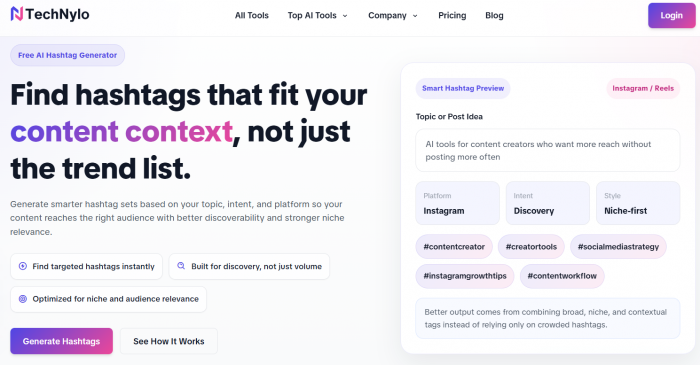
Technylo works more like a content workflow tool with hashtag support rather than just a basic generator. Instead of giving random hashtags, it structures them around your content idea, making it easier to build repeatable systems. It’s especially useful for creating multiple posts around a theme.
Its strength is consistency, helping you build hashtag sets aligned with your content categories. However, it’s not fully automated, so you still need to refine the output.
2. Flick

Flick is designed for creators who want to move beyond guesswork and understand which hashtags actually work. It provides data like competition, reach, and ranking difficulty, helping you avoid overcrowded tags and find ones where you can realistically grow.
It also tracks hashtag performance over time, allowing you to improve your strategy. The main drawback is cost, making it more suitable for serious creators and businesses.
3. Hashtagify
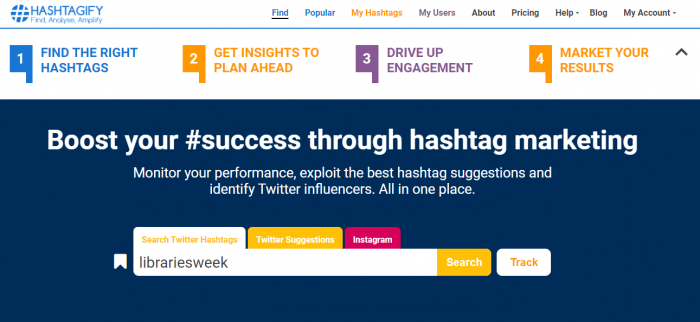
Hashtagify focuses on understanding hashtag ecosystems rather than just generating suggestions. It shows trends, connections, and how popularity changes over time, helping you build stronger hashtag combinations instead of isolated tags.
This is especially useful for trend-based content. However, it’s less beginner-friendly and requires some interpretation.
4. RiteTag
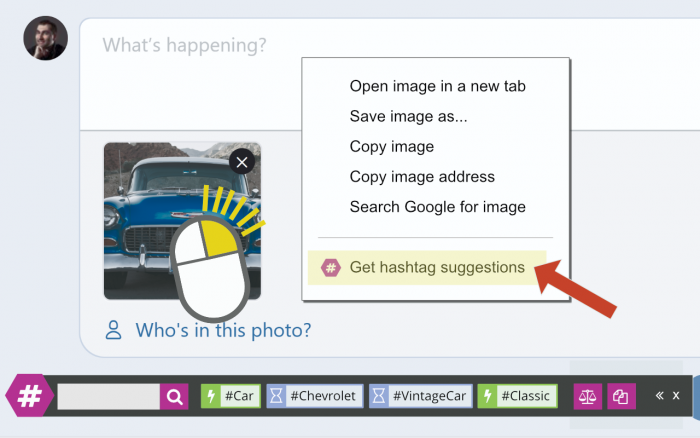
RiteTag is built for speed and convenience, offering instant hashtag suggestions while you create content. It also indicates whether a hashtag will perform immediately or over time, which is useful for fast-paced platforms. However, it focuses more on quick execution and lacks deeper strategy or tracking features.
5. Native Platform Search
Native search on platforms like Instagram, LinkedIn, and TikTok is often underrated but highly reliable. It shows related hashtags, post volume, and top-performing content based on real user behavior.
While it requires manual effort, it provides more accurate and practical insights than most automated tools.
Critical Mistakes That Kill Hashtag Reach
There are a few mistakes that consistently reduce reach, and most creators repeat them without realizing it.
Using banned or spammy hashtags is one of the biggest issues. These hashtags can reduce visibility or even trigger restrictions on your content.
Another mistake is overloading hashtags. Too many irrelevant tags make content look low quality and reduce engagement signals.
The biggest mistake, however, is lack of tracking. If you are not analyzing performance, you are repeating the same mistakes without improvement.
How to Track and Improve Hashtag Performance
Hashtag strategy only improves when you track results consistently over time.
You should monitor:
● Reach from hashtags
● Engagement per post
● Which hashtags appear in high-performing posts
Over time, patterns become clear. Some hashtags consistently work, while others contribute nothing to your growth.
Regular analysis is essential because hashtag performance changes over time. What works today may not work a few months later.
Platform-Specific Strategy (Quick but Important)
Each platform behaves differently, so your strategy must adapt instead of staying the same everywhere.
| Platform | Ideal Hashtags | Key Focus |
| 7–10 | Niche + intent | |
| 3–5 | Professional relevance | |
| X | 1–2 | Trends and timing |
| TikTok | 3–5 | Trends + content keywords |
Using the same strategy everywhere reduces effectiveness and limits reach.
What Actually Drives Reach (Beyond Hashtags)
One thing becomes very clear when you apply all of this consistently. Hashtags do not create reach on their own.
They help your content reach the right audience faster, but real growth still depends on:
● Content quality
● Engagement signals
● Watch time and interaction
Hashtags amplify good content. They cannot fix weak content.
Final Thoughts
The biggest mistake people make is treating hashtags as shortcuts. In 2026, they are part of a system, not a trick.
If you build structured hashtag sets, use intent-based tagging, track performance, and adapt over time, hashtags become predictable instead of random.
The goal is not to go viral once. The goal is to build a system where every post has a higher chance of reaching the right audience.