AI has quietly become the backbone of modern influencer marketing, helping brands move from guesswork to data‑driven, scalable campaigns. Instead of scrolling through endless profiles and spreadsheets, you can now use specialized AI platforms to discover creators, vet their audiences, automate outreach, and prove ROI with real numbers.
Below are eight of the best AI tools for influencer marketing right now, covering discovery, authenticity checks, campaign automation, and content creation.
1. Upfluence : AI Co‑Pilot for E‑commerce Brands
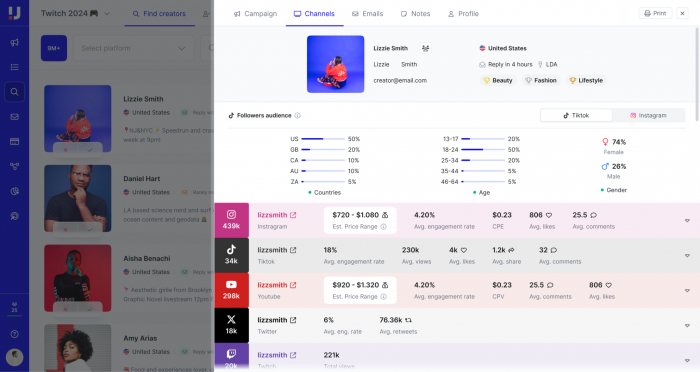
Upfluence is a mature influencer marketing platform built with e‑commerce and performance in mind. It combines creator discovery, audience analytics, and campaign management, and now layers an AI co‑pilot (“Jaice”) on top to make matching and workflows faster.
Upfluence’s AI analyzes creator profiles, audience demographics, engagement quality, and historical performance to recommend the best fits for your brief. It can also surface lookalike creators based on your past winning collaborations, which is a big win when you want to scale what already works.
Why it’s useful for influencer marketing: you get a single system where you can find creators, manage negotiations, track posts, and attribute revenue back to campaigns on Shopify and other e‑commerce stacks. For brands running influencer whitelisting or affiliate programs, the AI‑assisted matching plus sales attribution makes it much easier to justify spend to stakeholders.
2. Modash : Deep Discovery and Lookalike Search
Modash focuses on one thing and does it extremely well: influencer discovery and audience vetting at scale. It indexes millions of creators on Instagram, TikTok, and YouTube, then uses AI to parse their content, audience profiles, and engagement patterns.
The platform’s AI search lets you go beyond basic filters and find creators by topics, aesthetics, interests, or even “lookalikes” of your top performers. It also flags suspicious followers and low‑quality engagement so you avoid wasting budget on inflated accounts.
This is especially useful if you run multi‑market campaigns or niche verticals where manual searching would take weeks. A typical workflow: import a list of your best creators, use lookalike search to find 50–100 similar profiles, then export them into your outreach stack.
3. Favikon : Authenticity and Brand Fit Scoring
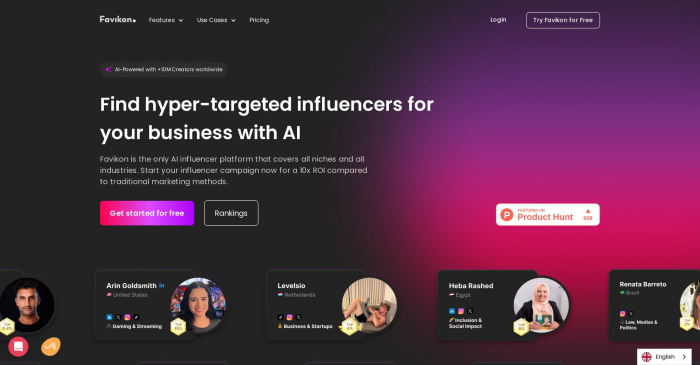
Favikon is an all‑in‑one influencer platform with a strong emphasis on authenticity scoring and AI‑driven vetting. Instead of just showing follower counts, it computes an “Authenticity Score” that factors in fake followers, engagement quality, posting patterns, and even how much AI‑generated content an influencer publishes.
The AI analyzes a creator’s past content to evaluate brand fit, tone of voice, and audience expectations. That makes it far easier to avoid mismatches where the creator’s values or style clash with your brand positioning.
Favikon is particularly useful when you manage many inbound creator requests and need to prioritize who is worth a deeper look. Instead of manual checks, you can lean on the AI score as a first filter, then focus your team’s time on top‑tier, on‑brand influencers.
4. CreatorIQ : Enterprise‑Grade Influencer Infrastructure
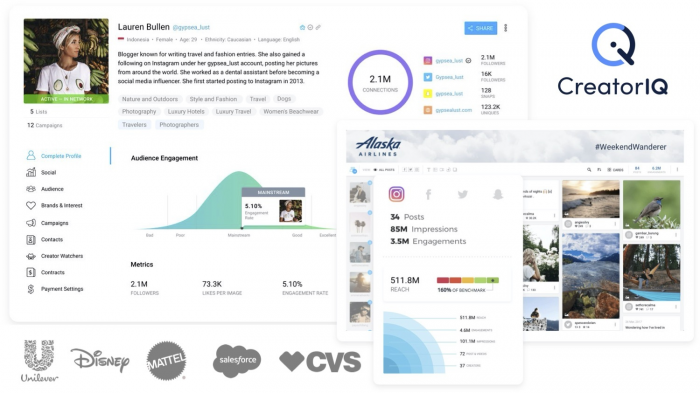
CreatorIQ positions itself as the enterprise infrastructure layer for influencer marketing, aimed at large brands and agencies. Its AI helps with creator discovery, audience analysis, fraud detection, and campaign optimization, but the real strength is in data connectivity.
The platform integrates tightly with systems like Salesforce, SAP, and internal data warehouses, so influencer performance sits alongside your broader marketing and sales metrics. This enables more advanced modeling (e.g., comparing influencer campaigns against paid social or email in terms of revenue contribution).
For global brands running multi‑market programs, CreatorIQ’s AI‑powered workflows help standardize vetting and reporting while allowing local teams to choose creators that fit their context. You trade a bit of simplicity for serious measurement and governance capabilities.
5. Uplodio : AI Agent for Outreach and Operations
Uplodio takes a different angle by acting as an AI “operations manager” for your influencer campaigns. Its agent, Amy, automates the entire operational workflow: finding creators from a vetted database, sending personalized outreach, negotiating rates, and onboarding creators into campaigns.
The AI uses content analysis to tailor messages to each influencer, which dramatically improves reply rates compared to generic email blasts. Reported campaigns see reply rates around 30%, versus an industry standard closer to 5% for traditional outreach.
If your team is small but you manage high campaign volume or multi‑language markets, Uplodio helps you scale without hiring a full‑time coordinator. You can stay focused on strategy and creative direction while the AI handles the repetitive admin work.
6. Sprout Social Influencer Marketing : Unified Social + Influencers
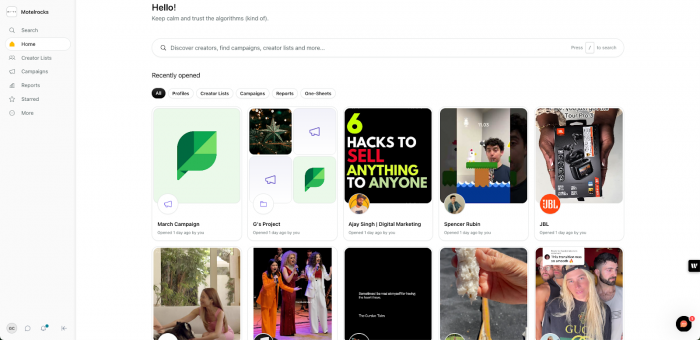
Sprout Social is widely known as a social media management platform, and its influencer marketing module extends that capability to creator campaigns. It indexes more than 10 million creators and uses AI Assist to support topic‑based discovery and creator recommendations.
A key feature is the Brand Fit Score, which automatically evaluates how well a creator aligns with your brand based on their content, audience, and historical performance. Because the influencer module is integrated with Sprout’s social publishing, listening, and inbox, you see influencer performance right next to your organic and paid social metrics.
This is very useful if your social, community, and influencer teams collaborate closely. Instead of fragmented tools, you get a single environment for planning posts, managing creator content, and answering DMs inspired by influencer campaigns.
7. Vista Social : AI‑Powered Social and Community Layer
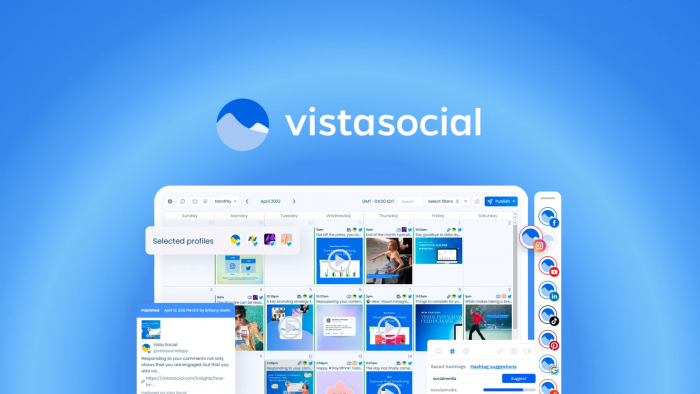
Vista Social is a comprehensive AI social media management platform that becomes a strong companion to influencer campaigns, especially on the content and community side. Its AI Assistant generates multi‑tone captions, rewrites content for different platforms, and adapts to your defined brand voice.
AI‑powered response suggestions are embedded into the unified social inbox, helping teams reply to comments and DMs faster while staying on‑brand. It also supports review response automation across platforms like Google Business and Yelp, which matters for brands that see traffic spikes from influencer collaborations.
You wouldn’t use Vista Social to find influencers, but it shines once content goes live. The platform helps you scale cross‑channel publishing, repurpose influencer content, and maintain a consistent voice as new audiences discover you through influencer posts.
8. Jasper : AI Content Engine for Briefs and Scripts
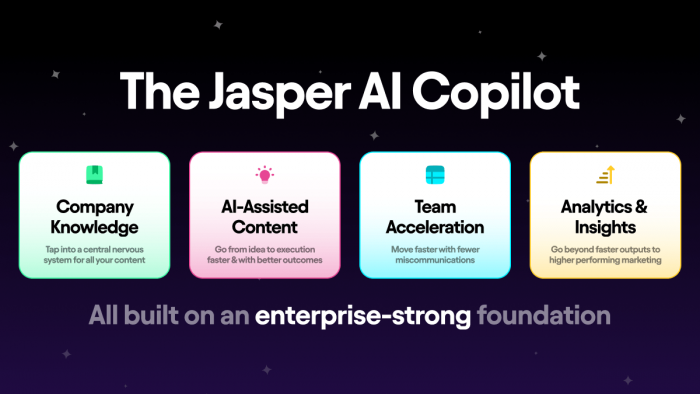
Jasper is not an influencer management tool, but it has become a staple AI content platform inside many marketing teams. It specializes in generating and refining copy for ads, scripts, emails, and social posts at scale.
For influencer marketing, Jasper is particularly useful for creating:
● Campaign briefs and creative guidelines for influencers
● Sample captions, hooks, and talking points tailored to different platforms
● Post‑campaign summaries and reports that translate results into narrative insights
Teams that adopt AI for content generation report significant time savings in drafting and editing marketing materials, freeing bandwidth to focus on strategy and relationship building. Jasper’s templates for ad copy and social posts plug nicely into both paid influencer whitelisting and organic collaborations.
Snapshot Table: Best Use Cases and Focus
Below is a quick at‑a‑glance view of where each tool shines.
| Tool | Primary Role | Best For | AI Focus |
| Upfluence | End‑to‑end influencer platform | E‑commerce brands, performance‑driven teams | AI co‑pilot for matching, analytics, sales links |
| Modash | Discovery and audience vetting | Brands/agencies needing deep search at scale | AI search, lookalike creators, fraud checks |
| Favikon | Vetting and authenticity scoring | Teams worried about fake followers and brand fit | Authenticity Score, brand fit analysis |
| CreatorIQ | Enterprise influencer infrastructure | Global brands and large agencies | Connected analytics, fraud detection, optimization |
| Uplodio | Outreach and operations automation | Lean teams, multi‑language campaigns | AI agent for outreach, negotiation, onboarding |
| Sprout Social | Social + influencer hub | Brands already on Sprout Social | AI Assist discovery, Brand Fit Score |
| Vista Social | Social management & community | Brands scaling content and engagement | Caption AI, response suggestions, review replies |
| Jasper | Content generation engine | Copy‑heavy teams and agencies | AI copywriting for briefs, scripts, reports |
How to Choose the Right Stack
In practice, most brands do not run on a single tool they build a stack where each layer does its job extremely well. For example, a mid‑size DTC brand might use Modash for discovery, Uplodio for outreach operations, Upfluence or CreatorIQ for performance tracking, and Jasper to generate briefs and scripts.
When evaluating these platforms, focus on:
● Volume and complexity of campaigns: Solo marketers may prioritize automation tools like Uplodio, while enterprises need CreatorIQ‑level governance.
● Your existing tech stack: If you already use Sprout Social or Salesforce, leaning into Sprout Social’s influencer module or CreatorIQ’s integrations will reduce friction.
● Where you lose the most time: If you’re stuck in discovery, tools like Modash or Favikon help; if operations are the bottleneck, Uplodio or Upfluence will have more impact.
Once you know your biggest bottleneck - discovery, vetting, operations, or content, you can select one or two of these AI tools to form a high‑leverage core stack and expand over time.