FaceCheck.ID is built for one question: where else does this face appear online? That question sounds simple, but the answer can affect dating safety, scam checks, impersonation concerns, privacy, and even someone’s reputation.
The tool can be useful when a profile feels suspicious or a photo looks reused. But it is not an identity verifier. It does not prove that someone is guilty, fake, dangerous, or honest. It gives leads. The user still has to check context, source quality, names, dates, and whether the image may have been stolen from someone else.
That is the fairest way to review FaceCheck.ID: helpful in the right situation, risky when treated like final proof.
FaceCheck.ID in One Line
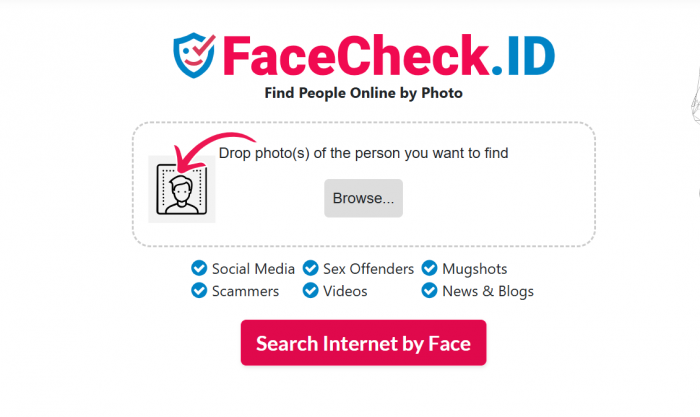
FaceCheck.ID is a reverse face search engine. You upload a face photo, and it looks for visually similar faces across public web sources. Its results may include social profiles, websites, news pages, video pages, mugshot-style sources, scam-related pages, or other indexed results where the same or similar face appears.
That makes it different from a normal reverse image search. Google Lens or TinEye may help you find the same image. FaceCheck.ID tries to find the same face, even when the image is cropped, reposted, renamed, or shown in another setting.
That difference is the reason people use it. It is also the reason it needs careful handling.
Where It Fits in Real Life
FaceCheck.ID is not the kind of tool most people need every day. It becomes useful when there is already a reason to be cautious.
A dating profile may look too polished. A social account may have no real history. A stranger may be asking for money, crypto investment, private photos, or personal details. A creator may suspect their images are being used on fake accounts. In those situations, a face search can help reveal whether the photo appears elsewhere.
The strongest use cases are:
● Checking suspicious dating profiles
● Finding reused or stolen profile photos
● Spotting possible impersonation accounts
● Looking for fake social media identities
● Checking whether your own face appears on unexpected websites
● Supporting cautious OSINT research
The weak use cases are just as important. FaceCheck.ID should not be used for hiring, housing, lending, public accusations, legal decisions, or background checks. A face match is not formal verification.
How the Search Really Works
FaceCheck.ID looks simple from the front end: upload a photo, wait for results, review matches. The actual value depends on what happens after the upload.
First, the tool needs to detect a usable face. Clear images work better. A front-facing, well-lit photo is more likely to return useful matches than a blurry screenshot, side-angle image, filtered selfie, or group photo.
Next, the system reads facial patterns rather than only looking for the exact same image file. This is why it may find the same person across different photos. It is also why the tool enters sensitive territory, because face-based search deals with biometric-style information.
Then FaceCheck.ID compares the uploaded face against its indexed sources. This is where users often misunderstand the result. The tool can only find what it can access or has indexed. If a person’s photos are private, deleted, hidden, or simply not covered by the tool’s database, the result may be incomplete.
Finally, the user gets possible matches. That word matters: possible. A strong match may be valuable, but it still needs verification. A weak match may be a lookalike. No result may mean nothing more than poor coverage.
Features That Matter
FaceCheck.ID has several features, but only a few matter in everyday use.
Face-based reverse search : The main feature is searching by face instead of searching only for the same image. This helps when a photo has been cropped, compressed, edited, or reposted in another format.
Public profile discovery : The tool may surface public profiles where the same or similar face appears. This can help users check whether a dating profile, social account, or suspicious contact is using someone else’s image.
Scam and catfish checks : This is probably the most practical reason to use FaceCheck.ID. If the same face appears under different names or across unrelated websites, it may point to a fake profile or stolen image.
Red flag-style results : FaceCheck.ID highlights certain risky sources, including scam-report pages, adult content, mugshot-style sources, offender-related websites, or multiple profiles with different names. This can be useful, but also dangerous if users jump to conclusions without checking the source.
Removal option : FaceCheck.ID offers a removal route for people who want their own photos removed from its results. This does not solve every privacy concern, but it is an important feature for people who find themselves indexed.
API access : The platform also promotes API access for developers who want to integrate face search into apps or services. For ordinary users, this is less relevant. For businesses or technical users, it shows FaceCheck.ID is not only a consumer search page.
The Accuracy Problem
FaceCheck.ID can be impressive when it works, but accuracy is not fixed. It changes depending on the image, the person, the sources indexed, and the quality of the match.
A clear photo of someone with many public images may return useful results. A low-quality screenshot of a private person may return little or nothing. A celebrity, influencer, model, or public figure may be easier to find than an ordinary person with a small digital footprint.
The tool can also make two types of mistakes.
A false positive happens when it returns someone who looks similar but is not the same person. This is especially serious if the match appears near sensitive sources such as mugshot pages or scam-related content.
A missed match happens when the tool fails to find a real match. This does not prove the person is genuine. It only means FaceCheck.ID did not find a result from its available sources.
That is why the safest rule is simple: FaceCheck.ID results should be treated as leads, not conclusions.
Pricing and Value
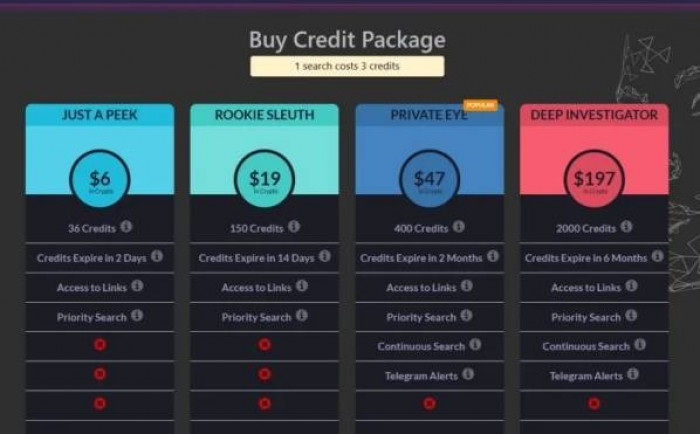
FaceCheck.ID uses a credit-based model rather than a simple unlimited free search system. Its official buy page states that searches use credits, with 3 credits required per search. Its API page lists search credits at 0.10 USD per credit, which makes the API search cost roughly 0.30 USD per search. Public third-party pricing pages also list consumer credit bundles, but pricing can change, so users should always check the official buy page before paying.
| Pricing Area | What Users Should Know |
| Search model | Credit-based system |
| Credit use | Official page says 3 credits are used per search |
| API pricing | Official API page lists credits at 0.10 USD per credit |
| Payment note | Official buy page mentions cryptocurrency payments |
| Value concern | Paying feels reasonable only if results are useful |
| Best fit | Regular scam checks, OSINT work, or image misuse research |
| Weak fit | One casual search with high expectation of certainty |
The pricing issue is not just the amount. It is the uncertainty. Users may pay and get a strong result, which feels worth it. They may also pay and get weak matches, irrelevant results, or nothing useful. That makes FaceCheck.ID harder to recommend as a casual one-time tool.
For users who regularly investigate fake profiles or image misuse, credits may make sense. For someone who wants one guaranteed answer, the value is less predictable.
Privacy: The Uncomfortable Part
FaceCheck.ID is useful because faces are searchable. It is risky for the same reason.
A face is not just another image. It can reveal identity, old profiles, personal history, location clues, and connections across websites. Even if a photo is public, the person in that photo may not expect it to be searchable through facial recognition.
This creates several concerns:
● Uploading someone else’s face may raise consent questions.
● Public images can still be sensitive.
● Old or reposted photos may appear without the person’s knowledge.
● Results can be used for stalking, harassment, or doxxing.
● A wrong match can damage someone’s reputation.
FaceCheck.ID’s removal process helps, but it does not remove the larger question: should public faces be this searchable in the first place? A serious review should not ignore that tension.
The best user approach is limited and cautious. Use tightly cropped images. Avoid uploading photos involving minors, bystanders, or sensitive settings. Do not share results publicly. Do not accuse someone based only on a match.
What Users Are Saying
Public feedback on FaceCheck.ID is divided, but the pattern is easy to understand. Users who like the tool usually want a quick way to check whether a face appears elsewhere online, especially when dealing with suspicious dating profiles, fake social accounts, or possible scam messages.
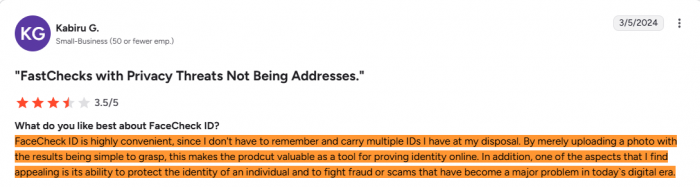
They appreciate the simple upload process and the chance of finding a strong match without doing a long manual search.
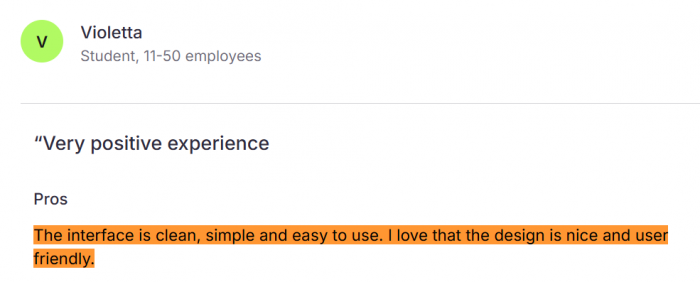
Most complaints come from users who expect more certainty than the tool can provide. Some say the results are inconsistent, with missed public photos, weak lookalike matches, or irrelevant results.
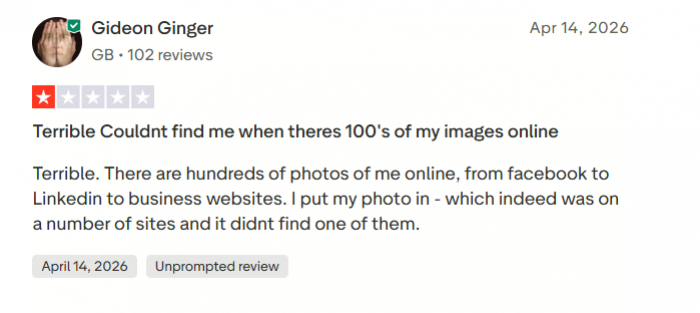
Others dislike the credit-based pricing because paying feels frustrating when a search does not return anything useful. Privacy is another concern, as some users are uncomfortable with public images being searchable through facial recognition.
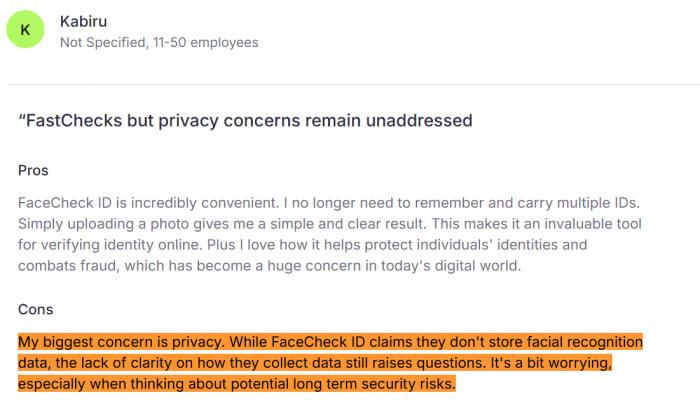
Customers seem to want a tool that is accurate, affordable, and transparent, but many complain that FaceCheck.ID can feel powerful one moment and unreliable the next.
The Criminal-Source Issue
One of the most sensitive parts of FaceCheck.ID is its claim around checking faces against sources such as mugshots, offender websites, suspects in the news, and other high-risk categories.
This may sound useful for safety, but it creates a serious risk of misinterpretation. A similar face appearing near a criminal-source result does not prove that the uploaded person has a criminal record. It may be a lookalike, outdated source, misindexed page, stolen image, or unrelated person.
This section deserves careful wording in any review. The feature may help users spot risk signals, but it should never be used as evidence by itself. If a result appears serious, it needs official verification and proper context.
For ordinary users, the better rule is: treat criminal-source matches as a reason to slow down, not a reason to make accusations.
Better Ways to Use It
FaceCheck.ID works best when it is part of a wider checking process.
A sensible workflow looks like this:
● Start with Google Lens or another free reverse image tool.
● Use FaceCheck.ID if the photo still feels suspicious.
● Check whether matches appear under different names.
● Open the source pages and examine context.
● Compare profile details, dates, usernames, locations, and image history.
● Look for repeated patterns, not one isolated result.
● Never make a public claim based only on a face match.
This kind of workflow protects the user from scams without turning the tool into a weapon against others.
Alternatives Worth Considering
FaceCheck.ID is not the only option. Some alternatives are better for deep face search. Others are better for exact image tracking, dating scam checks, or free first-level research.
| Alternative | Best For | Why It May Be Better |
| PimEyes | Stronger face search | More established face-search platform with monitoring features |
| Lenso.ai | Broader image search | Searches faces, duplicates, similar images, places, and related visuals |
| Google Lens | Free first check | Useful for finding reused images before paying for face search |
| TinEye | Exact image copies | Better for tracking the same image file across websites |
| Social Catfish | Dating scam checks | Built around identity and catfish-related searches |
| Yandex Images | Visual similarity | Sometimes useful for finding visually similar images, though not face-specific |
The best alternative depends on the problem. For serious face search, PimEyes is usually the closest competitor. For broader reverse image research, Lenso.ai may be more flexible. For free basic checking, Google Lens should be the first stop. For exact image reuse, TinEye is cleaner.
Who Should Use FaceCheck.ID?
FaceCheck.ID is best for users who understand its limits. It can help people who are trying to avoid scams, investigate suspicious profiles, or check whether their own images have been reused.
It makes sense for:
● Dating app users checking suspicious profiles
● Creators worried about stolen images
● People dealing with impersonation accounts
● Researchers doing careful OSINT work
● Users who want another clue before trusting an online stranger
It is not a good fit for people who want certainty from one search. It is also not appropriate for users trying to expose, shame, stalk, or investigate private individuals without a legitimate reason.
Who Should Avoid It?
Some users should avoid FaceCheck.ID or use it only with extreme caution.
Do not use it if your goal is to prove someone’s identity beyond doubt. Do not use it for employment screening, tenant checks, legal claims, public accusations, or personal revenge. Do not treat red flags as confirmed facts.
Also avoid uploading photos that include children, bystanders, private settings, medical context, intimate content, or sensitive situations. Even if the tool accepts the upload, that does not make the use ethical.
A face search can answer useful questions, but it can also create new harm if used carelessly.
Final Verdict
FaceCheck.ID is a useful tool with a narrow lane. It can help users check suspicious photos, identify possible catfish accounts, find reused images, and gather public web clues around a face. In scam-prevention situations, that can be valuable.
But the tool is easy to overtrust. A match is not proof. No match is not reassurance. A red flag is not a conviction. The user still has to verify source quality, context, and whether the photo may have been stolen or misused.
The fairest verdict is this: FaceCheck.ID is worth trying for cautious research, not for final judgment. It is strongest as an early warning tool and weakest when users expect it to act like an identity authority.
Used carefully, it can help people avoid online deception. Used carelessly, it can mislead users and harm privacy. That balance is what makes FaceCheck.ID both useful and uncomfortable.