Most social media posts fail for a simple reason. They are written to be seen, not to convert. There is a difference between attention and action. A post that gets likes creates visibility, but a post that converts drives measurable outcomes such as clicks, saves, follows, or purchases. Once you start viewing social media through this lens, the way you write begins to change.
High-converting posts are not built on trends or clever phrasing alone. They are rooted in understanding user behavior. Why people stop scrolling, what makes them continue reading, what builds trust, and what finally pushes them to act. This article breaks down the structure, psychology, and tools behind posts that consistently deliver results.
What Makes a Social Media Post “High-Converting”
A high-converting post is defined by what it achieves, not how it performs on surface metrics. Reach and engagement can indicate interest, but conversion reflects intent fulfilled. That means the reader did something meaningful after consuming the content.
| Element | What It Means | Why It Matters |
| Scroll Stop | The hook or visual that grabs attention | Without attention, nothing else matters |
| Clarity | Clear message and value proposition | Confusion reduces action |
| Relevance | Matches audience intent or problem | Builds connection quickly |
| Trust Signal | Proof, credibility, or relatability | Reduces hesitation |
| Action Trigger | Strong call to action | Converts attention into outcome |
Most posts fail because they focus only on one of these elements. High-converting posts align all five in a single flow.
1. Start With the Hook, Not the Content
The first line of your post determines whether the rest will even be read. If the hook does not create interest, the content that follows becomes irrelevant. This is why high-performing posts are designed from the top down, starting with the opening line rather than the main body.
A strong hook introduces tension, curiosity, or a clear problem. It does not try to explain everything upfront. Instead, it gives just enough information to make the reader want to continue. For example, shifting from a generic line to a problem-focused statement immediately changes how the reader reacts.
Effective hooks often follow recognizable patterns:
● Problem-driven opening
● Contrarian or unexpected statement
● Curiosity gap
● Outcome-oriented promise
The key difference lies in specificity. Vague statements get ignored, while precise, targeted hooks create immediate engagement.
2. Write for One Person, Not a Broad Audience
One of the most common mistakes in social media writing is trying to appeal to everyone at once. This approach usually results in generic messaging that fails to resonate with anyone deeply. High-converting posts feel personal because they address a specific situation or problem.
When a reader feels that a post speaks directly to their experience, they are more likely to engage and act. This is why narrowing your focus actually increases performance. It filters the audience but improves relevance for the right people.
Instead of speaking broadly about “businesses” or “creators,” effective posts address a clear scenario. This makes the message sharper, more relatable, and easier to act upon.
3. Focus on One Core Idea Per Post
Clarity is often lost when too many ideas are packed into a single post. High-converting content is built around one central idea, supported by a clear narrative. This ensures that the reader understands the message without effort.
A simple and effective structure often includes:
● Hook
● Context or problem
● Insight or solution
● Supporting detail or example
● Call to action
This structure works because it mirrors how people process information. It creates a logical progression that keeps the reader engaged from start to finish.
4. Make the Value Immediately Clear
Users make quick decisions about whether content is worth their time. If the value is not obvious early on, they move on. High-converting posts remove this friction by clearly stating what the reader will gain.
Instead of slowly building toward a point, effective posts communicate value within the first few lines. This sets expectations and gives the reader a reason to continue.
Clear value positioning also improves trust. When readers know what to expect, they are more likely to engage with the content and follow through on the intended action.
5. Use Simplicity Over Cleverness
Clever writing may attract attention, but clarity drives action. If a reader has to pause and interpret what a post means, the likelihood of conversion drops. High-converting posts prioritize simple, direct language that is easy to process.
Short sentences, familiar words, and straightforward phrasing improve readability. This is particularly important on social media, where attention spans are limited and distractions are constant.
Clarity builds trust because it reduces cognitive effort. When readers understand the message immediately, they are more likely to act on it.
6. Add Micro-Proof to Build Trust
Trust is one of the strongest drivers of conversion. Without it, even well-written posts fail to produce results. This is where micro-proof becomes important. Small signals of credibility can significantly influence how content is perceived.
Micro-proof does not need to be complex. It can be a simple reference to experience, results, or scale. These elements reassure the reader that the content is grounded in real-world outcomes.
Examples of effective micro-proof include:
● “Tested across multiple campaigns”
● “Used by thousands of users”
● “Improved engagement within days”
These additions strengthen the message without making it overly promotional.
7. End With a Clear Call to Action
A post that delivers value but lacks direction often fails to convert. The call to action provides that direction. It tells the reader what to do next and removes uncertainty.
Effective CTAs feel like a natural continuation of the content. They align with the value provided and guide the reader toward a logical next step. Whether it is saving the post, following an account, or clicking a link, the action should be clear and intentional.
Without a CTA, even strong content can lose its impact at the final stage.
7 Tools That Help You Write High-Converting Posts
Creating high-quality content consistently requires both skill and efficiency. The following tools can support different parts of the writing process, from ideation to optimization.
1. Technylo

Technylo is an all-in-one social media content creation platform that helps streamline everything from ideation to publishing. Instead of handling captions, hooks, hashtags, and planning separately, it brings them into a single workflow, making content creation more structured and efficient.
It includes tools like a caption generator, post generator, hook generator, hashtag generator, and even content calendar and reel script generators. This makes it especially useful for creators who want to maintain consistency and speed without starting from scratch every time. While it provides strong structured outputs, it still works best when refined with your own tone and audience understanding.
2. Jasper
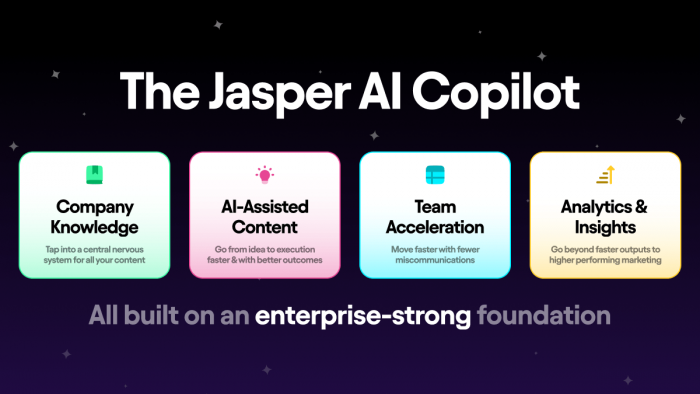
Jasper is an AI writing tool focused on marketing and copy generation. It offers templates that help create structured social media content quickly, making it useful for scaling content production.
The tool excels at generating ideas and variations, especially for campaigns that require multiple versions of the same message. However, the outputs often require editing to ensure originality and alignment with brand voice.
3. Copy.ai
Copy.ai is built for quick content generation, particularly in short-form formats like social media captions. It helps generate multiple angles for a single idea, which can be useful for testing performance.
Its strength lies in speed and experimentation. However, it is less effective for deeper refinement or highly customized content.
4. Canva Magic Write

Canva combines design and content creation in a single platform. Its Magic Write feature allows users to generate captions while working on visuals, creating a more integrated workflow.
This is particularly helpful for creators who handle both design and copy. While it offers convenience, its writing capabilities are more basic compared to dedicated AI writing tools.
5. Hootsuite

Hootsuite is primarily known for scheduling and social media management, but it also provides insights into content performance. These insights are valuable for understanding what types of posts convert.
By analyzing metrics such as engagement and click-through rates, users can refine their writing strategy over time. It is less about writing content and more about improving results through data.
6. Grammarly

Grammarly focuses on improving clarity, grammar, and tone. It helps ensure that content is easy to read and free of errors, which is essential for maintaining credibility.
While it does not generate content, it enhances the quality of writing. This makes it a valuable tool for refining posts before publishing.
7. Writesonic

Writesonic is another AI-powered writing tool designed for marketing content. It helps generate captions, hooks, and ad-style copy, making it useful for conversion-focused posts.
The tool is particularly effective for producing multiple variations quickly. However, like other AI tools, it requires manual editing to ensure quality and uniqueness.
What Actually Changes Conversion Rates
Improving conversion rates often comes down to small but meaningful adjustments. These changes may seem minor, but they can significantly impact performance over time.
● Stronger hooks that immediately capture attention
● Clear value propositions within the first few lines
● Specific language instead of generic statements
● Inclusion of proof or credibility signals
● Direct and actionable calls to action
These elements work together to create a more effective and persuasive post.
Common Mistakes That Reduce Conversions
Even well-written posts can fail if they overlook key fundamentals. Recognizing these mistakes is essential for improving performance.
| Mistake | What Happens |
| Weak hook | Users scroll past quickly |
| Too many ideas | Message becomes unclear |
| No clear value | Reader loses interest |
| Complex language | Reduces readability |
| Missing CTA | No action is taken |
Avoiding these issues often has a greater impact than adding new strategies.
Final Thoughts
High-converting social media posts are built on clarity, relevance, and intent. They are not about sounding impressive or following trends blindly. They are about understanding what the audience needs and delivering it in a way that is easy to consume and act upon.
When the focus shifts from visibility to results, the entire approach to writing changes. Posts become more structured, more intentional, and ultimately more effective. That is where real growth begins.