Have you ever replayed a song because it felt powerful, yet you couldn’t quite explain why? That’s a familiar experience for most music lovers. Lyrics often carry layered emotions, symbolism, and storytelling that aren’t always obvious on first listen. Songtell is built for exactly that moment when you want to go beyond the surface and understand what a track might truly be saying.
I spent considerable time exploring the platform, testing different genres, checking how it handles complex writing, and comparing its interpretations with human analysis. This review breaks down how Songtell works, what it does well, where it struggles, how much it costs, and whether it genuinely changes the way you experience music.
By the end, you’ll know if it’s a tool worth adding to your listening routine.
What Is Songtell?
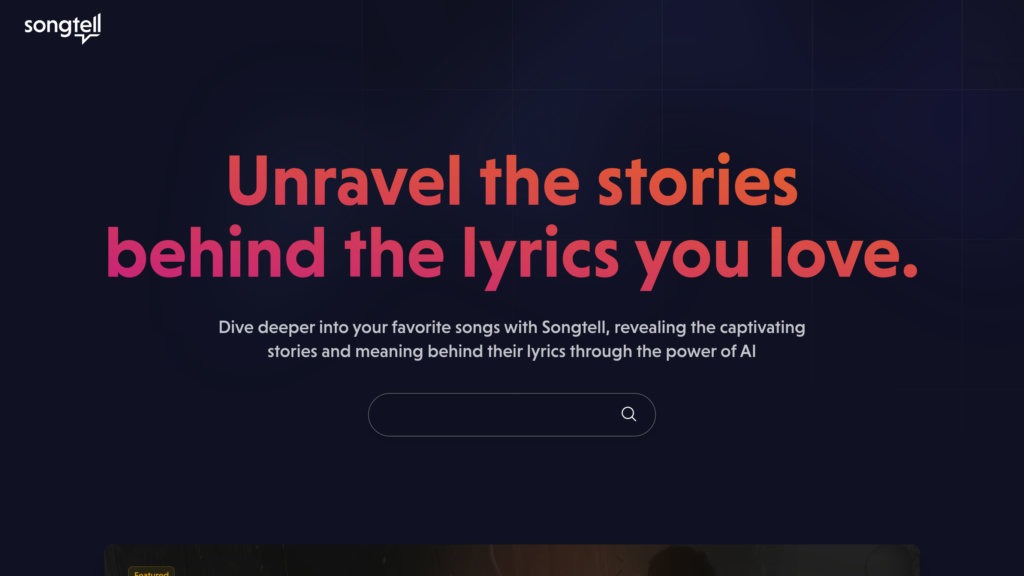
Songtell is an AI-driven lyric interpretation platform that focuses on explaining the meaning behind songs rather than simply displaying their words. Instead of leaving you to guess the intent, it generates a written breakdown that explores themes, emotional tone, narrative direction, symbolism, and sometimes even cultural context.
You search for a track, and if an explanation already exists, it appears instantly. If not, the system creates one for you in seconds.
The experience feels less like reading a database and more like having a knowledgeable friend walk you through the story hidden inside the music.
How Songtell Turns Lyrics Into Meaning
Step 1: You search for a song
The journey starts when you enter a track title (and usually the artist). The system first makes sure it has identified the correct song so the analysis is built on the right lyrics and not a similarly named track.
Step 2: The lyrics are collected and organized
Instead of reading the song as one long paragraph, the AI separates it into verses, chorus, bridge, and repeated lines. This helps it understand which parts carry the main message and which parts move the story forward.
Step 3: The language is examined deeply
The model scans the words and phrases to understand tone and intent. It detects whether the writing feels emotional, reflective, angry, hopeful, nostalgic, or conversational. At this stage, it is learning how the song feels, not just what it says.
Step 4: Key ideas and patterns are identified
The system looks for repetition in imagery, emotions, and situations. If multiple lines point toward the same idea for example longing, personal growth, or conflict those signals are grouped into a central theme.
Step 5: Metaphors and symbolism are interpreted
Figurative language is translated into plain meaning. Instead of taking poetic lines literally, the AI connects them to the emotion or situation they represent.
Step 6: The emotional journey is mapped
The AI tracks how the mood changes from the beginning to the end of the song. It notices whether the track moves from confusion to clarity, pain to acceptance, or distance to connection, and reflects that progression in the explanation.
Step 7: A narrative is reconstructed
If the lyrics suggest a story, the system pieces it together with who is speaking, what they are going through, and what changes by the final lines. This turns abstract writing into a clear, understandable flow.
Step 8: Broader human meaning is connected
The detected themes are linked to universal experiences such as heartbreak, identity, healing, rebellion, or self-discovery. This is why the interpretation often feels relatable.
Step 9: A natural, readable explanation is generated
All the analysis is converted into smooth, human-like text. Instead of showing technical data, Songtell presents a clear summary that explains what the song is likely expressing.
Step 10: The result is delivered instantly (and often stored)
If the interpretation already exists, you see it immediately. If it’s newly created, it can become part of the platform’s growing library for future users
In simple terms, the flow is:
Identify the song → Structure the lyrics → Understand the language → Detect themes → Track emotional movement → Rebuild the story → Present a clear meaning.
Features That Stand Out
AI-Based Lyric Analysis
The core strength of Songtell is its ability to convert poetic or symbolic lyrics into plain, understandable language. It highlights emotional direction, subject matter, and story progression in a way that feels approachable even for casual listeners.
Large Interpretation Library
A significant number of songs already have ready-made analyses across multiple genres and time periods. That means you’ll often find results instantly without waiting for new content to generate.
Emotional and Thematic Context
Instead of repeating the lyrics, the platform focuses on what they convey heartbreak, self-reflection, nostalgia, empowerment, conflict, and more. This added context often changes how you hear a song the next time you play it.
Multilingual Capability
For global music fans and language learners, this is particularly useful. It doesn’t just translate, it explains meaning, which helps bridge cultural and linguistic gaps.
Sharing and Exploration
Interpretations can be saved or shared, and browsing different songs creates a discovery-driven experience that feels part educational, part entertainment.
Pricing and Access
Songtell follows a freemium structure.
Free access typically includes:
● Standard lyric interpretations
● Basic search functionality
● An ad-supported interface
Premium plans (usually in the ~$3–$10/month range) unlock:
● An ad-free experience
● More detailed, sometimes verse-level insights
● Saved collections or favorites
● Faster access to newly generated analyses
● Enhanced contextual depth
Discounted yearly subscriptions have been mentioned by users, though the exact pricing can vary, so it’s best to confirm inside the platform.
How Much Songtell Costs and What You Actually Get
Songtell is designed to be usable at multiple levels, which means casual visitors, regular readers, and heavy users all experience the platform differently. At its core, the service keeps a meaningful portion of its features open to everyone, while reserving deeper, more interactive capabilities for users who choose a paid tier.
The free version works as an entry point into the ecosystem. Anyone can search for songs, read existing lyric interpretations, and explore meaning without creating an account. This makes it feel more like a public knowledge hub than a locked tool. For students, writers, and music lovers who simply want to understand a track’s emotional or narrative layer, this level is often enough.
Where the platform begins to change is in the premium layer. Paid access is not just about removing limits it reshapes how you interact with the system. Instead of passively reading meanings, you move into a space where you can request deeper analysis, generate interpretations more frequently, and experience faster responses. The difference is similar to browsing a library versus having a research assistant working for you.
Another important aspect of access is that Songtell is entirely browser-based. There is no software installation, no device restriction, and no performance dependency on your system. Whether you’re using a phone, tablet, or desktop, the experience remains consistent. This greatly lowers the barrier for global users and makes the free tier more practical.
Feature Access Comparison
| Aspect | Free Access | Premium Access |
| Reading existing song meanings | Fully available | Fully available |
| Searching the song database | Unlimited | Unlimited |
| Depth of AI-generated interpretation | Standard, pre-generated content | More detailed and dynamic responses |
| Ability to request new meanings | Limited or restricted | Higher or priority access |
| Response speed for new analyses | Normal queue | Faster processing |
| Daily usage flexibility | Basic exploration level | Designed for frequent and professional use |
| Ads or platform support elements | May be present | Usually reduced or removed |
| Best suited for | Casual listeners and students | Writers, creators, researchers, music analysts |
The Real Difference Is Not the Price: It’s the Use Case
For someone who only occasionally looks up a song after hearing it on a playlist, the free version already feels complete. You search, you read, you leave with a new perspective. There is no pressure to upgrade because the core educational value is not hidden behind a paywall.
But for people who use lyrics as part of their work, content creators, bloggers, reviewers, literature students, or anyone analyzing music culturally the premium tier changes the pace of their workflow. Instead of adapting to what the database already contains, they can actively generate meaning on demand. That shift from passive consumption to active exploration is what the subscription is really selling.
Accessibility and Global Use
Because Songtell runs entirely online, access is not tied to region-specific app stores or high-end devices. A stable internet connection is enough. This is especially important for users in countries where paid creative tools are often limited by currency conversion or hardware requirements.
The free tier ensures that even in those regions, the educational and interpretive value of the platform remains open.
Value Perspective
If you measure value in terms of entertainment, the free version is more than sufficient. If you measure value in terms of:
● research time saved
● content creation speed
● analytical depth
● idea generation
then the premium version becomes less of a cost and more of a productivity tool. That’s why the same platform can feel optional to one user and essential to another.
Real User Feedback: The Good and the Not-So-Good
The Positive Side: Why Many Users Love Songtell
One of the most frequently appreciated aspects of Songtell is the sense of instant lyrical clarity it provides. For listeners who have spent years wondering what a song truly means, the platform delivers a structured interpretation in seconds. This makes it especially valuable for:
● students studying poetry and songwriting
● casual listeners curious about hidden meanings
● content creators who need quick explanations
Users often describe the experience as similar to having a literature guide for modern music, where metaphors, emotional themes, and narrative context are broken down in an accessible way.
Another strong point is speed and convenience. Traditional lyric-meaning research involves browsing forums, interviews, and fan theories. Songtell compresses that entire process into a single response. For modern audiences used to instant answers, this is a major advantage.
Many users also appreciate that the interpretations are:
● clearly written
● emotionally aware
● easy to understand even for non-native English speakers
This makes the tool useful not just for music fans, but for people using songs to learn language, analyze storytelling, or write essays.
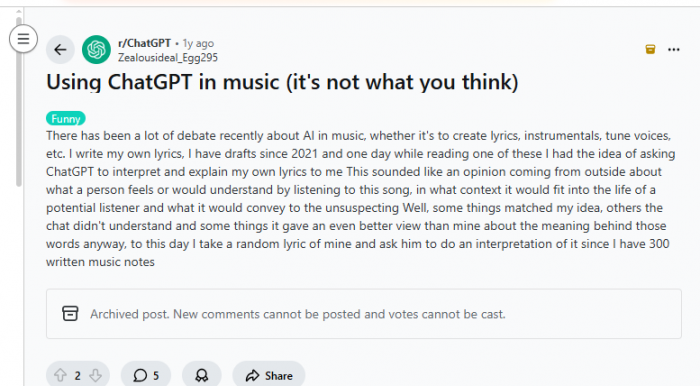
From a creative perspective, some songwriters say AI interpretations help them see their own lyrics from a new, unexpected angle. One Reddit user who experimented with AI lyric interpretation explained that:
“Some things matched my idea… others gave an even better view than mine.”
This reflects a recurring theme:
AI doesn’t just explain songs, it can spark new interpretations.
The Emotional Value for Listeners
A less obvious but important benefit is the emotional validation users feel.
When someone connects deeply with a song, they want confirmation that their interpretation “makes sense.” Songtell often provides a structured meaning that:
● reinforces personal feelings
● helps users articulate why a song matters to them
● turns vague emotions into clear thoughts
For many, this is the real magic of the platform.
Where Users Become Skeptical
Despite the praise, not all feedback is uncritical.
The most common concern is that AI interpretations can sound authoritative even when they are speculative. Songs are intentionally ambiguous, and some listeners feel that reducing them to a single explanation removes part of the artistic mystery.
There is also a recurring argument in music communities that:
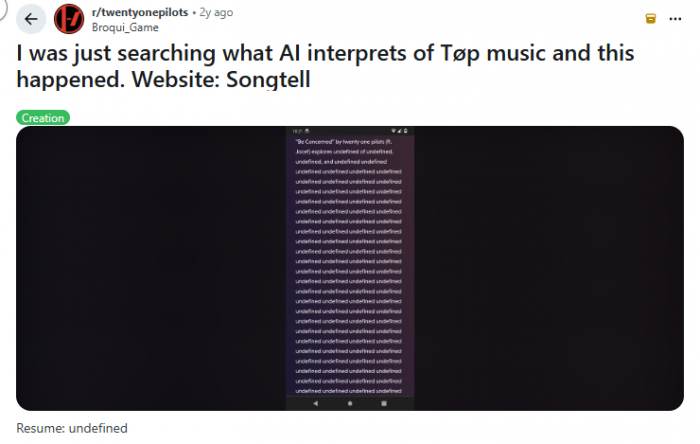
“You’d be better off asking actual people to interpret the lyrics.”
(Reddit)
This reflects a broader philosophical issue:
Human interpretations come from lived experience.
AI interpretations come from pattern recognition.
For deeply personal or culturally specific songs, users sometimes feel the analysis:
● misses context
● feels too generic
● sounds emotionally correct but not truly insightful
The Accuracy Debate
Another limitation mentioned by users is that Songtell typically:
● analyzes lyrics as text
● does not evaluate vocal delivery, production, or musical mood
But in real music, meaning often comes from:
● how a line is sung
● the instrumentation
● the historical moment of the artist
Without those elements, some interpretations can feel incomplete.
Repetition and Similar Framing
Power users especially those analyzing many songs sometimes notice a pattern in structure:
● theme identification
● emotional summary
● message about love, loss, growth, or identity
While this makes the output clean and readable, it can occasionally feel formulaic.
The Trust Factor
A subtle but important concern is that new listeners may:
● treat AI explanations as the definitive meaning
instead of
● one possible interpretation
For music lovers who believe meaning should remain open-ended, this is a philosophical drawback.
The Balanced Reality
In practice, most real users don’t see Songtell as a replacement for human discussion.
They use it as:
● a starting point
● a quick reference
● a creativity tool
not as the final word on a song’s meaning.
That distinction is key to understanding why sentiment remains largely positive despite the limitations.
Takeaway
Real user feedback shows that Songtell succeeds because it delivers something people have always wanted:
fast, readable, emotionally intelligent explanations of songs.
But the same feature that makes it powerful AI-generated certainty is also where the skepticism begins.
For the best experience, users treat it as: not the meaning of a song
But a meaning of a song.
Songtell vs. Other Lyric Platforms
| Platform | Core Purpose | How It Explains Meaning | Data Source | Depth of Interpretation | Community Input | Best For | Limitations |
| Songtell | AI-powered lyric meaning & storytelling | Uses AI to turn lyrics into emotional, narrative-style explanations | AI analysis trained on large text datasets | Moderate to high (depends on song popularity & AI confidence) | No human annotation layer | Quick understanding of a song’s theme and mood | Can feel generalized; lacks line-by-line cultural context |
| Genius | Lyrics + human annotations | Meaning explained through line-by-line crowd-sourced notes | Fan contributions + artist input | Very deep for popular songs | Strong community + verified artists | Cultural references, hidden metaphors, hip-hop analysis | Some songs have incomplete annotations |
| Musixmatch | Lyrics synchronization with music platforms | Focus is on displaying lyrics, not explaining meaning | Publisher & community submissions | Very low | Limited (mainly for corrections) | Real-time synced lyrics on Spotify, Apple Music | No interpretation or storytelling layer |
| AZLyrics | Static lyric library | No meaning or explanation | Direct lyric database | None | No community layer | Quick access to clean lyrics | No analysis, no context |
| LyricFind | Licensed lyrics provider for streaming services | Does not interpret meaning | Official publisher licensing | None | No public annotation system | Accurate, licensed lyrics | Purely a data provider, not an insight platform |
Who Should Use Songtell?
It works especially well for:
● Curious listeners who want to understand songs more deeply
● Students studying language, poetry, or storytelling through music
● Content creators and playlist curators looking for meaningful descriptions
But it’s important to remember that the interpretations are generated, not confirmed by the artists themselves.
Think of them as thoughtful possibilities rather than factual explanations.
Final Thoughts
Songtell represents a new way of interacting with music. It transforms listening from a purely emotional experience into an interpretive one, where themes, symbolism, and narrative become easier to recognize.
Used with the right mindset, it’s not about replacing human insight it’s about enhancing curiosity.
If you enjoy exploring what songs might mean rather than just how they sound, it’s a tool that can genuinely enrich your relationship with music.