
Creators rarely run out of ideas. They run out of clarity.
One week, the content feels sharp. The next week, everything feels rushed, repetitive, or disconnected. A post performs well, but no one studies why. A strong comment suggests a useful topic, but it gets buried. A half-good idea sits in the notes app for months because it never becomes a real plan.
That is exactly where a weekly reset helps. The Creator’s Weekly Reset is a simple 30-minute routine designed to help creators review what happened, clean up scattered ideas, choose better topics, and enter the next week with a realistic content plan. It is not a heavy productivity system. It is a weekly checkpoint that helps creators make smarter decisions before the pressure of posting begins.
The Sunday Problem
Most creators begin the week with a messy content brain. They have saved posts, random notes, unfinished drafts, platform notifications, analytics screenshots, trend ideas, and audience questions all competing for attention.
The problem is not the amount of information. The problem is that none of it has been processed.
Without a reset, creators often plan content from emotion. They post what feels urgent, what competitors are doing, or what happens to be easy that day. That can work occasionally, but it does not build a consistent creator brand. Over time, the content starts to feel reactive instead of intentional.
A weekly reset changes the question from “What should I post?” to “What does my audience need next, and what evidence do I already have?”
That shift matters. It helps creators stop treating every week like a blank page. Instead, each week becomes a continuation of the last one.
The 30-Minute Reset Map
A strong reset does not need two hours, a complicated dashboard, or ten different tools. It needs a clear order of decisions.
| Time | What to Do | Why It Matters |
| 0 to 5 minutes | Review last week’s output | Shows what actually happened, not what you planned |
| 5 to 12 minutes | Read the audience signals | Helps identify useful topics, not just popular posts |
| 12 to 18 minutes | Sort your idea pile | Removes weak ideas and saves the strong ones |
| 18 to 25 minutes | Choose the week’s direction | Gives the content a clear focus |
| 25 to 30 minutes | Set next actions | Makes execution easier during the week |
The point of this structure is speed. You are not trying to analyze every number. You are trying to make the next seven days less chaotic and more deliberate.
Start With the Truth
The first step is simple: look at what you actually published.
Not what you wanted to publish. Not what was sitting in your draft folder. Not what you planned on Monday and abandoned by Wednesday. Look only at what went live.
This is where many creators find the first useful insight. Maybe the week looked active, but the posts were all low-effort reactions. Maybe you posted often but ignored your main topic. Maybe the content performed well, but none of it supported your offer, newsletter, service, portfolio, or long-term positioning.
Ask yourself:
● What did I publish last week?
● Which content felt rushed?
● Which post had the clearest purpose?
● Which planned post did I skip?
● Did my content support the audience I actually want to attract?
This step is not about guilt. It is about pattern recognition.
A creator who skips the same type of post every week may not have a discipline problem. They may have a format problem. A creator who keeps posting quick opinions but avoids deeper tutorials may be choosing speed over authority. A creator who gets engagement but no profile visits may be entertaining people without giving them a reason to care about the person behind the post.
The reset works because it turns these patterns into visible information.
Read the Signals, Not Just the Scores
A weekly reset becomes useful only when you look beyond surface metrics.
Likes are easy to notice, but they are not always the best indicator of content quality. A post with many likes can disappear from memory quickly. A post with fewer likes but strong saves, comments, profile visits, or replies may reveal deeper audience interest.
Creators should read performance like a set of signals, not a scoreboard.
| Signal | What It Usually Means | What to Do With It |
| Saves | The post was useful enough to revisit | Turn it into a checklist, carousel, guide, or newsletter |
| Shares | The idea was relatable or valuable to pass along | Build a stronger version with a sharper hook |
| Comments | The topic opened a conversation | Use replies as future content prompts |
| Profile visits | People wanted more context about you | Improve bio, pinned posts, and offer clarity |
| Link clicks | The post created action | Study the framing and repeat the angle |
| Watch time | The video held attention | Reuse the structure, pacing, or opening idea |
The most important question is not “Which post got the most likes?”
The better question is: “What behavior did this post create?”
If a short tutorial received strong saves, your audience may want practical content they can apply later. If a personal lesson created long comments, your audience may connect with experience-based storytelling. If a trend post brought reach but no followers, it may have been visible without being memorable.
This is where better planning begins. You stop guessing what people want and start building from actual audience behavior.
Clean the Idea Mess
Every creator has an idea mess.
It may live in a notes app, Google Doc, Notion board, voice memo folder, saved Instagram posts, screenshots, old captions, content calendars, or random messages sent to themselves. The issue is not collecting ideas. Collecting is easy. Sorting is the real work.
During the weekly reset, spend a few minutes separating useful ideas from vague ones.
A strong idea usually has three qualities:
● It is specific enough to explain in one sentence
● It connects to your audience’s real problem, desire, or curiosity
● It can be turned into a clear format without forcing it
A weak idea usually sounds interesting but has no direction. For example, “content consistency” is not a post yet. It is a topic. “Why creators lose consistency after two good weeks” is closer to an actual angle. “A 30-minute reset for creators who keep starting from zero every Monday” is even sharper.
That difference matters because vague topics slow execution. Clear angles make writing, filming, and designing easier.
Use this simple filter:
| Idea Type | Keep or Cut? | Example |
| Clear and useful | Keep | “5 profile fixes that help new visitors understand your content faster” |
| Interesting but vague | Refine | “Content planning mistakes” |
| Good but incomplete | Park | “How creators can repurpose one idea across platforms” |
| Trend with no brand fit | Cut | A viral format that does not connect to your audience |
| Repeated too often | Reframe | A topic you have posted before but can update with a new example |
This prevents your content plan from becoming a dumping ground. The goal is not to use every idea. The goal is to protect your attention for ideas that can actually serve your audience.
Pick One Weekly Angle
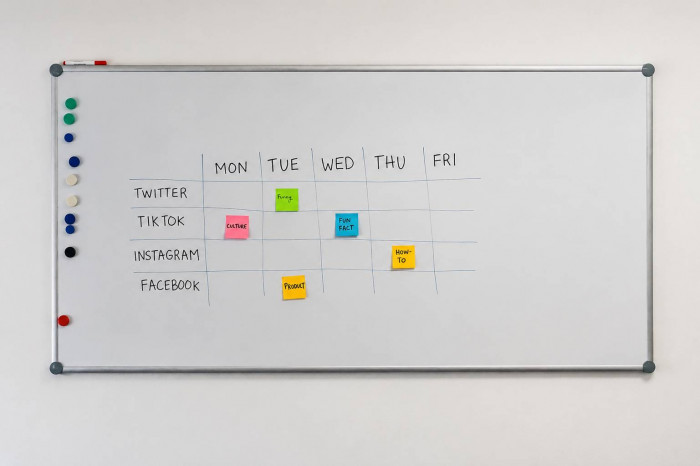
One of the fastest ways to improve content planning is to give each week a clear angle.
This does not mean every post must sound the same. It means your content should feel connected. A creator who jumps from productivity tips to personal rants to trend reactions to sales posts without a visible thread can confuse the audience. People may enjoy individual posts, but they may not understand what the creator is known for.
A weekly angle gives the content a center.
For example:
● “This week, I will focus on helping creators improve their profiles.”
● “This week, I will explain content planning mistakes.”
● “This week, I will turn audience questions into practical posts.”
● “This week, I will build trust around my process.”
● “This week, I will warm up my audience for an offer.”
This is more useful than simply filling a calendar. A calendar tells you when to post. A weekly angle tells you why the posts belong together.
If your angle is “better profile first impressions,” your week could include a short video on bio mistakes, a carousel on profile layout, a personal post about what makes creators look credible, and a checklist-style post for new creators. Each piece works separately, but together they build authority around one useful theme.
That is how a creator becomes easier to remember.
Build the Smallest Useful Plan
Many content plans fail because they are built for an ideal week, not a real one.
A creator may plan seven posts, two reels, one newsletter, three carousels, daily stories, and a YouTube script. It looks impressive on Sunday. By Wednesday, it becomes a guilt list.
A better weekly reset creates the smallest useful plan. That means choosing enough content to stay visible and intentional without overloading the creator.
For most solo creators, three strong pieces of content can be better than seven rushed ones. A realistic plan might include one authority post, one audience-engagement post, and one repurposed or lighter post.
Here is a cleaner way to think about it:
| Content Role | Purpose | Example |
| Authority post | Shows expertise | A breakdown, tutorial, checklist, case study, or mistake analysis |
| Connection post | Builds trust | A lesson, opinion, behind-the-scenes note, or personal observation |
| Discovery post | Reaches new people | A short video, trend adaptation, shareable tip, or strong hook-based post |
| Conversion post | Moves people toward action | FAQ, offer explainer, testimonial, resource, or newsletter prompt |
You do not need all four every week. Choose based on your current goal.
If your audience is growing but not engaging, prioritize connection. If people engage but do not click or inquire, add conversion. If your profile feels quiet, use discovery. If you want to become known for a specific subject, publish more authority content.
Good planning is not about posting more. It is about choosing the right role for each piece.
Make Execution Easier
The final part of the reset is not content planning. It is friction removal.
A plan that says “make carousel” is too vague. It still leaves the hardest part for later. A better plan tells you the next small action.
Instead of “record video,” write “draft three opening hooks.”
Instead of “write LinkedIn post,” write “pull one example from last week’s client conversation.”
Instead of “make carousel,” write “outline seven slide titles.”
Instead of “send newsletter,” write “reuse Tuesday’s post as the opening section.”
This small change can save the week. Most creators do not avoid content because they are lazy. They avoid it because the starting point is unclear.
Before ending the reset, each planned post should have:
● A topic
● A format
● A reason for posting
● One next action
That is enough. You do not need a perfect script, caption, and design in the reset itself. You only need to make the next work session easier to start.
What a Good Reset Reveals Over Time
The first weekly reset gives you a better plan. The fifth weekly reset gives you better judgment.
After a few weeks, patterns become obvious. You may notice that your audience saves practical frameworks but comments more on personal lessons. You may see that short videos bring reach, but carousels bring profile visits. You may discover that your best content ideas come from audience questions, not from trend pages.
This is the hidden value of the routine. It creates a feedback loop.
Creators who never review their work repeat the same mistakes for months. They keep blaming the algorithm, the platform, or the audience. Sometimes those things matter, but often the real issue is simpler: the creator is not studying their own content enough to improve it.
A weekly reset forces you to pause and ask better questions:
● What is my audience repeatedly asking?
● Which topics are becoming part of my identity?
● Which formats create the strongest response?
● Which posts bring attention but not trust?
● Which ideas should become a series instead of a one-off post?
This is how content planning becomes more strategic without becoming complicated.
A 30-Minute Routine You Can Actually Repeat
The best content system is not the one with the most columns, apps, tags, or dashboards. It is the one you can repeat when the week is busy.
Here is the full weekly reset in plain language:
1. Look at what you published.
2. Notice what people did in response.
3. Remove weak ideas from your planning space.
4. Choose one theme or priority for the week.
5. Pick a realistic number of posts.
6. Assign one next action to each post.
7. Leave the reset with clarity, not more pressure.
That is the whole routine.
It is simple because it needs to be. Creators already have enough moving parts: ideas, editing, hooks, captions, comments, thumbnails, analytics, platform changes, and audience expectations. A useful reset should reduce noise, not add to it.
Final Verdict
The Creator’s Weekly Reset works because it gives creators a fixed moment to think before they produce.
It helps separate good ideas from clutter, useful signals from vanity metrics, and realistic planning from overambitious scheduling. More importantly, it helps creators build content with memory. Each week teaches the next one.
A creator who resets every week is not just posting. They are learning from their own audience, refining their positioning, and turning scattered effort into a more deliberate content system.
Thirty minutes will not solve every content problem. But used consistently, it can stop the weekly panic, sharpen your planning, and make your next post feel less like a guess and more like a decision.