The Expectation Gap No One Talks About
Content creation was supposed to get easier. That was the promise when tools like ChatGPT, Jasper, and Copy.ai became widely accessible. The expectation was simple: faster drafts, fewer bottlenecks, and a smoother creative process.
But the lived experience for many creators tells a different story. The tools work. They generate content quickly and often convincingly. Yet the process still feels mentally heavy, inconsistent, and at times even more frustrating than before.
This disconnect exists because AI has not removed the complexity of content creation. It has shifted it. What used to be a struggle of execution has become a struggle of direction, judgment, and clarity. The effort has not disappeared. It has moved to a deeper layer.
Content Creation Is Not a Single Task
One of the biggest misconceptions is that content creation is just “writing” or “posting.” In reality, it is a chain of decisions that depend on each other. When one part is unclear, the entire process slows down.
| Stage | What Actually Happens | Where It Feels Hard |
| Idea | Choosing what to say | Too many options, no clarity |
| Positioning | Deciding angle and audience | Fear of being irrelevant |
| Creation | Writing, designing, producing | Maintaining quality and flow |
| Editing | Refining structure and clarity | Overthinking and second-guessing |
| Distribution | Posting and optimizing | Uncertain outcomes |
| Feedback Loop | Analyzing performance | Lack of clear signals |
AI tools are strongest at the creation stage, where they can generate drafts, outlines, or variations quickly. However, the stages that demand the most clarity such as idea selection, positioning, and evaluation are still entirely dependent on human judgment.
This is why someone can generate a full article in minutes and still spend hours deciding whether it is worth publishing.
The Real Bottleneck: Decision Fatigue
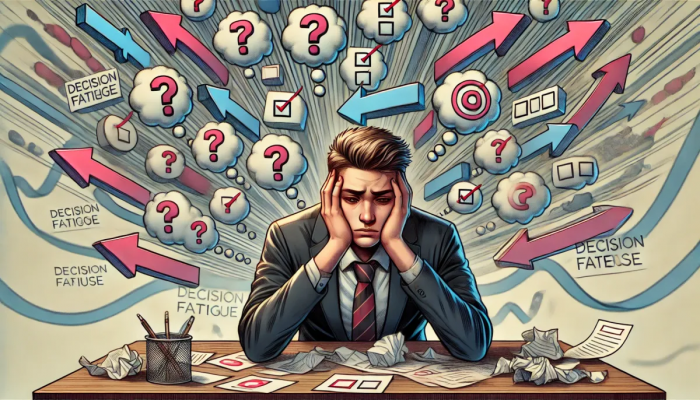
The biggest hidden challenge in AI-assisted content creation is not time. It is the number of decisions a creator has to make.
Before AI, the process was constrained. You had one draft, one direction, and limited room to explore variations. That constraint forced clarity. Now, with AI, the number of options expands dramatically. You can generate multiple headlines, rewrite sections endlessly, or explore completely different tones within seconds.
This abundance creates friction rather than freedom. The creator is no longer asking what to write. Instead, they are constantly evaluating what is better, what is good enough, and what should be discarded.
Over time, this leads to decision fatigue. Even small choices begin to feel heavy because they are repeated across every stage of the workflow. The mental energy required to select, refine, and finalize content often outweighs the time saved in generating it.
The paradox is simple: AI reduces effort in execution but increases effort in selection.
Speed Without Direction Creates Friction
AI tools are designed to accelerate output. But speed only becomes valuable when it’s guided by clear direction. Without a defined intent or angle, faster production simply results in more options to sift through not better decisions.
Creators today can generate multiple drafts, outlines, and ideas within minutes. Yet when there’s no clarity around audience, positioning, or purpose, these outputs begin to blur together. They feel usable, but not meaningful. Abundant, but not decisive.
This is where friction begins to build:
● Too many similar options make it harder not easier to choose
● Lack of clarity around audience leads to generic, unfocused content
● Absence of a strong point of view results in work that feels interchangeable
The problem isn’t a shortage of content. It’s a shortage of conviction.
AI doesn’t inherently understand your long-term vision, your audience’s expectations, or the perspective you want to own. In the absence of these signals, it defaults to safe, widely acceptable patterns content that works, but rarely stands out.
That’s why creators often feel stuck. Not because they can’t produce but because they can’t confidently decide what’s worth publishing.
The Hidden Cost of Context Switching

One area that often goes unnoticed is how fragmented modern content workflows have become.
A single piece of content might involve writing in Notion, generating drafts in ChatGPT, editing with Grammarly, designing visuals in Canva, and scheduling through Buffer.
Each switch may seem small, but it introduces cognitive friction. The brain has to repeatedly reset context, recall intent, and re-align with the original goal. Over time, this fragmentation slows down thinking and increases mental fatigue.
AI tools have expanded capabilities, but they have also expanded the number of environments creators operate in. The difficulty is not just in doing the work, but in staying mentally aligned while doing it.
The Illusion of Productivity
AI creates a powerful sense of momentum. It allows you to generate more content in less time, test different formats quickly, and stay consistently active across platforms.
But increased output doesn’t automatically lead to meaningful progress.
There’s a quiet but critical difference between producing content and building something that holds long-term value. When content is created rapidly without a clear foundation, it often lacks depth and distinction. It may perform decently, but it rarely feels memorable or irreplaceable.
This is where the illusion starts to form:
● High output creates the feeling of progress, even when direction is unclear
● Content that performs “okay” can mask the absence of real differentiation
● Constant activity leaves little room for reflection, refinement, or improvement
The result is a growing disconnect. On the outside, productivity appears to increase. On the inside, satisfaction begins to drop. Creators start to wonder whether they are truly evolving or just producing at a faster pace.
That tension is what makes content creation feel more difficult today. The numbers may suggest progress, but the experience often tells a different story.
Quality Still Requires Human Judgment
AI tools have become highly effective at improving structure, grammar, and readability. Platforms like Notion AI and Grammarly can refine content to a level that feels polished and professional.
However, quality is not defined by polish alone. High-quality content depends on elements that AI cannot fully replicate: original thinking, contextual awareness, and meaningful insight derived from real-world experience. These elements require judgment, not just generation.
AI tends to produce outputs based on patterns. It predicts what is likely to work based on existing data. While this makes it effective for drafting and structuring, it also means the output often leans toward the average.
The gap between “well-written” and “worth reading” still has to be bridged by the creator.
The Originality Problem: Everything Starts to Sound the Same
As more creators rely on AI tools, a noticeable pattern has emerged. Content across different platforms begins to feel similar in tone, structure, and even phrasing.
This happens because most AI systems are trained on overlapping datasets and optimized for broadly acceptable outputs. The result is content that is coherent but often predictable.
For creators, this creates a new layer of difficulty. Standing out requires going beyond what AI naturally produces. It requires injecting perspective, experience, and sometimes even contradiction into the content.
Without that effort, content risks blending into a larger pool of similar outputs. The challenge is no longer just creating content, but creating content that feels distinct.
The Emotional Layer: Pressure Has Increased
Content creation has always involved a degree of uncertainty. What has changed is the level of expectation.
When tools make production easier, the perceived standard rises. Creators begin to feel that they should be able to produce more content, more consistently, and at a higher quality. When that does not happen, it creates self-doubt.
This pressure often shows up in subtle ways:
● Feeling behind despite producing regularly
● Comparing output quality with others using similar tools
● Questioning whether the content is good enough to publish
These are not technical problems. They are psychological responses to a changing environment where the baseline for output has shifted.
The difficulty is no longer in writing itself. It is in maintaining confidence, clarity, and consistency within a more demanding system.
Platform Algorithms Add Another Layer of Difficulty
Even when content is well thought out, distribution introduces uncertainty.
Platforms prioritize different signals: watch time, engagement, click-through rates, retention curves. These signals are not always transparent, and they change frequently. As a result, creators are often optimizing for systems they do not fully understand.
This creates a feedback loop where:
● Good content may underperform due to distribution factors
● Average content may perform well due to timing or trends
AI does not solve this problem. It can help generate content, but it cannot guarantee how that content will be received or distributed.
This unpredictability adds another layer of difficulty. Creators are not just producing content. They are navigating systems that influence visibility in ways that are not fully controllable.
The Workflow Problem Most People Ignore
Another reason content creation feels difficult is that many creators use AI tools without a structured workflow. The tools are powerful, but when used in isolation, they create fragmentation.
For example, generating ideas without validating them, writing drafts without a defined audience, or editing without a clear standard often leads to content that feels disconnected.
A more effective approach is to treat content creation as a structured pipeline:
| Stage | What Works Better |
| Idea | Start with a clear problem or insight |
| Angle | Define who the content is for and why it matters |
| Draft | Use AI to expand and structure ideas |
| Edit | Apply human judgment for clarity and depth |
| Publish | Align with platform-specific expectations |
| Review | Use feedback to refine future content |
When this structure is in place, AI becomes a supporting tool rather than the driving force. The process feels more controlled, and decision-making becomes easier because each step has a clear purpose.
Why Consistency Feels So Difficult

Consistency is often described as a matter of discipline, but in practice, it is heavily influenced by how the process is designed.
If content creation requires constant idea generation, repeated decision-making, and ongoing emotional effort, it becomes difficult to sustain. Even with AI, these underlying demands do not disappear.
AI reduces the time required to produce content, but it does not reduce the effort required to think clearly, choose meaningful topics, and evaluate performance. These are the parts of the process that determine long-term consistency.
This is why many creators experience an initial burst of productivity when adopting AI tools, followed by a slowdown. The tools accelerate output, but they do not solve the deeper challenges of maintaining direction and quality over time.
What Actually Makes Content Creation Easier
The solution is not adding more tools. It is reducing unnecessary complexity.
Creators who find content creation easier tend to operate within clear constraints. They limit the number of decisions they need to make by defining specific themes, formats, and workflows.
Instead of starting from scratch each time, they build repeatable systems that guide the process. AI is then used within those systems to speed up execution rather than define direction.
In practical terms, this often means:
● Focusing on a few core content themes instead of covering everything
● Reusing proven formats that already work for their audience
● Using AI to expand or refine ideas, not generate direction from scratch
This shift reduces cognitive load and makes the process more predictable.
The Real Shift: From Creation to Curation
As AI continues to evolve, the role of the creator is changing.
The value is no longer in producing every piece of content manually. It is in deciding what deserves attention, shaping it effectively, and ensuring it aligns with a broader strategy.
This shift moves content creation closer to curation. The creator becomes responsible for filtering ideas, refining outputs, and maintaining consistency across content.
The difficulty does not disappear. It moves to a higher level of thinking where judgment, taste, and clarity matter more than speed.
Final Perspective
Content creation feels hard today not because AI tools are failing, but because they have exposed the deeper layers of the process.
Execution is no longer the main challenge. The real work now lies in decision-making, strategic thinking, and maintaining a clear point of view.
AI has made it easier to produce content. It has not made it easier to create meaningful content. And that distinction is what defines the experience most creators are feeling today.