
I used to think a post was working when the numbers went up.
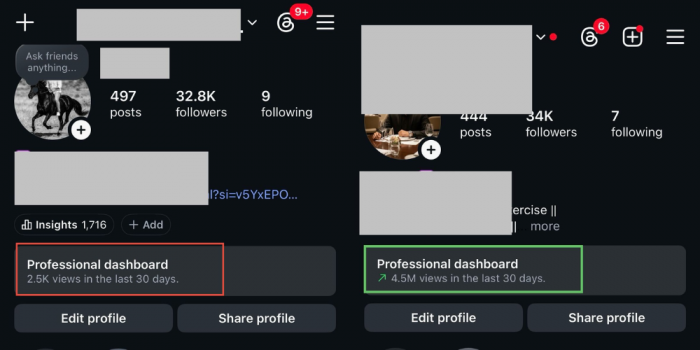
For a long stretch of my first two years writing online, I chased reach. I watched the view counts and refreshed the like tally, sure that a viral post meant I was getting better. Then a post hit my highest reach ever and produced not a single message, while a quieter one I almost deleted brought in two clients. That gap stuck with me. It was the first time I understood that attention and trust are different currencies, and only one of them pays.
This piece is the version of that lesson I wish someone had handed me earlier. By the end you will have a step-by-step method for writing posts that build trust with your audience, and a clear sense of which habits quietly destroy it.
Why I stopped chasing attention
Let me define the thing first, because I went too long without a definition. A trust-building post is any post whose real job is to make readers more confident in you over time, by being useful and honest enough that they keep coming back. Attention is a separate goal, and for a while I confused the two.
Attention is easy to measure, which is why it is so easy to over-value. A post can reach thousands of people who feel nothing and remember nothing. Reach counts the eyes that passed over your words. It says little about whether anyone trusts the person behind them.
Trust is slower and quieter. You rarely see it the moment a post goes out. You see it weeks later, when a stranger defends your point in someone else's comments, or when a quiet follower finally writes to say they want to work together. A moment I realized someone trusted me because of my posts, not only liked them.
Once I saw that difference, my whole approach changed.

I started sorting my content by what it actually did. Some formats are good at getting noticed. Others are good at making people believe you. A few manage both, and those are the ones worth studying. Here is the rough map I worked from:
| Content type | Builds awareness | Builds trust |
|---|---|---|
| Viral or trend posts | High | Medium |
| Teaching or how-to posts | Medium | High |
| Case studies | Medium | Strongest |
| Personal stories | High | High |
The table is a generalization, not a law, and your own numbers may sort differently. Still, it made one thing obvious. The posts I was proudest of for their reach were sitting in the wrong column for the goal I cared about. That sent me looking for what trust is actually made of, which is where the next section starts.
What trust is actually made of
After enough trial and error, I landed on three things that have to be present before a reader will trust you.
I think of it as a simple equation.
Trust = Competence + Consistency + Character
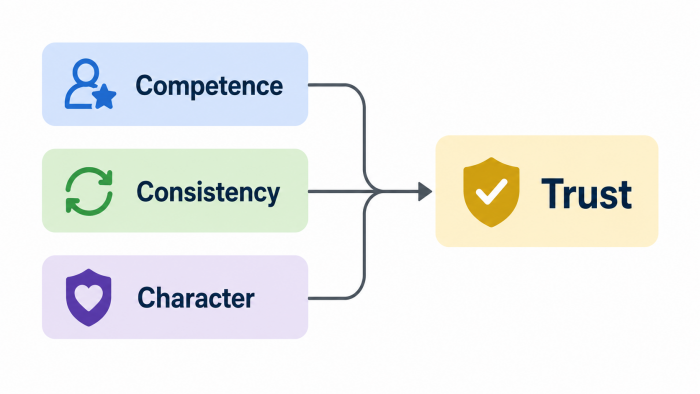
Competence is the reader believing you know the thing you are talking about. Consistency is you showing up in a way they can predict, with quality that holds. Character is the part most people skip, the sense that you are honest about your limits and that you put the reader ahead of your own pitch.
Each one has its own failure mode, and each one reappears in the post types I will walk through later. For the next three sections I will take them in turn, starting with the one that is easiest to fake and hardest to fake well.
Competence, or proving you know the thing
Competence has almost nothing to do with sounding smart. What it rewards is specificity, detail precise enough that a reader can tell you have done the work.
The fastest way I found to show it was to replace advice with examples. Early on I wrote things like post consistently or know your audience, and they landed like wallpaper. Nobody argues with generic advice, and nobody remembers it. When I swapped a vague tip for a concrete story, the response changed. I once posted a line-by-line teardown of an email that flopped on me, including the subject line I thought was clever and the plain one that beat it. It got more saves than anything motivational I had written that year, and three people replied asking me to look at their sequences.
Specific beats are impressive, every time.
Numbers help too, as long as they are yours. A reader can sense the difference between a borrowed statistic and a figure you earned. I tested forty subject lines across one quarter, and the plainest one, just the offer stated simply, beat my cleverest by a wide margin on opens. . Show the receipts and you no longer have to claim authority. The reader hands it to you.

Consistency, where my biggest mistake lived
If competence earns the first nod, consistency is what keeps it.
This is the section where I made my most expensive mistake, so I will be blunt about it. For months I believed volume was the answer. I told myself that posting every single day would compound into trust, so I did, even on days when I had nothing worth saying. I posted every weekday for four months straight. By the end the posts had thinned into filler and the engagement had gone flat. I started to dread opening the app. The lesson took a while to sink in. My audience responded to something useful twice a week far more than to something shallow seven times a week.
Consistency turned out to mean two things at once, and I had only been doing the easy one. The first is rhythm, people knowing roughly when to expect you. The second is coherence, your point of view holding steady so readers are not meeting a different person each week. Rhythm without coherence is just noise on a schedule.
I cut my output and my reach went up. That still surprises me.
The trade I made was easy to describe and hard to commit to. I chose depth over frequency. I now publish two considered posts a week, usually a teaching post and a story, and I would rather skip a slot than fill it with noise. The same trade shows up in the post types below, because the formats that build the most trust are the ones that take the most thought.
Character, the part most people skip
The character is the hardest of the three to perform, which is lucky, because performing it does not work. Readers have a finely tuned sense for someone managing an image. You build trust through character by being willing to look a little less polished than you would like.
The post that taught me this was one I almost did not publish. I wrote about a course launch that sold four seats against a goal of forty, and I laid out the assumptions I got wrong without dressing it up. It became my most shared post of the year, and a handful of the people who shared it became clients. The result was counterintuitive. Admitting a mistake did not make me look less competent. It made the competence believable, because now there was a real person attached to it.
People trust a voice that can say “I was wrong.”
The character also shows up in restraint. Every time you resist the urge to oversell, you make a small deposit. Every time you point someone to a better resource that is not yours, you make a larger one. As we saw in the section on consistency, your point of view has to hold steady, and character is what makes that point of view worth trusting in the first place.
The post types that did the heavy lifting
With the three pillars in place, the question turns practical. Which formats actually carry them? These four worked hardest for me, and each leans on a pillar from the sections above.
The behind-the-scenes post
This one builds competence and character together. You show the messy middle of your work instead of the clean result. A rough template: open with the goal you were chasing, then show the part that went sideways and the small fix that saved it. I shared the three drafts of a homepage headline, including the two embarrassing early versions and the client question that finally unlocked the right one. People told me the messy middle was the most useful part.
The lesson-from-failure post
This is pure character, and it travels further than almost anything else I write. The structure is plain and honest: here is what I got wrong, here is what it cost, here is what I do differently now.My post about losing a retainer client, and the boundary I now set in every contract because of it, outperformed every polished case study I had published.
The teaching post
Teaching posts are the workhorse for competence. You take one specific problem your reader has and solve it completely, with no padding. The trick I learned the hard way is narrowness. A post that fully solves one small problem out-trusts a post that vaguely covers a big one. A short post titled how to write a subject line that survives the inbox, with one rule and one example, became the piece people still link to when they recommend me.
The customer-story post
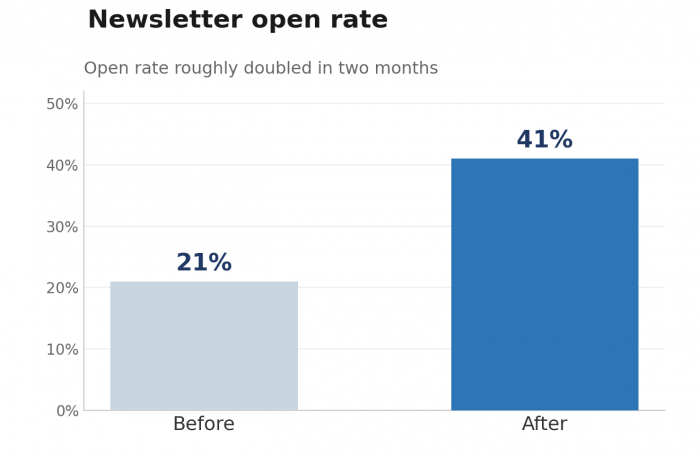
If the failure post is the most generous format, the customer story is the most persuasive. You let someone else's result do the talking, which sidesteps the awkwardness of praising yourself. Keep the focus on their problem and their outcome, and keep yourself in the background. One founder came to me with a newsletter nobody opened. We cut her send length in half and led every issue with a single useful idea, and within two months her open rate had roughly doubled. I kept her name out of it, but she was glad to have the result shared.
None of these formats is a clever hack. Each is a pillar from the earlier sections given a shape. Which makes the opposite worth a look: the habits that take trust apart.
The habits that quietly broke trust
For a while I focused only on what to add. It took longer to notice what was quietly subtracting. These are the habits I had to unlearn, and most are the mirror image of the pillars above.
- Clickbait the post never delivers on. The headline writes a check the content cannot cash, and the reader files you under not worth the click next time.
- Borrowed authority. Quoting big names or dropping statistics you did not earn reads like a costume, and readers can feel when knowledge is rented.
- Overpromising. The moment you guarantee a result you cannot control, you have traded lasting trust for a single click.
- Selling in every post. A feed that is all pitch teaches people to scroll past you, because trust needs room to breathe between asks.
- Changing your opinion to match the room. Flip-flopping for approval tells readers your point of view is for sale, which is the opposite of the character we covered earlier.
For a long time I was guilty of the constant selling. Nearly every post ended with a call to book a call, and the more I pushed, the quieter the replies got. When I cut the asks back to one in five posts, the inbound conversations went up.
Most of these are tempting because they work once.
The method, step by step
If you want the whole thing on one screen, here is the method these sections add up to:
- Sort your posts by job. Decide whether a post is meant to build awareness or trust, and write more of the ones that build trust.
- Prove competence. Swap vague advice for specific examples and your own numbers, so the reader hands you authority instead of you claiming it.
- Choose consistency over volume. Pick a rhythm you can hold and a point of view that stays steady — depth beats frequency.
- Lead with character. Be willing to look less polished: admit what you got wrong, hold back the hard sell, and point people to better resources even when they are not yours.
- Use the trust-building formats. Lean on behind-the-scenes, lesson-from-failure, teaching, and customer-story posts.
- Cut the trust-breaking habits. Drop clickbait, borrowed authority, overpromising, constant selling, and changing your opinion to fit the room.
What I would tell you if we only had five minutes
If you remember nothing else, remember this. Trust compounds, and compounding is boring while it is happening.
Every post I have described is a small deposit. Most of them feel like they did nothing on the day they went out. The reader who finally hires you, or shares your work, or sends the message that makes your month, is responding to dozens of deposits they never mentioned. The client who signed my largest project told me, almost in passing, that he had been reading my posts for over a year before he reached out. I had no idea he existed until the day he booked a call. You almost never get to watch trust accumulate. You only get to see it arrive.
So the practical advice is almost dull: keep making honest deposits, and stop grading each one by the day's likes.
The writers who build real trust are not the ones who found the perfect post. They are the ones who kept showing up as the same useful, honest person long enough for it to add up. The next post you write will not prove that. The hundredth one will.