How I stopped dumping thirty tags into every post and started getting found.

The morning my favorite trick stopped working
For years I treated hashtags like a cheat code. After every post I pasted thirty tags underneath and watched the views climb. It felt like magic.
Then one quiet Tuesday the magic switched off.
My reach did not collapse all at once. It drained slowly, the way a phone battery does when you are not watching it. Same posts and the same tags. Half the eyes.
Here is what happened, and it is the spine of everything below. The platforms stopped treating hashtags as a reach button. Instagram's head, Adam Mosseri, has said plainly that tags help the system understand what a post is about, yet they will not hand you more distribution. Instagram then cut its limit from thirty tags to five, and search and keywords quietly took over the job tags used to do.
This guide is what I wish someone had handed me that Tuesday. I'll start with what a hashtag actually does now, build a strategy you can run on any network, walk you through each platform, and finish where the field is heading. You will use fewer tags and get more from them than you did when you were dumping thirty into every caption.
What a hashtag actually is now
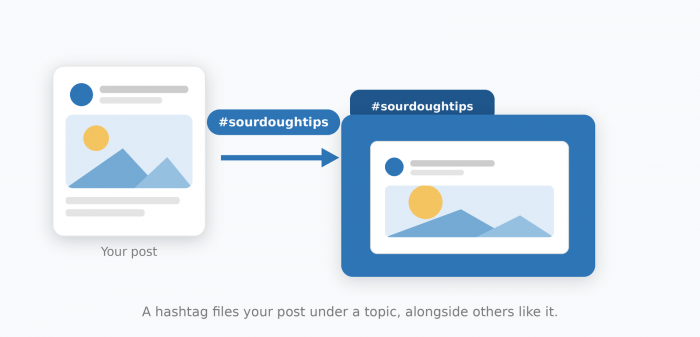
Strip away the mystique and a hashtag is a label. You put the pound sign before a word, and the platform files your post under that topic. The filing still works. The reach-magic is the part that left.
Hashtags were born on Twitter in 2007 as a way to group related messages, and for a decade a good tag could put your post in front of thousands of strangers. Then recommendation engines got smart enough to guess what you would like without you following anything. In December 2024 Instagram even removed the option to follow a hashtag, which quietly retired the old tag-based feed.
It helps to separate tags from keywords. A keyword is a natural phrase inside your caption, the kind of thing someone types into a search bar, like “easy weeknight dinners.” A hashtag is that same idea turned into a clickable tag. The difference that matters: platforms now read your plain caption as searchable text, so your words carry weight before you add a single tag. Hold onto that, because it becomes the whole argument later.
Why they still matter in 2026
If tags no longer hand you reach, you might wonder whether they earn any effort. They do, for two reasons that have nothing to do with going viral.
The first is the right audience. A precise tag works like a bouncer, pulling in people who care about your subject and turning away the scrollers who would glance and leave. That matters, because when the wrong crowd ignores your post, the algorithm reads the silence as a reason to show it to even fewer people.
The second is search. Social apps are turning into search engines, and close to one in three people now start a search inside TikTok or Instagram instead of Google. Instagram captions have even begun surfacing in Google's results. A well-worded, well-tagged post keeps getting found for weeks, a slower but steadier kind of reach than the old spike. As I said up top, tags alone will not lift your reach. Findability is a different prize, and tags still help you win it.
What the algorithm actually rewards
To use tags well you only need to know which levers are real. When you publish, the platform treats your tags as one clue among many about your topic, then weighs that against everything it knows about each user. Tags are in the pile. They are nowhere near the heaviest thing in it.
The heavy items are engagement signals: how long someone watches, and whether they save your post or send it to a friend. Those behaviors tell the platform your content deserves to spread, and they outrank any tag. This is why a relevant tag beats a popular one every time. A giant tag like #love drops you into an ocean that refreshes every second. A snug, specific tag lands you in a smaller room where people actually stop.
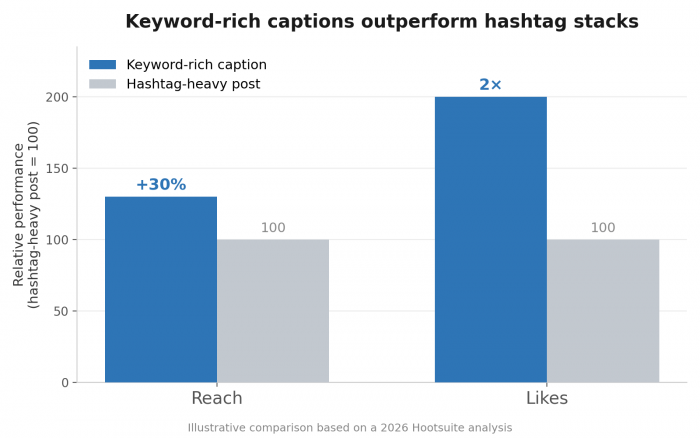
Here is the number that should reframe everything. A 2026 Hootsuite analysis found that posts built around keyword-rich captions pulled in roughly thirty percent more reach and about twice the likes of posts that leaned on a pile of hashtags. If you are the person who struggles to select hashtags for your post there is good news for you, you can find high-performing hashtags instantly with Technylo Hashtag Generator and boost your post reach. The caption did more than the tag stack, which is why the strategy below puts your words first and your tags second.
The tags worth choosing
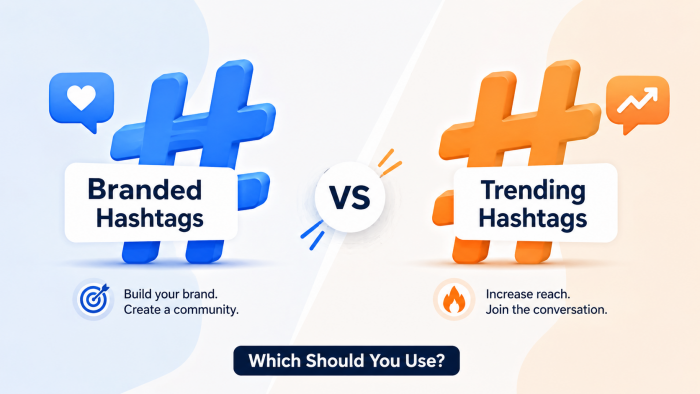
Most tags fall into a few buckets, and a strong post borrows from more than one. Branded tags are yours alone, built from your name or a phrase you coined, and their job is to gather your community rather than reach the masses. Industry tags name your field, like #skincare, and carry big audiences with big competition, so they work best as context. Niche tags describe exactly what a post is about, like #sourdoughtips instead of #baking, and this is the sweet spot where most of your tags should live. Community tags name a tribe, like #vanlife, and connect you to people already gathered around an interest. Location tags pin you to a place, which is gold for any business with an address.
How to research without guessing
Picking tags off the top of your head is how you end up with the same tired set on every post. Start from your core topic: ask what your ideal reader would type into a search bar to find you, and write that phrase in plain words. It seeds both your caption and your tags.
Then look outward and inward. Open a few competitor posts that did well and note the tags underneath, hunting for patterns rather than copying. Type your seed phrase into the app's own search and watch its suggestions, since those come from what people actually search. Glance at the post counts while you are there. A tag with millions of posts is a crowded room where you vanish in seconds, while a few thousand posts can be too quiet to matter. The keepers usually sit in between.
Save what you find in a simple library sorted by content type, so publishing means choosing from a tested shortlist instead of staring at a blank line.
Building a strategy that fits the new limits
First I have to take something away. If you have followed the old three-three-three rule, stacking three broad tags on top of three medium ones on top of three niche ones for nine in total, let it go. It comes from the old Instagram and does not survive a five-tag ceiling. Nine tags now reads as clutter, and on some networks it works against you.
Swap the count for a shape. On most posts, one broad tag gives context and two or three niche tags reach the people who will engage. That is it. Three or four well-chosen tags, weighted toward the specific, with everything past that treated as noise.
A few habits keep this honest. Lean relevant when you are torn, because a small interested audience beats a huge indifferent one. Organize tags by content category so tagging is a quick choice, not a fresh decision each time. Rotate your sets, since pasting the identical tags for months can read as spammy and traps you in the same audience. Then treat tags as an experiment. Keep the sets that earn saves and drop the rest.
Those ceilings change from one network to the next, which is where I am taking you now.
A walk through every major platform
The principle holds everywhere: a couple of well-aimed tags plus a caption in your reader's language. The specifics differ, so here is the cheat sheet before I break each one down.
| Platform | Sweet spot | What to remember |
|---|---|---|
| 3-5 tags | Hard cap of 5. Let the caption do the heavy lifting. | |
| TikTok | 3-5 tags | #FYP adds nothing. Niche tags carry the post. |
| 3-5 tags | Place them at the end and keep them professional. | |
| X (Twitter) | 1-2 tags | More than two can cut your engagement. |
| 1-2 tags | Mostly for joining a public conversation or event. | |
| YouTube | 3-5 tags | Never exceed 15, or YouTube ignores all of them. |
Instagram changed the most, so your Instagram strategy needs the most updating. It now caps you at five tags (down from thirty) and removed followable tags in 2024. Use three to five specific tags, then let a keyword-rich caption do the real work, because Instagram reads that text and can surface you to people who never saw your tags. Skip the generic #instagood pile; it signals nothing and wastes your five slots.
TikTok tags still aid discovery, but the same three-to-five rule applies. Pair one broad category tag with a couple of niche ones, and skip #fyp and #foryou, which everyone uses and which tell the algorithm nothing. TikTok search is growing, so your spoken words and on-screen text matter as much as the tags.
LinkedIn rewards restraint. Three to five tags at the end of the post, drawn from your industry and the topics you want to be known for. Add more and a professional audience reads you as less credible.
X (Twitter) is where hashtags were born, and they still earn their keep for live moments and trending talk. The catch is volume: one or two woven into the sentence is the sweet spot, and going further can shrink your engagement.
Facebook gives tags a minor role, mostly for joining a public conversation or event. Keep it to one or two, and strip down any Instagram caption you repost.
YouTube has the one hard rule you cannot ignore. You may add up to fifteen tags, but cross that line and it discards all of them, even the valid ones. Three to five is plenty, and the keywords in your title and description matter far more than tags here.
Banned and risky hashtags
One trap catches people off guard, because the tag that hurts you can look innocent. Platforms hide or restrict tags when spam or abuse latches onto them, and sometimes a perfectly ordinary word gets quietly limited. Add one and your post can be held back from search and recommendations, or in the worst case your account gets shadowbanned and your reach drops with no warning. Spotting them is easy: search a tag inside the app before you adopt it, and if you see a notice that recent posts are hidden, or it returns almost nothing despite looking common, move on.
Knowing whether it is working
Everything here stays a guess until your own numbers confirm it, and you do not need a fancy dashboard. Watch your reach and, where the platform shows it, the slice that came from search; some apps now report search views directly. Saves and shares matter just as much, since a saved post is one the platform wants to spread. Pay attention to who follows you afterward too, because the right followers beat a bump of accounts that never engage again.
Once a month, compare your tag sets against those numbers and keep what earns its place. Let the rest go. Over a few months the pattern of what works for your specific audience becomes clear, and that beats any generic list of popular tags.
Where hashtags go from here
The direction has been clear since that Tuesday. Algorithms keep getting better at reading the whole post on their own. They scan your caption and the on-screen text, and they even pick up the words you say out loud in a video, piecing together your topic without leaning on tags. Tags are sliding toward being one helpful signal among many.
At the same time, search inside social apps keeps growing, and the skill once called hashtag strategy is becoming something closer to writing for how people search. Keywords climb while tag stacks fade.
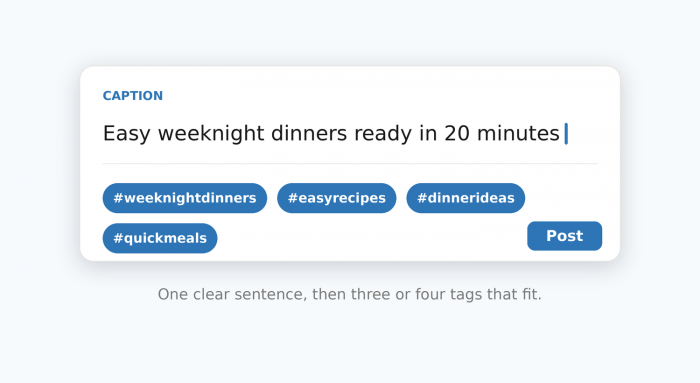
So the next time you face a blank caption, spend the energy you once burned on thirty tags writing one clear sentence that says what your post is about, in the words your reader would use. Then add three or four tags that genuinely fit. That single habit will carry you further than any list I could hand you.
The Bottom Line
Hashtags stopped being a megaphone and became a filing system, and that one shift sits behind every rule I gave you here. The aim now is to be found by the right people, a calmer and steadier goal than chasing a crowd. Fewer tags, chosen with care, will carry you there.
Treat each tag the way a librarian treats a label. Pick a few that are accurate and put them where they belong. Then let your words do the rest.