AI can help you ship content faster than ever, but speed alone doesn’t build connection. The real advantage comes when you use AI to handle the heavy lifting while you stay firmly in charge of voice, nuance, and truth. Authentic captions feel like a conversation with a person, not a polished press release written by a model.
This guide walks you through how to turn AI-generated drafts into captions that sound like you, resonate with your audience, and still save you time.
Why authenticity matters more than polish
Your caption is usually the first place people “hear” you. Before they decode your carousel, watch your reel, or click your link, they scan the caption and decide in a couple of seconds whether this feels like a real human or just another templated post.
Authentic captions do three things at once: they convey a clear point, they carry a recognizable voice, and they show a small glimpse of real life. When any of these is missing, people sense it. The caption generated in AI Caption Generator may be grammatically perfect, but it feels like something they’ve seen a hundred times before.
This is where most AI captions fail. Left unedited, they sound polite, generic, and slightly detached from reality. The solution isn’t to abandon AI, it's to reposition it. AI becomes your draft engine; you remain the editor, storyteller, and guardian of trust.
The anatomy of a “real” caption
Authentic captions are less about fancy phrasing and more about a few core elements working together: voice, specificity, emotion, and structure. Think of them as the four levers you can adjust each time you edit an AI draft.
| Element | What it does | Typical AI issue |
| Voice | Makes the caption sound distinctly like you | Overly formal or neutral tone |
| Specificity | Grounds the message in real, concrete details | Vague phrases like “game-changing” or “great” |
| Emotion | Gives readers a reason to care | Safe, emotionally flat language |
| Structure | Guides attention and makes reading effortless | Repetitive hooks and predictable patterns |
When a caption feels “AI-ish”, it’s rarely because of one word. It’s usually because all four levers are set to default.
Build your voice before you build prompts
AI can’t imitate a voice you haven’t clearly defined. Before you touch a prompt, spend a few minutes documenting how you actually sound. Not how a typical “brand” sounds, but how your audience already hears you.
Start by writing down the words and phrases you naturally use, the ones you avoid, and the role you play in your audience’s life. Are you the friend who keeps it real? The coach who doesn’t sugarcoat? The educator who simplifies complexity without dumbing it down?
It also helps to label your baseline tone: casual or polished, playful or serious, opinionated or neutral. If someone read ten of your captions in a row, what traits would they consistently notice? That informal “voice brief” becomes the reference point you’ll keep feeding to AI so your outputs don’t drift into generic territory.
Prompt with context, not just commands

Most stale AI captions start with an empty prompt: “Write an Instagram caption about my new product.” That’s like asking a stranger to write your wedding speech with zero backstory.
A strong prompt tells AI who you are, who you’re talking to, what you want the caption to achieve, and what to avoid. When you front-load context, the draft comes back closer to your lane and needs less surgery.
Here’s a simple prompt structure you can reuse:
| Prompt Component | Example input |
| Who you are | “I’m a solo designer helping creators build personal brands.” |
| Voice | “My tone is honest, slightly witty, and conversational, not corporate.” |
| Audience | “I speak to creators who feel overwhelmed by content and branding.” |
| Goal | “This caption should promote a new carousel about simplifying their brand.” |
| Constraints | “Avoid hype words like ‘game-changing’, keep it under 80 words, no clichés.” |
The idea is to treat AI like a junior writer on your team: if you wouldn’t give a human only one vague sentence as a brief, don’t do it to the model either.
Treat AI output as a draft, not a destination
The biggest shift in mindset is this: AI gives you clay, not a finished sculpture. Your job is to mold it.
A practical way to edit is to move through three passes:
1. Clarity pass : Remove filler sentences (“In today’s world…”, “We’re so excited to share…”) and tighten any overlong explanations. If a sentence doesn’t earn its place, cut it.
2. Specificity pass : Swap vague claims for concrete details. “Our community is thriving” becomes “500 creators joined in the last 30 days.” “This changed everything” becomes “This cut my editing time from 2 hours to 45 minutes.”
3. Voice pass : Inject your natural phrasing. If you’d never say “elevate your experience” in real life, replace it with something you would: “make this less of a headache,” “cut the chaos,” or “finally feel in control.”
Reading the caption aloud is a simple but powerful test. If you feel even slightly embarrassed saying it, your audience will feel that disconnect when they read it.
Add details only you could know
AI is good at patterns; authenticity lives in specifics. The easiest way to humanize a caption is to add details that could only come from your experience, your workflow, or your audience.
This might be the exact time you recorded the video (“Shot this at 6:12 a.m. on my third coffee”), a small mistake you made (“I forgot to hit record on the first take”), or a micro-observation about your audience (“You keep saving productivity posts and still feel behind this one is for you”).
These touches act like fingerprints. An AI can generate similar structure and tone, but it can’t spontaneously invent your lived context. A single well-chosen detail is often enough to break the “this feels like ChatGPT” reaction.
Make authenticity platform-aware
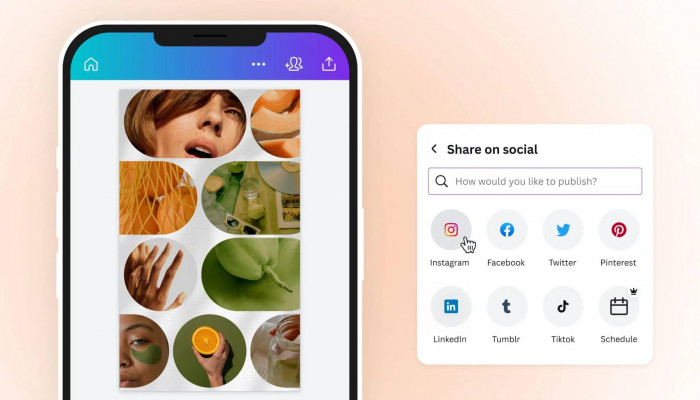
A caption can sound authentic and still flop if it doesn’t fit the platform’s rhythm. The same story needs different packaging on Instagram, LinkedIn, X, and Facebook.
Here’s a quick snapshot of how to tune an AI draft for each major platform:
| Platform | Authentic style cues | Common missteps |
| Conversational, visual, clear emotional hook, short paragraphs | Overly long blocks or formal tone | |
| Insight-driven, story plus takeaway, light professional polish | Empty inspiration with no substance | |
| X | Punchy, opinionated, one clear idea per post | Long-winded intros or PR language |
| Warmer, more community-focused, slightly longer narrative allowed | Dense text walls and jargon |
Instead of copying the same AI caption everywhere, use it as a base and then shorten, sharpen, or soften it depending on where it will live.
Use emotion without turning it into drama
Authentic emotion doesn’t mean over-the-top reactions. It means the caption helps readers feel something specific: relief, curiosity, recognition, motivation, or even a bit of healthy discomfort.
One useful approach is to connect your post to a micro-moment in your audience’s life. For example, instead of “Check out my new video on consistency,” you might say, “If you’ve promised yourself ‘I’ll start posting next Monday’ for the last three Mondays, this one’s for you.”
Notice that the emotion here is recognition, not spectacle. Once AI gives you the basic explanation, ask: “What is the human moment behind this?” Then write one line that speaks directly to that moment.
Maintain a consistent brand voice over time
Authentic captions aren’t just about individual posts; they’re about the pattern people notice across your content. If one day you sound like a corporate press release and the next you sound like a meme account, it becomes harder for followers to trust that any of the voices are really you.
Consistency doesn’t mean every caption looks the same. It means certain things are reliably stable: your level of directness, your sense of humor, how much you explain versus how much you assume, and the kind of call to action you use.
You can think of it as a “voice baseline.” You might dial it slightly up or down more serious when announcing a program, more playful in a behind-the-scenes post but it always feels like a variation on the same person, not an entirely different writer.
A simple authenticity checklist
Instead of overthinking every caption, you can use a fast pre-publish checklist. Once AI generates the draft and you’ve edited it, run through these questions:
● Does the first line feel like something I’d genuinely say to a friend or follower?
● Is there at least one concrete detail (number, moment, reference, or observation)?
● Have I removed obviously generic phrases that could belong to any creator in any niche?
● If someone had never seen my content before, would this caption give them a realistic sense of my voice?
If you stumble on any of these, tweak the caption. A small change in the opening line or one added detail is often enough to shift the perception from “polished but generic” to “oh, this person gets it.”
A repeatable workflow for creators
To make this sustainable, you need a repeatable workflow rather than a one-off effort. Here’s a simple pipeline you can apply to almost any post:
| Stage | What you do | Why it matters |
| Clarify the point | Decide the one message the caption must land | Prevents vague, overstuffed drafts |
| Brief the AI | Share your voice, audience, goal, and constraints | Produces drafts closer to your style |
| Generate | Let AI create 1–3 caption options | Gives you raw material to work with |
| Edit | Tighten wording, add specifics, inject your tone | Turns a generic draft into your voice |
| Final check | Read aloud, run the authenticity checklist, then publish | Ensures captions feel human, not canned |
Over time, you’ll notice your prompts get sharper and your editing faster. The goal isn’t to remove yourself from the process but to make your involvement more focused and more strategic.
Bringing it all together
Authentic AI captions are the product of partnership, not delegation. AI handles pattern, structure, and speed; you bring context, lived experience, and the courage to say things in a way only you can.
When you define your voice, brief AI with real context, treat outputs as drafts, inject specific details, and keep your tone consistent across platforms, your captions stop sounding like the internet and start sounding like you. That’s the kind of authenticity audiences recognize and remember.