
AI has quietly become the growth marketer’s unfair advantage. The teams that win in 2026 are not the ones “using AI” in a vague way, but the ones that plug specific tools into specific bottlenecks: content velocity, funnel automation, SEO, ad creative, and retention. Used that way, AI stops being a toy and starts looking like an extra operator on the team.
Below is a guide to seven AI tools that actually move the needle for growth marketing.
Growth Marketing and AI: Where These Tools Really Fit
Before diving into tools, it helps to map where growth marketing usually breaks:
● Campaigns take too long to brief, write, and ship.
● CRM and funnel workflows are under‑used or inconsistent.
● SEO works in theory but execution is sporadic and unstructured.
● Ad creative burns out faster than the media budget.
● Retention and lifecycle emails never get the love they deserve.
The tools below are chosen because each one is excellent at solving at least one of those real‑world constraints, not because they are fashionable.
1. Jasper : Turning Growth Ideas into Ship-Ready Content
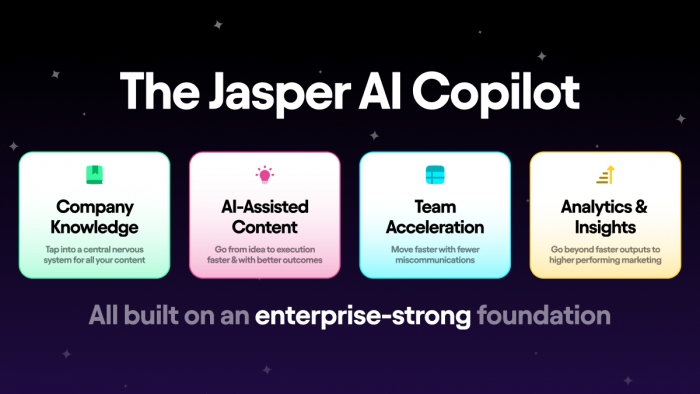
Jasper is best understood as an AI content system rather than just a “writer.” It is built for marketing teams that run many campaigns simultaneously and cannot afford to rewrite the brand voice from scratch every time. Brand guidelines, positioning, tone, and style can be baked into the system so that all generated copy feels like it comes from the same team.
In practical growth terms, Jasper can handle blog content for acquisition, landing pages for conversion, performance ad copy for paid channels, and supporting assets like nurture emails and product descriptions. It shines when you have clear strategic direction but limited bandwidth to execute at scale.
Jasper at a glance
| Aspect | Details |
| Core use | Generating and scaling on‑brand marketing content across channels. |
| Main strength | Keeps campaign content consistent while significantly increasing output. |
| Limitation | Works best when a team invests time in feeding it strong brand inputs. |
| Pricing | Free trial available; paid plans start around $59/month. |
| Best for | Teams that already know what to say and need to say it everywhere, fast. |
2. HubSpot Marketing Hub : AI Sitting on Top of Your Funnel
HubSpot Marketing Hub is less about individual campaigns and more about the whole system that supports growth: contacts, events, workflows, emails, landing pages, and reports. Its AI features plug into this structure, helping marketing teams write emails and pages faster, suggest improvements, and surface insights from campaign data.
For a growth marketer, the real power of HubSpot is that every touchpoint sits inside a single database. AI then becomes an assistant inside that ecosystem helping build segments, drafts, and automations that are tied to real user behavior instead of guesswork.
HubSpot Marketing Hub at a glance
| Aspect | Details |
| Core use | AI‑assisted CRM marketing: lead capture, nurture, automation, and reporting. |
| Main strength | Connects copy, workflows, and analytics to a single view of each contact. |
| Limitation | Costs and complexity increase as you add contacts, features, and hubs. |
| Pricing | Free tools exist; paid Marketing plans start around $20/month per seat on Starter. |
| Best for | B2B and SaaS growth teams that care about qualified pipeline, not just top‑of‑funnel clicks. |
3. Copy.ai : Workflow AI for the GTM “Busywork”
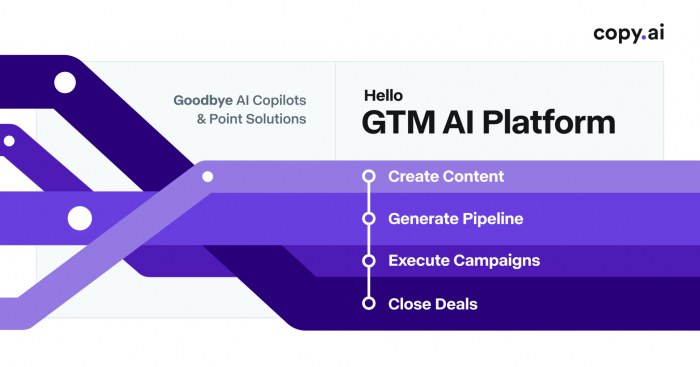
Copy.ai has leaned into workflows and “GTM co‑pilot” use cases: prospecting emails, social posts, sales enablement snippets, product messaging variants, and repurposed content for different buyer personas. Its real value shows up when growth and sales are tightly linked and both teams need repeatable messaging at speed.
Instead of treating each prompt as a one‑off, you can build repeatable flows that turn a few inputs (ICP, offer, objection themes) into full sequences or content sets. That is exactly the kind of work that eats up time in active growth motions.
Copy.ai at a glance
| Aspect | Details |
| Core use | Automating repetitive go‑to‑market copy and workflows across marketing and sales. |
| Main strength | Compresses the time needed to generate coherent campaigns and outbound sequences. |
| Limitation | Requires clear playbooks; vague input still produces generic output. |
| Pricing | Free tier available; paid plans generally start around $29/month. |
| Best for | Lean GTM teams that need more outbound and campaign volume than headcount allows. |
4. Surfer : Making SEO Execution Less Random

Surfer is what many content teams use when “we should do more SEO” has become a recurring internal joke. Instead of producing articles in a vacuum, Surfer forces content to be aligned with what already ranks: keyword clusters, search intent, competing pages, and on‑page recommendations.
In growth marketing, this is vital because organic is one of the few channels that compounds. Surfer helps move SEO from ad‑hoc blog ideas to a disciplined pipeline that can be assigned, written, optimized, and measured.
Surfer at a glance
| Aspect | Details |
| Core use | Planning and optimizing content to perform better in organic search. |
| Main strength | Gives writers and strategists a clear, data‑backed brief for each SEO article or page. |
| Limitation | Cannot fix weak offers, poor link profiles, or missing overall SEO strategy on its own. |
| Pricing | No permanent free plan; entry pricing is around $99/month. |
| Best for | Growth and content teams that rely on organic search as a major acquisition channel. |
5. AdCreative.ai : Extra Creative Bandwidth for Paid Growth
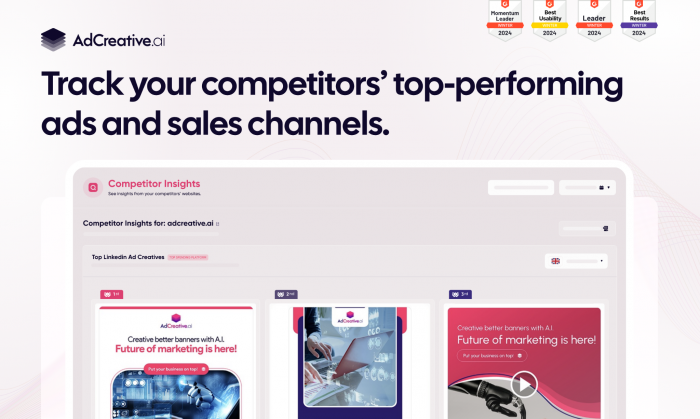
Ad fatigue is one of the quiet killers of performance marketing. Campaigns decay not because targeting fails, but because creatives stop getting attention. AdCreative.ai exists in this exact problem space: it uses AI to generate variations of ad images, headlines, and copy that can be tested across platforms like Meta, Google, and display.
It does not replace a good creative strategist, but it does reduce the time between “we need new creatives” and “we have a batch ready to run”. For growth marketers responsible for CAC and ROAS, that faster iteration loop is often where the efficiency gains hide.
AdCreative.ai at a glance
| Aspect | Details |
| Core use | Creating ad creative variations for social, search, and display campaigns. |
| Main strength | Multiplies the number of testable ad concepts without multiplying design time. |
| Limitation | Outputs still need human filtering for brand fit and compliance. |
| Pricing | Free trial typically offered; paid plans start around $39/month. |
| Best for | Paid media and growth teams that live in performance dashboards and need constant creative tests. |
6. Klaviyo : AI Where Retention and Revenue Actually Meet

Klaviyo has become a default choice for ecommerce retention because it blends customer data, segmentation, flows, and messaging into one environment. AI then layers on top in the form of subject line suggestions, content help, and smarter recommendations for who should receive what and when.
From a growth perspective, Klaviyo is powerful because it turns customer behavior browse, purchase, churn risk into automated communication. That is how brands drive repeat purchases and higher lifetime value without manually building every single campaign.
Klaviyo at a glance
| Aspect | Details |
| Core use | Email and SMS marketing with strong ecommerce segmentation and flows. |
| Main strength | Designed from the ground up around ecommerce data and retention tactics. |
| Limitation | Less relevant for non‑commerce business models or pure B2B with complex sales cycles. |
| Pricing | Free plan for smaller lists; paid pricing starts around $20/month, scaling with contacts. |
| Best for | Ecommerce brands that see repeat customers as their real growth engine. |
7. Semrush : Intelligence Layer for Channel and Keyword Bets
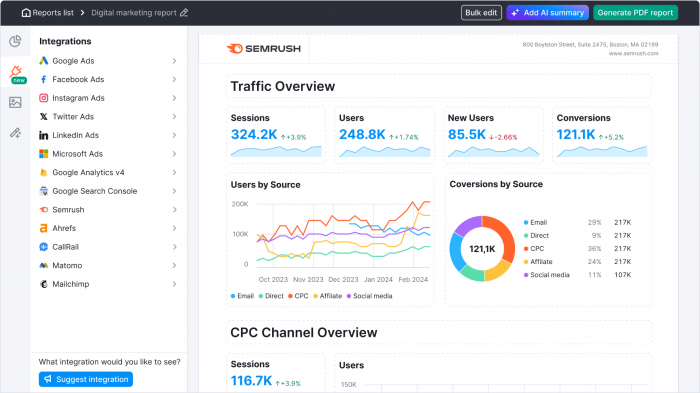
Semrush sits at the strategic end of this stack. It does offer AI‑assisted content and suggestions, but its biggest value in growth marketing is intelligence: keyword trends, competitive visibility, backlink profiles, SERP features, and content gaps. That information is what helps teams decide where to place effort, not just how to write one more article.
For growth leaders, Semrush is useful when questions sound like: “Which topics can we realistically own?”, “Where are competitors weak?”, or “What content is actually driving traffic and links?” Answering those well can prevent a lot of wasted time.
Semrush at a glance
| Aspect | Details |
| Core use | SEO, competitive research, and content opportunity discovery. |
| Main strength | Offers a wide, integrated view of search performance and opportunity across domains and topics. |
| Limitation | Can feel heavy and over‑featured for teams that only need basic SEO support. |
| Pricing | Limited free usage; paid plans start around $139.95/month. |
| Best for | Growth and SEO teams that need data to prioritize content, keywords, and channels. |
How to Turn These Tools into a Real Growth Stack
These tools are far more powerful together than in isolation. A practical stack might look like this:
● Use Semrush to decide where search‑driven growth is realistic.
● Use Surfer to translate that strategy into concrete content briefs and optimized drafts.
● Use Jasper or Copy.ai to generate cross‑channel assets around those same themes.
● Use AdCreative.ai to spin out visual and copy variants for paid experiments supporting those themes.
● Use HubSpot to capture leads, run nurture journeys, and connect campaigns back to pipeline and revenue.
● Use Klaviyo (for ecommerce) to turn first‑time buyers into repeat customers with lifecycle flows.
When used this way, AI stops being “one more thing to learn” and instead becomes the stitching that holds acquisition, activation, and retention together.
Closing Thoughts
The best AI tools for growth marketing are the ones that disappear into your process. When they are configured well, marketers spend less time fighting empty docs, staring at messy spreadsheets, or cloning last month’s creatives and more time making smarter bets based on clearer signals.
The real win is not replacing marketers; it is giving growth teams something they have never had enough of: time to think, test, and iterate. If you know which of your bottlenecks hurts the most right now (content, SEO, ads, CRM, or retention), that is the place to start when choosing your first tool from this list.